

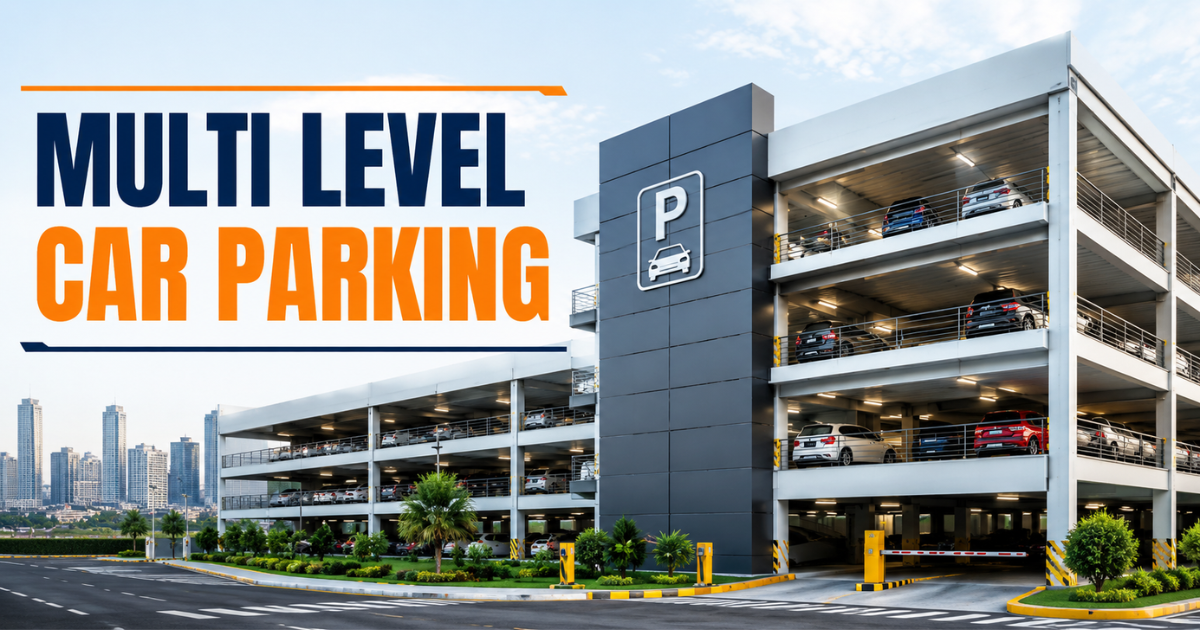
A friend once wasted an entire lunch break circling a mall lot because every ground level spot was full. That single memory is why Multi level car parking keeps coming up whenever I talk about smarter city design.
Vehicle numbers keep climbing faster than most cities can add new roads or lots. Old style parking lots simply were not built to handle this much daily pressure.
Planners, architects, and developers now treat proper parking design as essential infrastructure, not a side detail. Long queues, stress, and lost hours near a mall, hospital, or office tower affect almost everyone eventually.
A well planned structure solves this by building upward instead of sprawling outward across open land. Stacking vehicles vertically gives a site far more capacity without needing a single extra acre.
New drivers often tense up the first time they face a tight turn inside a cramped structure. Poor lighting and narrow lanes punish careless steering and reward drivers who move with real control.
Without solid technique, it is easy to end up with a scraped bumper, a bent mirror, or a costly repair bill. This is exactly why Multi level car parking has become such a practical answer for crowded urban areas.
What Is Multi Level Car Parking?
Strip away the jargon and this kind of structure is simply a building with several floors dedicated to storing cars. Instead of one flat surface lot, it spreads vehicles across height rather than width.
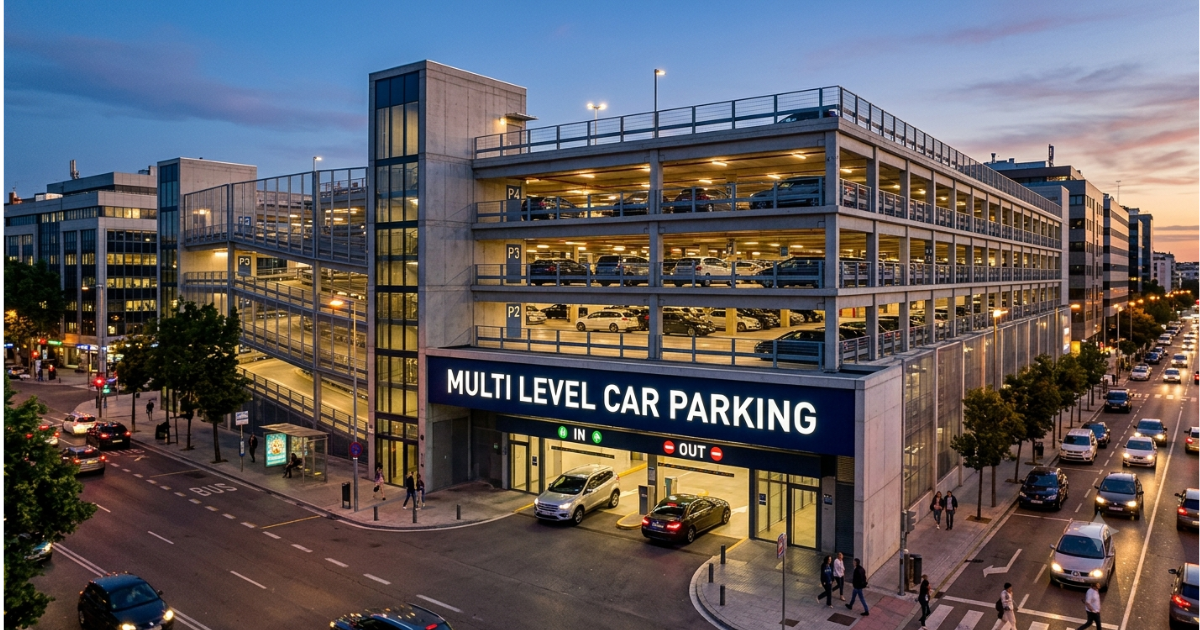
These facilities lean on smart layout, sometimes basic machinery, and occasionally full automation to move cars in and out quickly. Many sites still run manually, depending on budget and the size of the plot.
You will spot this setup inside malls, airports, hospitals, and office towers almost everywhere today. Hotels, tech parks, schools, and mixed use buildings rely on it just as heavily.
Older flat lots swallow huge stretches of land and offer nothing extra in return. That single flaw is exactly why modern developments now favor height over sprawl.
At its core, Multi level car parking exists so that cities and transit hubs can squeeze more capacity from land they already own. Floor by floor, this approach turns a tight plot into genuine parking headroom.
Types of Multi Level Car Parking Systems
These setups generally split into two broad families, and knowing both makes planning far easier. One relies on drivers steering their own car through ramps and lanes toward an open bay.
The other uses lifts, pallets, and automated controls to move the vehicle for you. A car simply reaches the entry point, and machinery quietly parks it without any driver involvement.
This machine driven approach trims human error and speeds up the whole process noticeably. It also removes the need for wide turning lanes that eat up valuable floor space.
A puzzle style version shuffles cars sideways and vertically, almost like sliding tiles, to open room for more vehicles. This style suits locations with heavy demand and very little spare land.
A stacked version uses hydraulic lifts to literally park one car above another. It fits beautifully into apartment blocks, office complexes, and private garages where every square foot counts.
Traditional layouts still have a place, letting drivers handle circulation lanes and turning areas themselves. Even so, a large share of that floor ends up dedicated to driving space rather than actual parking.
Machine based Multi level car parking systems flip that balance entirely by cutting circulation space almost to zero. That shift lets a building house noticeably more vehicles while staying safer and more efficient.
Benefits of Multi Level Car Parking
Space efficiency usually tops the list of reasons owners make the switch. Vertical construction squeezes far more vehicles into a smaller footprint than any flat lot ever could.
Traffic congestion drops sharply once drivers stop circling endlessly in search of an open spot. Automated access and organized layouts also cut the risk of theft, vandalism, and accidental scrapes.
There is a real environmental upside too, since less time spent driving in circles means lower fuel use. Fewer wasted minutes searching for a spot directly translate into lower emissions across a busy site.
Owners enjoy faster retrieval, stronger resale value, and better overall project returns as a result. Multi level car parking also boosts day today convenience for every driver who uses the facility regularly.
Security improves too, since controlled access naturally discourages unwanted activity around parked vehicles. Add in genuine land savings, and the case for going vertical becomes hard to ignore.
Why Multi Level Car Parking Is the Future
The more expensive land becomes, the more seriously businesses and city planners treat vertical parking. What used to feel like a luxury upgrade now reads as a basic requirement for new construction.
Maximizing available space while easing traffic flow checks nearly every box a growing city cares about. Reducing the environmental footprint of daily driving adds another strong reason to make the shift.
Smart technology, including automated guidance and live digital monitoring, is making these structures far easier to use. That shift toward genuinely user friendly design is exactly why adoption keeps climbing across the industry.
Cities leaning on this approach are simply preparing for tomorrow’s transportation needs today. Multi level car parking gives them room to grow without running out of physical space to build on.
Why Choose a Trusted Provider
Not every company builds these structures to the same standard, so reputation and track record matter enormously. Look for a partner offering mechanical, puzzle, and stacked solutions tailored to your exact site.
A dependable provider also offers strong after sales support and long term maintenance plans. That ongoing relationship protects the investment for years rather than just through the initial build.
Customized layouts matter too, since every site has different space constraints and traffic patterns. A provider who adapts the system to those constraints delivers far better long term value.
Why Multi Level Car Parking Is Important
Rapid urban growth is putting real pressure on available land nearly everywhere. Global trends suggest well over half the world’s population will live in cities within the next few years.
In major metropolitan areas, demand for parking already outpaces supply by a wide margin. That gap alone should worry anyone drafting plans for a new commercial or residential building.
This is exactly where Multi level car parking earns its keep, since it avoids the need for sprawling new lots. Leaning on height instead of width saves land while genuinely improving overall project efficiency.
Property value also rises when a building can offer hundreds of extra spaces within the same footprint. That single advantage benefits developers and residents in equal measure.
The Evolution of Parking Systems
Decades ago, most vehicles simply sat in open surface lots that were cheap and simple to build. The catch was that these lots devoured huge stretches of land that cities could never reclaim later.
As land prices climbed, developers shifted toward basements, podium levels, and multi story garages instead.
Eventually engineers solved the problem by designing machinery driven systems built on lifts and automated controls. Removing the need for wide circulation roads boosted parking density in a way flat lots never could, and this is exactly where Multi level car parking earned its place in modern construction.
Why Multi Story Car Parks Are Difficult
Anyone who has crept nervously around a tight bend inside a real structure already knows the challenge. Narrow lanes and sudden pivots make it easy to misjudge exactly how much room a car needs.
The front of a vehicle swings outward during a turn while the back wheels act as the true pivot point. Turning too early, before understanding that movement, is the fastest way to scrape a pillar or clip a wall.
Use Slow Speed and Full Control
Everything here comes down to disciplined speed control inside a confined structure. Staying in first gear and easing off the clutch buys time to react if a gap tightens unexpectedly.
This kind of slow, careful driving wears the clutch slightly faster than normal road use. Even so, it delivers far better control and meaningfully lowers the risk of a collision.
Don’t Be Afraid to Make Corrections
Even experienced drivers rarely clear a tight corner perfectly on the very first attempt. The moment a gap looks too narrow, stopping completely beats forcing the car through and risking damage.
Turning the wheel the opposite way swings the front clear of the obstruction so you can reposition safely. Small corrections like this are completely normal, even for drivers who have parked here for years.
Watch Your Mirrors and Vehicle Overhang
Wing mirrors remain the sharpest tool for judging distance from nearby pillars while turning. Checking them constantly mid turn prevents most of the accidental scrapes drivers regret later.
Vehicle size changes everything about how much room a turn actually needs. Compact cars slip through tight areas easily, while SUVs, vans, and longer vehicles need noticeably more clearance.
Parking in a Tight Space
When reversing into a bay, swing the front outward first so the rear lines up cleanly with the space. Reverse slowly, feed the wheel in gradually, and keep checking both mirrors the entire time.
Once the car sits aligned, straighten the wheels and check the gap on both sides. If the bay is especially tight, leave enough room to open the doors comfortably afterward.
Use Turn Signals Wisely
Signals exist purely to help other drivers and pedestrians understand your next move. Inside a quiet private structure with nobody around, using one is not always strictly necessary.
Still, flicking the indicator when another car is following you improves safety and communication instantly. Random or unnecessary signaling, on the other hand, tends to confuse rather than help anyone nearby.
Final Thoughts
Driving slowly, positioning the car carefully, and checking mirrors often all reduce the risk of an accident inside tight structures. Precise control paired with careful observation always beats rushing or overconfidence.
If nerves are still an issue, practicing in quieter areas first builds real confidence over time. Patience and steady technique are really all it takes to make Multi level car parking feel completely stress free.
Whether a project leans on manual ramps, full automation, or a mix of both, the mission stays identical. Build a lasting way to store vehicles that keep pace with growing populations without swallowing more land.
FAQs
Multi level car parking
What is Multi level car parking?
It is a building with multiple floors designed to store many vehicles within a small footprint. It uses height rather than width to multiply how many cars a site can hold.
What makes this system take up less room than a typical lot?
It stacks vehicles across several levels instead of spreading them across one flat surface. A small plot of land can then hold far more cars than a standard open lot ever could.
Is this kind of structure safe for vehicles?
Yes, most facilities use controlled access and automated systems that reduce theft, vandalism, and accidental damage.
Which types of buildings use Multi level car parking systems?
Malls, airports, hospitals, offices, and residential complexes rely on this setup constantly today. It has become essential wherever land is limited and vehicle numbers keep climbing.
Why should developers invest in this kind of infrastructure?
It increases property value, eases congestion, and supports more sustainable urban growth overall. It works as a long term solution rather than a short term patch for a shrinking parking supply.