

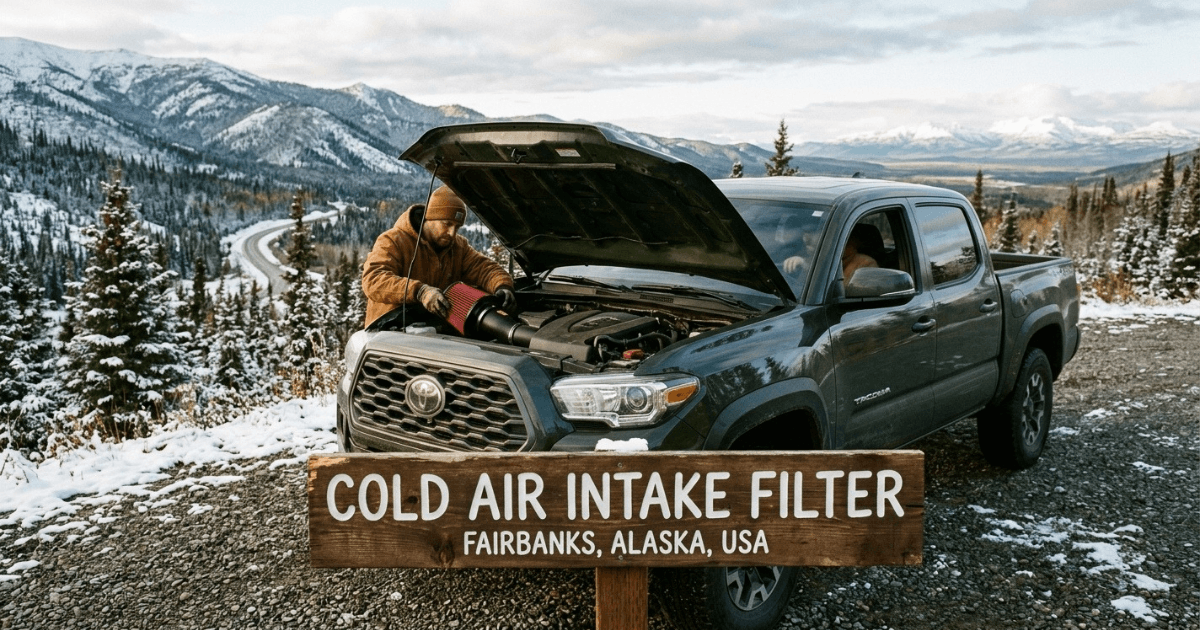
The best cold air intake filter for a Fairbanks truck does three jobs well. It feeds the engine clean air through dusty summers, shrugs off snow and ice fog in winter, and fits your exact model. This guide shows you how to judge each option and the shop that installs it.
Most intake guides assume a mild climate. National Weather Service records put the average January low in Fairbanks at -16.9°F, and summer brings gravel dust and wildfire smoke. Those extremes shape every choice below, from cold air induction design to installer.
What Does a Cold Air Intake Filter Actually Do?
A cold air intake filter traps dirt before it reaches your engine while letting air move with less resistance than a factory element. A complete cold air intake (CAI) adds smoother tubing and a better inlet. The result: improved airflow and cleaner, cooler air.
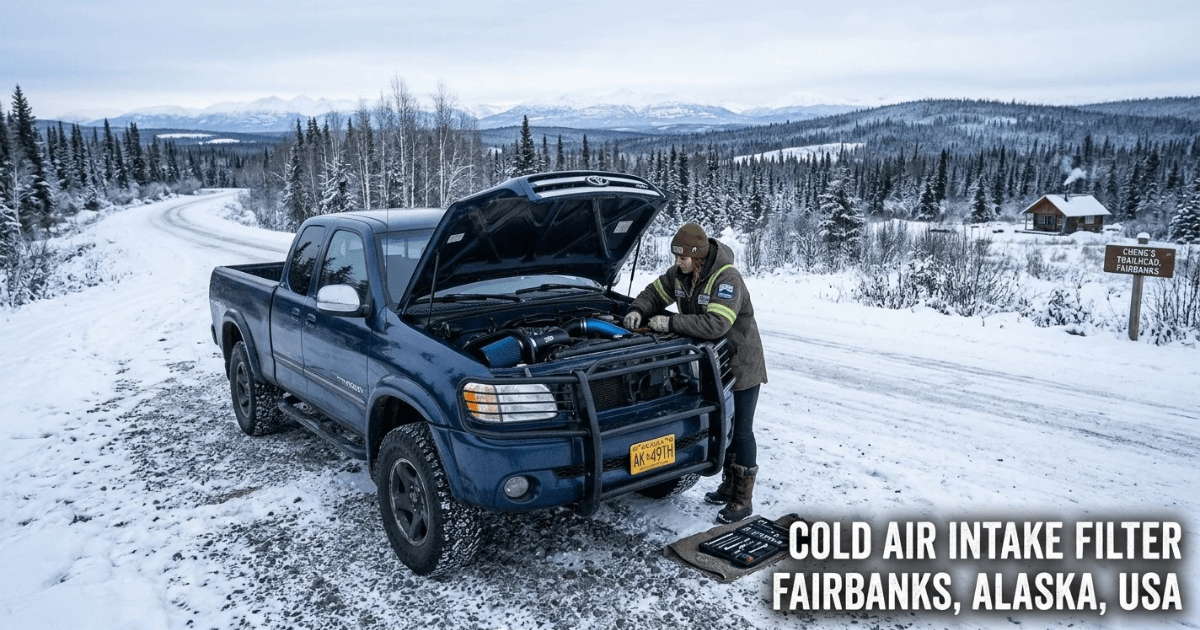
The physics stays simple: dense cold air packs more oxygen into each cylinder than warm air. More oxygen supports more complete combustion, and the engine computer sets the air-fuel mixture from the MAF sensor reading. That makes filtration efficiency as important as flow.
Real gains come from a high-flow air filter, a smoother tube, and better heat management. A good aftermarket air intake improves all three.
Why Does Fairbanks Weather Change How You Pick an Intake?
Fairbanks swings from deep cold to dusty, smoky summers, and your intake must survive both. Winter tests how the filter handles snow, frost, and ice fog. Summer tests filtration against dust on roads like the Elliott Highway.
Does a Cold Air Intake Still Help at 30 Below?
At 30 below, outside air already runs colder than any intake could make it, so winter benefits come from flow. You feel them as crisper throttle response on cold mornings. The bigger payoff arrives in July, when hot under-hood air robs power.
July afternoons in Fairbanks often reach the 70s, and traffic heats the engine bay fast. That heat explains why trucks make less power when the engine is warm. An intake that holds colder intake temperatures through those weeks earns its place.
What Happens to an Open Filter in Snow and Ice Fog?
An exposed filter can pull in blowing snow and frost, which blocks airflow and starves the engine. The Alaska Climate Research Center notes that ice fog forms around -30°F, and its tiny crystals can coat a filter. A sealed airbox with a protected inlet handles these conditions far better.
A winter habit worth keeping: lift the airbox lid after a week of heavy snow and check the pleats. A frosted filter shows a white crust, and a soft brush clears it in seconds. A frozen filter mimics a weak engine, so check it first.
Which Filter Type Works Best: Oiled, Dry, or PowerCore?
For most Fairbanks trucks, a dry air filter makes the easiest choice because it needs no oil. An oiled air filter grabs fine dust well but demands careful re-oiling. A maintenance-free filter suits owners who want minimal upkeep through long winters.
Corsa Performance sells three styles: an oiled filter, the DryTech dry filter, and the PowerCore filter. Its pre-oiled filter uses a tacky surface for fine particle capture, while DryTech skips oil entirely. Both work as a reusable air filter and a washable air filter.
Spectre Performance builds its elements from non-woven synthetic filter media with multiple layers of filter fabric. That synthetic air filter media flows better than a regular paper filter, and buyers pick a filter color in red, blue, or black. Kits use a cone-shaped filter or a round air filter.
Buy a vehicle-specific filter or a direct-fit replacement filter rather than forcing a universal cold air intake filter into place. A proper replacement air intake filter seals tightly against its housing. A low-restriction air filter only helps when it fits well.
What Parts and Materials Should a Good Truck Intake Include?
A quality air intake kit includes a smooth tube, a heat barrier, solid clamps, and a high-performance air filter. Look for polished aluminum or powder-coated aluminum tubing, stainless steel hardware, and a real heat shield. Cheap kits skimp here.
Spectre kits combine a polished aluminum intake tube with a powder-coated steel heat shield, a coupler, stainless steel clamps, a mounting bracket, and a velocity stack. Some add an adapter ring for the factory MAF sensor and a fitting for the breather hose. Others use a driver-side mounted air filter or cast aluminum tubing.
Cold Air Inductions uses stainless steel fasteners, rubber and silicone parts, and OEM sensors and connections. It sells an Elite Series and a Carbon Elite Series, lists carbon fiber among its materials, and offers a plexiglass filter window. The brand claims OEM-quality construction, made in the USA.
How Do Closed and Open Intake Designs Compare?
A closed system design seals the filter inside a box drawing outside air, while an open system intake leaves the filter exposed under the hood. They block snow, slush, and engine heat more reliably.
An open induction kit sounds louder and costs less, but it breathes engine heat. Cold Air Inductions flags gaps between the hood and intake box as a weak spot in lesser designs. A sealed cold air induction box keeps air and heat control where it belongs.
Builders can use Spectre’s DIY air intake components, including an inline air filter housing and a low-profile round air box. Those boxes offer single inlet and dual inlet versions with several inlet angle choices, alongside a universal air intake and an LS engine swap intake kit. Spectre routes the intake inlet away from heat from the radiator and headers.
Most owners simply want a bolt-on design. Spectre calls its vehicle kits a direct-fit bolt-on replacement with a stock-like fit. A CAI truck intake on factory mounts also returns to stock easily.
How Much Power Can You Realistically Expect?
Expect modest real-world performance gains, felt mostly as sharper throttle response and faster acceleration. Results depend on the engine and how each brand tests. Treat any horsepower or lb-ft of torque claim as a result from specific test conditions.
Cold Air Inductions says it tests with a chassis dyno, a flow bench, and computer simulation. A chassis dyno reports rear-wheel horsepower, meaning power measured at the tires rather than the crankshaft. Tire numbers run lower, but they read more honestly.
Corsa lists fuel efficiency as a benefit, but mileage changes stay small. Cold Air Inductions adds improved truck sound and consistent performance to its list. A clogged air filter wipes out every gain, so maintenance matters more than the logo.
Which Brands Make Truck Intakes, and What Services Do They Offer?
Corsa Performance, Cold Air Inductions, and Spectre Performance all sell intake kits and filters, and each brand offers the services listed on its own website. None of the three advertises hands-on repair work. Their support centers on parts, guides, warranties, and installer referrals.
What Does Corsa Performance Offer?
Corsa Performance sells vehicle-specific replacement filters, including a PowerCore filter for the Ford Bronco. Its website lists installation instructions, a Find Installers locator, filter care guides, a Warranty Center, customer service, and a CARB EO sticker request. A search by vehicle tool confirms fitment before you order.
What Does Cold Air Inductions Offer?
Cold Air Inductions builds intakes for the Chevy Silverado 1500, GMC Sierra 1500, Chevy Colorado, and GMC Canyon. Its website lists installation guides, a lifetime warranty, warranty registration, a dealer locator, and FAQs. The brand advertises no ECM tune required and says installation requires no modifications.
What Does Spectre Performance Offer?
Spectre Performance sells vehicle-specific intake kits, universal parts, and replacement air filters. Its website provides detailed installation instructions and says common hand tools handle the job. Retail listings show Spectre kits for the Ford F-150, Ford F-250 Super Duty, RAM 1500, and RAM 2500.
How Do You Clean and Maintain the Filter Through a Fairbanks Year?
Inspect the filter at every oil change and clean it whenever it looks dark. A faded filter color, reduced engine performance, or lower fuel efficiency signals that it needs attention. In Fairbanks, add a check after breakup season.
For an oiled element, Corsa recommends a filter cleaner, about 10 minutes of soak time, and a rinse from the clean side to the dirty side. Then let it air dry completely, because Corsa warns against compressed air or heat sources. Skip the garage heater.
Re-oiling comes next: apply filter oil in a light, even coat, allow about 20 minutes of wick time, and check for dry spots. Corsa sets the re-oil interval at roughly 30,000 to 50,000 miles, depending on conditions. Gravel roads and smoke shorten that service interval, so let the filter’s condition decide.
Good filter care protects your sensors, since excess oil can drift onto the MAF sensor. Wildfire smoke adds airborne contaminants on top of dirt and dust particles from gravel shoulders. Dry filters simplify filter cleaning, needing only a wash and a full dry.
Is a Cold Air Intake Legal and Safe for Your Warranty in Alaska?
Alaska has suspended its vehicle emissions inspection programs, so no local test will flag an intake. Alaska DEC records show the Fairbanks North Star Borough suspended its program on January 1, 2010. Still, pick a CARB certified part if you might register the truck elsewhere.
A 50-state street legal kit carries a CARB EO sticker, and Corsa lets owners request one through its website. That sticker documents emissions compliance if you move to California. Retail listings also show 50-state legal status for several Spectre kits.
Cold Air Inductions states that its intake does not void the vehicle warranty, which answers the usual worry about voiding the vehicle warranty. Compare a lifetime warranty with a limited 90-day warranty covering defects in materials or workmanship. Durable construction matters too, since Fairbanks temperature swings punish brittle plastic.
What Should You Look For in a Fairbanks Installer or Service Provider?
Choose an installer who knows your exact truck, follows the brand’s installation instructions, and understands winter intake problems. Ask whether they reuse factory sensors, check for air leaks, and confirm fitment with brand tools. A careful shop also hands you a filter maintenance schedule.
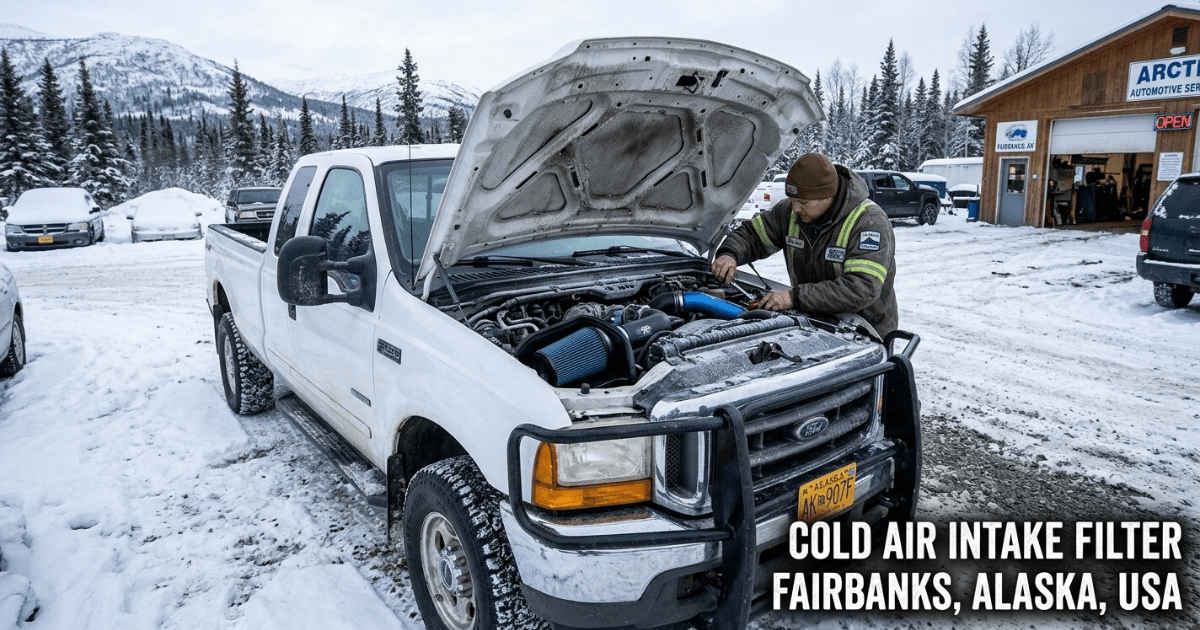
A good shop quotes a realistic install time and favors a no-drill installation. They should explain whether your kit needs ECU reprogramming or a custom tune, since most bolt-on kits run on the factory calibration. Ask them to log intake air temperature on a scan tool before and after the install.
Ask the same questions whether you’re comparing an s&b cold air intake, a Spectre kit, or a sealed cold air induction box. Corsa’s installer locator and the Cold Air Inductions dealer locator give you a starting list. Our site puts that list beside local shop details, so you can compare providers in one place.
What Else Do Fairbanks Truck Owners Ask?
Can snow damage my engine through the intake?
Packed snow mostly blocks airflow rather than causing instant damage. Snow that melts inside an open filter can still push water toward the throttle body. A sealed box and regular winter checks keep both risks low.
Is an s&b cold air intake a good fit for Alaska?
Judge an s&b cold air intake by the same standards as any other brand. Confirm fitment, read the warranty on the brand’s own site, and favor a sealed box for snow. Then ask a local installer about ice fog.
Where Can You Find the Right Intake Provider in Fairbanks?
The best intake pairs the right cold air intake filter with a provider who understands Fairbanks winters and each brand’s services. Our site gathers fitment notes, brand service details, and local installer information together. Start your search there to find the right intake and the right shop for your truck.