

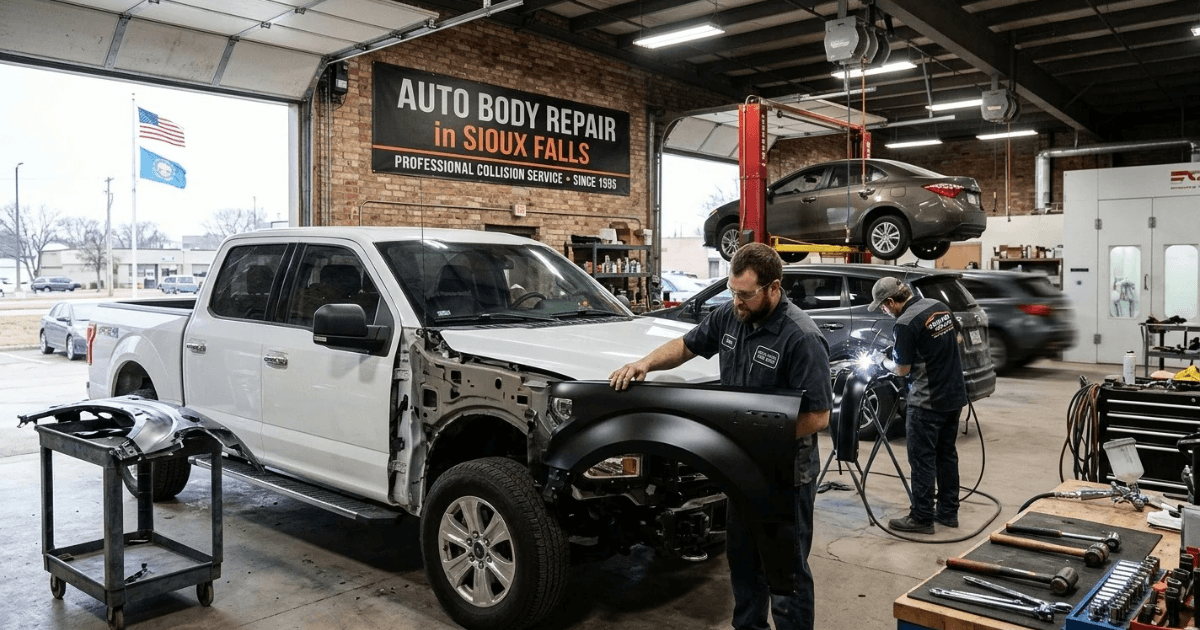
Auto body repair in Sioux Falls covers everything from a small parking-lot ding to serious collision damage after a winter crash on I-29. The auto body shop you pick affects your safety, your car’s resale value, and how smoothly your insurance claims go. This guide answers the questions drivers ask most, in plain words, so you can walk into any shop prepared.
Sioux Falls drivers deal with icy roads, deer, gravel, and spring hail, so body damage is a normal part of owning a car here. You’ll learn what repairs typically include, what they may cost, and how South Dakota insurance rules work. You’ll also get practical tips for judging a shop before you hand over your keys.
What does auto body repair in Sioux Falls actually include?
Auto body repair restores your vehicle’s outer shell, frame, and finish after damage. In Sioux Falls, most shops handle collision repair, dent repair, bumper repair, scratch repair, paint and refinishing, and frame straightening. Many also offer auto glass repair, hail damage repair, and rust repair, so you can often fix everything in one visit.
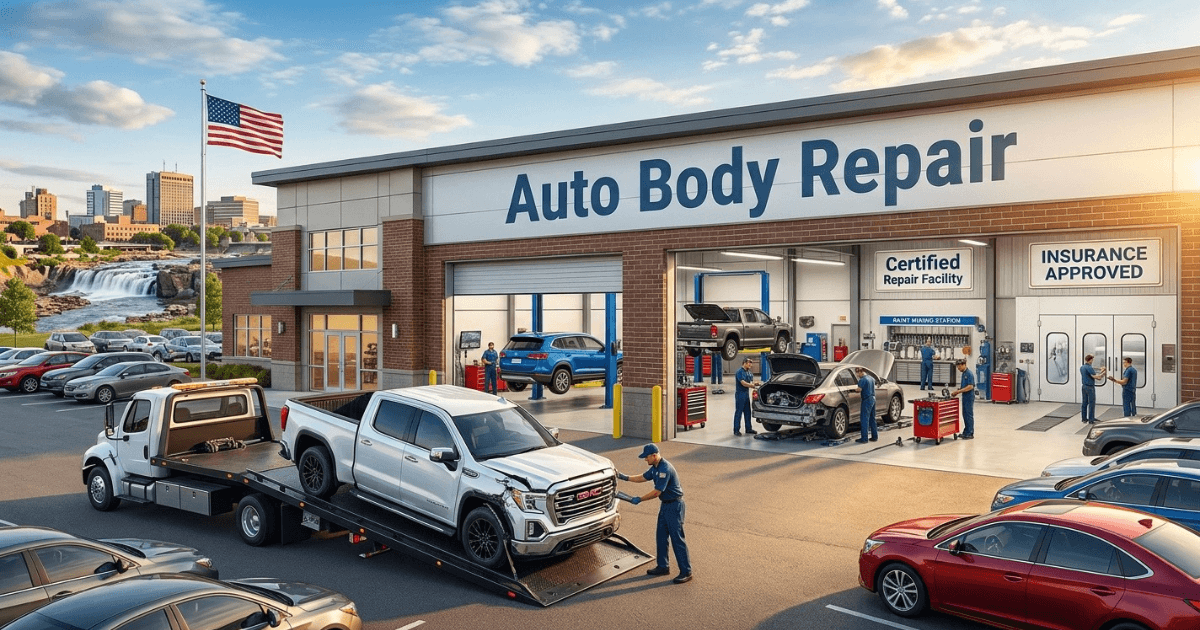
The work splits into two broad groups: structural repair and cosmetic repair. Structural work fixes the parts that protect you in a crash, like the frame and crumple zones, while cosmetic work fixes what you see, like door dings, scuffs, and paint chips. A good shop checks for both, because a small dent can hide a bent bracket underneath.
What’s the difference between collision repair and auto body repair?
It often includes structural fixes, part replacement, and safety checks. Auto body repair is the wider term, covering crash damage plus everyday wear like scratches, rust, hail dents, and fading paint that has nothing to do with an accident.
The difference matters when you call a shop or your insurer. A fender bender that cracks a bumper is a collision claim, while a door scraped by a shopping cart usually isn’t worth a claim at all. Knowing which bucket your damage falls into helps you decide whether to involve insurance.
Can one shop handle glass, hail, and dent work?
Yes, many Sioux Falls shops handle all three. Larger shops and chains often offer auto glass replacement and windshield replacement, while many full-service shops do paintless dent repair for hail and small dents. Ask before you book, since some smaller independent shops send glass work to a partner.
Paintless dent repair pushes dents out from behind the panel without sanding or repainting, so your factory finish stays intact. It works best on shallow dents where the paint isn’t cracked. South Dakota even defines this method by name in its insurance code (SDCL 58-12-15), which shows how common hail repair is in the state.
What Happens During Collision Repair, Step by Step?
Most repairs follow the same path: you get a free estimate, approve the work, and the shop orders parts. Technicians then take the car apart to find hidden damage, fix the structure, prep and paint the panels, and reassemble everything. A final quality check comes before you pick the car up.
Each step aims to bring your car back to its pre-accident condition, not just make it look good from ten feet away. Here’s how a typical repair process runs:
- Damage review: A repair advisor inspects the car in person or through a photo estimate you upload from your phone.
- Teardown: Technicians remove damaged panels to find hidden problems, then send supplements to your insurer if the bill grows.
- Structural work: The shop fixes frame damage and checks measurements against manufacturer standards.
- Body and paint: Panels get repaired or replaced, primed, painted with careful color matching, and sealed with clearcoat.
- Reassembly and checks: Lights, sensors, and trim go back on, and many shops wash the car before final delivery.
How long does auto body repair in Sioux Falls take?
Small jobs like a bumper scuff or a single dent often take one to three days. Larger collision repairs can take one to several weeks. The biggest factors are parts availability, insurance approvals, and how much hidden damage shows up once the shop takes the car apart. These are general estimates, not guarantees.
Ask the shop for a written repair timeline and how they’ll keep you updated. Several Sioux Falls shops let you check vehicle status online or by text. If you’ll be without a car, ask about a loaner car, and check whether your policy includes rental car coverage before work starts.
How much does auto body repair cost in Sioux Falls?
Costs range from under a hundred dollars for a simple touch-up to several thousand for structural collision work. The final price depends on labor hours, paint materials, parts, and whether you choose OEM parts or aftermarket parts. Always get a written estimate, because no two damage reports look the same.
The table below shows rough national ranges that repair guides commonly quote. These are approximate estimates, not verified Sioux Falls prices, so use them only as a starting point when you compare real quotes.
| Repair type | Rough estimate (USD, approximate) | What drives the price |
| Paintless dent repair, small dent | $75–$250 per dent | Dent size, location, panel access |
| Scratch and paint repair, one panel | $150–$1,000 | Scratch depth, paint color, blending |
| Bumper repair or cover replacement | $300–$1,500 | Repair vs. replace, parking sensors |
| Windshield replacement | $250–$1,000+ | Glass type, camera recalibration |
| Frame straightening | Often $1,000+ | Extent of structural damage |
Why do two shops give different quotes?
Shops price labor differently, use different parts, and may see different damage. One estimate might use aftermarket parts while another uses factory parts. One shop may also find hidden damage that another missed. Compare line by line, not just the total, to see what each quote actually includes.
Look for paint blending into nearby panels, which helps new paint match the old. A cheaper quote that skips blending can leave a visible color line on your door or fender. Also ask whether the price includes wet sanding and polishing, corrosion protection, and recalibrating safety sensors.
Is it worth paying for OEM parts?
Often, yes, especially for newer cars, leased vehicles, and safety parts. OEM parts come from the carmaker and fit like the originals. Aftermarket parts cost less and can work fine for older cars, but fit and finish vary. Your policy decides what the insurer pays, so read it.
Many policies pay for aftermarket or used parts unless you cover the price difference. If you want OEM, ask before work starts and get the insurer’s decision in writing. That one conversation can save you from surprise charges when you pick up the car.
How does car insurance work for auto body repair in Sioux Falls?
After an accident, you file a claim with your insurance provider or the other driver’s insurer. An insurance adjuster reviews the damage, often alongside your chosen shop’s estimate. The insurer pays for the approved repair minus your deductible, and the shop sends supplements if it finds more damage during teardown.
Your deductible applies only when you claim on your own policy; when the other driver is at fault, their liability coverage should pay instead. If an uninsured driver hits you, your own collision coverage is often the backup, so check what your policy includes. Keep every photo, report, and receipt, because a clear paper trail speeds up the claim process.
Can my insurance company choose my repair shop?
No, the choice is yours. South Dakota law (SDCL 58-33-72) restricts auto insurers from requiring you to use a particular shop, so you can take your car to any shop you trust. Just know you might pay the difference if your shop’s price runs higher than the insurer’s approved estimate.
Pushing a customer toward a certain shop is often called insurance steering. If an adjuster pressures you, ask them to put the reason in writing, and contact the South Dakota Division of Insurance with questions. Know your rights before you sign any repair authorization.
Do I need two estimates in South Dakota?
No. The South Dakota Division of Insurance says no state law requires two estimates. Getting a second quote is still common and smart, because it lets you compare prices and catch missed damage. You can pick the shop with the higher estimate, but you may have to cover the difference yourself.
Multiple estimates help most on large claims where hidden damage is likely. Be wary of any shop that offers to “take care of” your deductible, since a 2025 South Dakota law (SDCL 37-24-50.1) bars body shops from rebating insurance deductibles. A legitimate shop won’t play games with your claim.
Smart Steps to Finding the Best Collision Shop in Sioux Falls
Look for certified technicians, a written warranty coverage policy, clear estimates, and steady customer reviews. Visit the shop, ask how they handle insurance, and notice whether they explain repairs in plain words. The right shop answers your questions patiently and puts every promise in writing before any work begins.
Sioux Falls has a mix of national chains, dealership body shops, and family-owned body shop operations, and each has strengths. Chains may offer a nationwide warranty that follows you if you move, while a local body shop may give you more personal attention. Neither is automatically better, so judge the shop in front of you.
What certifications should a body shop have?
Look for I-CAR training and OEM certifications from carmakers. I-CAR is a nonprofit that trains collision technicians, and its Gold Class label shows ongoing training across a shop’s staff. OEM certifications mean a carmaker approved the shop’s equipment and methods for its vehicles, which matters for newer and luxury vehicles.
Ask to see certificates rather than trusting a website badge. Also ask about aluminum repair, since many newer trucks use aluminum panels that need separate tools and training. A shop that works on all makes and models should still tell you honestly when your car needs a specialist.
What questions should I ask before handing over my keys?
Ask what the warranty covers and for how long, whether the estimate uses OEM or aftermarket parts, and how the shop handles supplements. Also ask for a timeline, how you’ll get updates, and whether they offer a loaner or shuttle service. Clear answers to these questions are a strong sign of a trustworthy shop.
A few practical buyer tips before you sign:
- Get the estimate in writing, with parts and labor listed separately.
- Ask whether a lifetime warranty covers paint, workmanship, or both.
- Take dated photos of your car at drop-off, inside and out.
- Ask about financing options if insurance won’t cover the repair.
- Inspect the car in daylight at pickup, checking panel alignment and color match from several angles.
Is DIY touch-up paint worth it, or should you go to a shop?
DIY touch-up paint is worth it for tiny chips and light scratches that haven’t reached bare metal. Anything deeper, wider than a pencil eraser, or on a bumper with sensors belongs in a shop. A poor DIY job can cost more to fix later than a professional repair would have cost upfront.
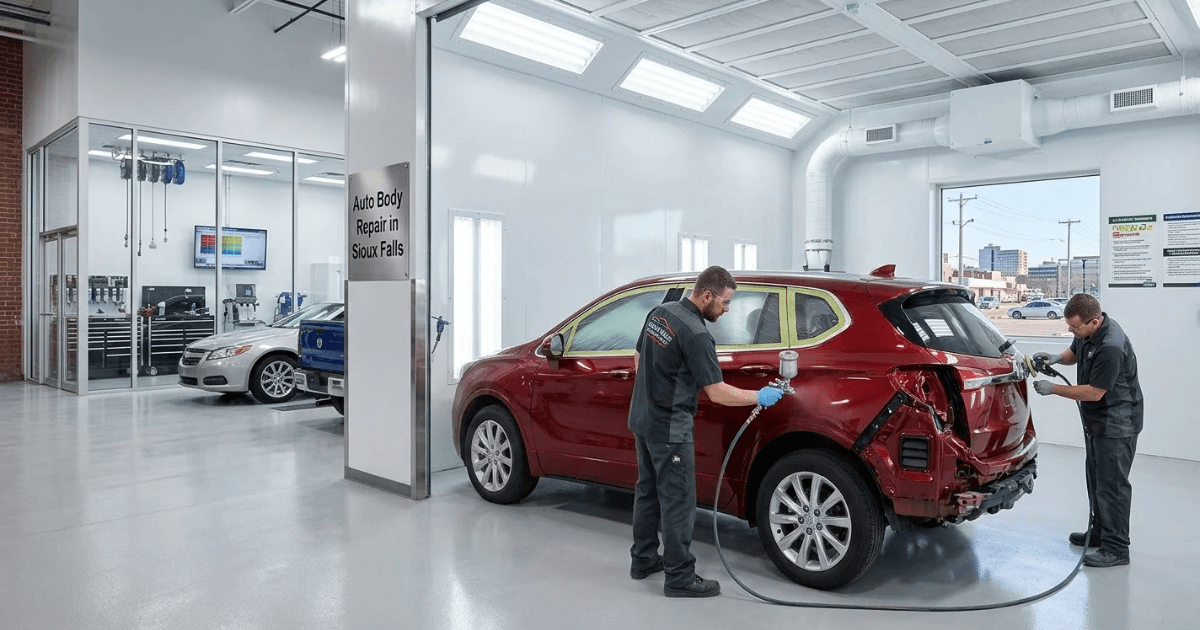
Find your paint code on the sticker in the driver’s door jamb or in the owner’s manual, then order paint mixed to that code. A basic kit uses primer, a basecoat color layer, and clearcoat on top, applied in thin coats. If the touch-up looks raised, a little rubbing compound can level it, but stop before you rub through the factory paint.
Don’t leave chips alone through a South Dakota winter. Road salt and moisture can reach exposed metal and start rust, which turns a five-minute fix into a full panel repair.
What should you do right after a car accident in Sioux Falls?
First, make sure everyone is safe, and call 911 if anyone is hurt or the cars block traffic. Then document the damage with photos, swap insurance details with the other driver, and contact your insurer. After that, choose a shop and schedule an estimate before small damage turns into rust or bigger problems.
South Dakota requires drivers to report crashes that cause injury or significant property damage to law enforcement. Check the current reporting rules with the Sioux Falls Police Department or your insurer if you’re unsure. Photos from several angles, plus the other driver’s plate and policy number, make your claim much easier to settle.
If the car isn’t safe to drive, many shops can arrange towing straight to their lot. Leaking fluids, broken headlights, or a bumper dragging on the road are clear signs to tow rather than drive.
FAQs
Should I file an insurance claim for hail damage in South Dakota?
It’s your choice. The South Dakota Division of Insurance notes that no law forces you to file a claim or report a possible loss, though your policy spells out your duties after damage. For light hail dents, paintless dent repair may cost less than your deductible, so get a quote first.
Can I drive my car while waiting for auto body repair in Sioux Falls?
Often yes, as long as lights, mirrors, doors, and the hood work properly and nothing rubs a tire. Drive it only if it’s safe and legal. Broken lights, a loose bumper, or new warning lights on the dash are signs to get an inspection first, since hidden structural damage can affect handling.
Will a repaired car lose resale value?
It can, especially after major collision damage that shows up on vehicle history reports. A quality repair with matched paint, even panel gaps, and documented work limits that loss. Keep your final invoice and warranty papers, because buyers trust a car more when they can see who fixed it and how.
What does a body shop warranty usually cover?
Most body shop warranties cover workmanship and paint defects such as peeling, fading, or cracking, not new damage or normal wear. Many shops offer coverage for as long as you own the car. Terms differ widely between shops, so ask for the warranty in writing and read what voids it.
How do I get a quick estimate for auto body repair in Sioux Falls?
Several Sioux Falls shops accept photo estimates online, and many offer walk-in estimates during business hours. Snap clear photos of the damage from a few angles, plus one wide shot of the whole car. A photo estimate gives you a starting number, but the final price may change after an in-person inspection.