

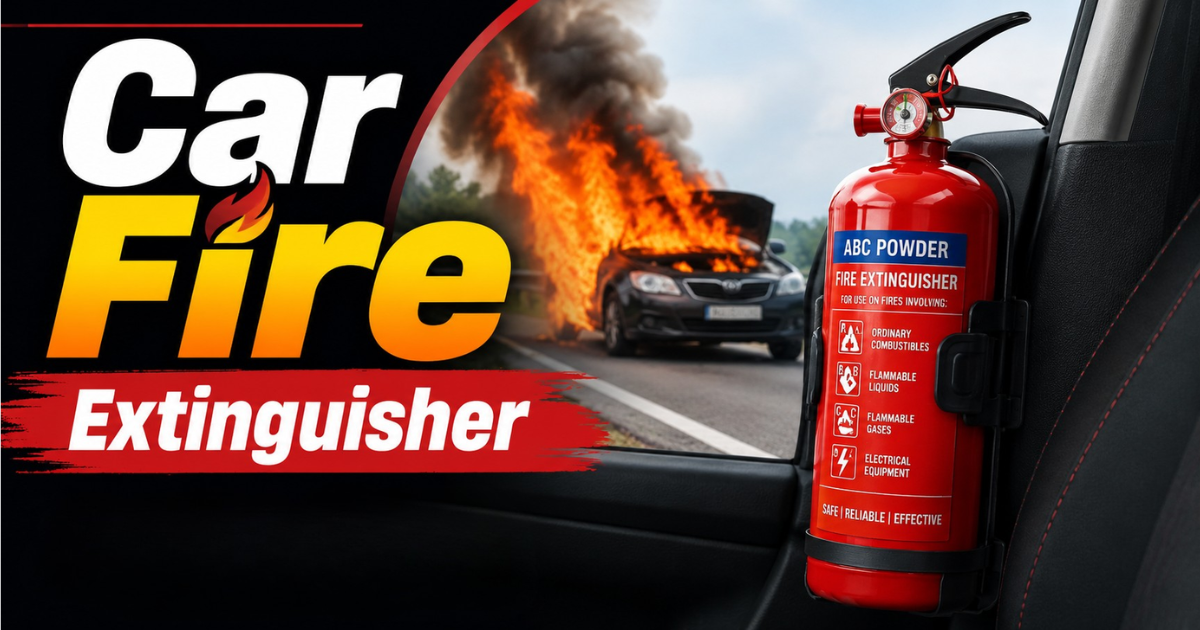
A car fire can turn dangerous within just a few minutes, so owning a car fire extinguisher is an essential part of every vehicle’s safety kit. Whether you drive a hatchback, a family SUV, a commercial van, a petrol car, or a diesel van, the right unit keeps you covered.
I’ve kept a car fire extinguisher in my own glove box for years, and that habit brings real extra protection and maximum protection for passengers and property. That significant difference in preparation is exactly why a reliable, compact fire extinguisher matters so much during unpredictable emergencies.
Common Causes
Every car carries materials that can ignite under the wrong conditions, and understanding the causes behind this keeps drivers a step ahead. A car fire extinguisher only works well once you know exactly what kind of blaze you might be facing.
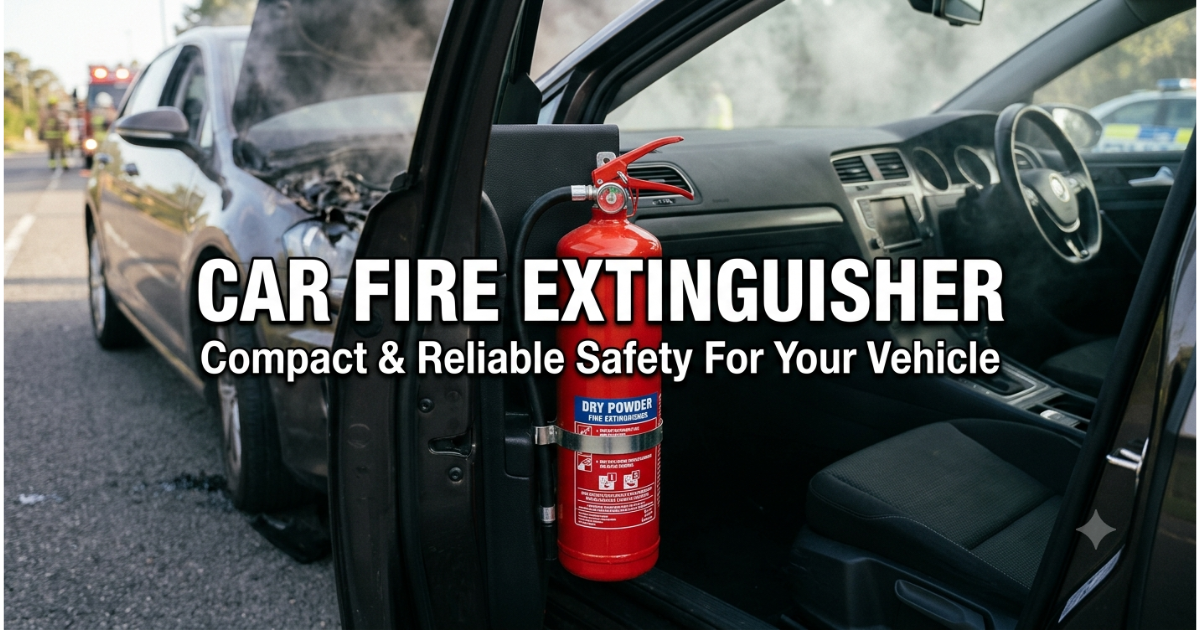
Class A Fires feed on combustible materials such as upholstery, seats, carpets, and interior trim found inside most cars. Class B Fires come from flammable liquids like petrol, diesel, engine oil, and other fuels, while Class C Fires involve flammable gases such as LPG.
Electrical Fires usually start from faulty wiring, damaged batteries, or worn electrical components hidden under the dashboard. Lithium Ion Battery Fires, common in electric vehicles (EVs) and hybrid vehicles, burn at high temperatures that need proper suppression methods.
Matching the right extinguisher to each of these fire types matters for genuine effectiveness on the road. Electrical short circuits, fuel leaks; oil leaks, engine overheating, battery malfunctions, and road accidents or collisions are common triggers behind serious fires.
Consistent vehicle maintenance, quick fixes to mechanical issues, and small preventive measures cut the risk of fire dramatically over time.
Why You Should Keep/Choose a Fire Extinguisher
Having firefighting equipment on hand in an emergency lets you act during the early stages of a fire. That quick action from a car fire extinguisher can prevent extensive damage and even save lives on a bad day.
ABC powder extinguishers stand out as versatile tools because they handle multiple types of fires in one canister. They cover Class A items like wood, fabric, paper, and upholstery, plus Class B flammable liquids such as petrol and diesel, and Class C flammable gases.
Many budget extinguishers only hold BC powder, which won’t protect car interiors full of plastics and other combustible materials. That’s why an ABC rated extinguisher offers comprehensive protection instead of a partial fix.
The key benefits of any good car fire extinguisher go beyond just handling small fires in the moment. They raise the safety of passengers and nearby motorists, lower the odds of costly vehicle damage, and add peace of mind during long distance travel.
They also stay genuinely effective on manageable fires that you can put out safely by yourself.
Choosing the Right Fire Extinguisher
Vigil makes three ABC powder fire extinguishers in 600 g, 1 kg, and 2 kg sizes for different needs. The capacity number tells you how much extinguishing powder sits inside the cylinder, not the total weight of the unit.
Every version ships with a mounting bracket for secure installation and quick access during emergencies. Passenger cars usually do fine with the smaller sizes, while vans, delivery vehicles, and other commercial vehicles need a higher capacity model.
A car fire extinguisher with greater firefighting capacity suits petrol vehicles, diesel vehicles, motorcycles, and trucks carrying heavier loads. These units rely on BC dry powder or ABC dry powder that stays lightweight and compact enough for daily use.
They fight fuel fires and electrical fires in internal combustion vehicles, whether they’re private cars or larger fleets. Electric vehicles (EVs) bring a different challenge, since their lithium ion batteries can slip into thermal runaway.
That causes intense fires and long lasting fires that a Lithium Battery extinguisher (LithEx) or fire blankets handle far better. A regular car fire extinguisher only manages surrounding materials and can’t fully extinguish a true battery blaze on its own.
Because toxic smoke builds up fast in these cases, calling emergency services is always the safer move. Hybrid vehicles mix fuel powered engines with a battery pack, so unlike purely traditional vehicles, they need two kinds of protection.
That means carrying an ABC unit for general vehicle fires and a lithium option for battery related emergencies. Experts also point out that solid materials, engine oil, electrical equipment, and wiring remain common fuel sources for maximum protection planning.
Storage
A car fire extinguisher only helps if it stays securely mounted and easily accessible at all times. Good storage locations include under the driver’s seat, the passenger foot well, a boot mounted bracket, or the rear cargo area in vans.
Never leave it loose, because sudden braking or a collision can turn it into a dangerous projectile inside the cabin. Use the supplied mounting bracket to keep it secure and ready for any emergency, whether near the passenger’s seat or elsewhere.
This applies just as much to commercial vehicles carrying goods as it does to a small family hatchback. Regular maintenance matters just as much as placement for any car fire extinguisher you rely on.
Check the pressure gauge, inspect the tamper seal, and note the service date and expiry date regularly. If the unit turns out partially discharged, replace or service it straight away rather than waiting.
Maintenance and Checks
Before trusting any car fire extinguisher, inspect its condition and check the manufacturing date first. Confirm it’s still within its service life and covered by a 5year warranty before you rely on it.
Look closely at the tamper seal and watch for powder residue, since either sign could point to an accidental discharge. Proper installation matters too, so a sturdy metal mounting bracket with secure fixing points stops the unit from getting damaged.
This keeps it safe from harm while driving over bumps or during sharp turns. Regular maintenance — checking the pressure gauge and expiry date, then choosing to replace or service a partially discharged canister — keeps it genuinely ready.
How to Deploy Your Car’s Fire Extinguisher the Right Way
A car fire extinguisher works best when you already know the steps before you ever need them. Vigil extinguishers are built for quick operation and straightforward operation even under stress.
Grip the handle, pull the safety pin, break the tamper seal, then aim at the base of flames and squeeze.
The 600 g model uses a plastic safety clip with a red pushbutton release for fast handling. The 1 kg and 2 kg sizes rely on a folding handle with a traditional safety pin that also allows compact storage.
Remember that any discharge causes pressure loss, so the unit should get serviced or replaced afterward. Using a car fire extinguisher correctly the first time makes a real difference in how fast a fire goes out.
The general PASS method — pull the pin, aim the nozzle, squeeze, and sweep from side to side — works well on a spreading fire. If a battery pack gets involved, evacuate and call emergency services right away instead of continuing to spray.
The same PASS technique applies whether you’re following Vigil’s steps or a general set from any brand. And if heavy smoke builds up, leave vehicle immediately, contact emergency services, and stay clear until the fire is fully extinguished.
Vehicle Fire Safety Tips
Put personal safety first, always: if you spot heavy smoke or growing flames, step back rather than staying to fight it. A car fire extinguisher is meant for small, manageable situations, not a blaze that’s already out of control.
Only try to extinguish small fires when you feel confident and have a safe escape route planned out. Stand upwind so you’re not breathing in harmful fumes while waiting on emergency services to arrive.
Build a simple vehicle safety plan that includes servicing vehicle parts on schedule and fixing fuel faults and electrical faults early. Avoid overloading electrical system wiring and keep an eye on warning lights on the dashboard.
Carrying a car fire extinguisher is only one part of staying safe, alongside good driving habits and regular checks. If your car catches fire, evacuating everyone and keeping a safe distance while calling emergency services lowers the overall risk of fire turning tragic.
Conclusion
A Vigil ABC powder fire extinguisher is a smart safety accessory for any car, no matter how far you travel. The 600 g and 1 kg sizes offer reliable protection for daily driving, while the 2 kg version gives extra capacity to larger vehicles and commercial vans.
Keep checking the tamper seal, the manufacture date, and the mounting bracket on your own car fire extinguisher often. Never open the bonnet during an engine fire; instead, use the bonnet gap and be ready to evacuate if flames keep growing.
That single habit does a lot for road safety on every trip you take. A compact ABC dry powder extinguisher suits most petrol vehicles and diesel vehicles, while lithium battery extinguishers and fire blankets add backup for electric vehicles and hybrid vehicles.
Inspect your unit often, store securely, and learn its operation so you stay prepared for anything. This kind of small investment in protecting passengers during an unexpected fire emergency brings valuable protection through unexpected emergencies.
Whether you’re driving across town or covering long distances, a dependable car fire extinguisher stops minor fires from turning devastating. Pairing this habit with regular vehicle maintenance and solid fire safety knowledge gives your whole family an extra layer of security.
FAQs
Car fire extinguisher
How often should I check my car fire extinguisher?
Give it a quick look every couple of months and a proper inspection at least twice a year. Check the pressure gauge, tamper seal, and expiry date each time so it’s never a surprise when you need it.
Can one extinguisher work for both a petrol car and an electric vehicle?
Not fully. A standard ABC or dry powder unit handles fuel and electrical fires well, but EV battery fires need a lithium specific extinguisher or a fire blanket for proper control.
What size extinguisher is best for a regular family car?
A 600 g or 1 kg unit usually covers most passenger cars comfortably. Larger vehicles like vans or commercial trucks do better with a 2 kg model for added firefighting capacity.
Is it safe to open the bonnet if my engine catches fire?
No, opening the bonnet feeds the fire with fresh oxygen and can make it worse almost instantly. Release the bonnet catch from inside instead and spray through the gap, or step away and call for help if it’s too big.
Where’s the safest place to mount an extinguisher inside a car?
Under the driver’s seat, in the footwell, or in a boot mounted bracket all work well. The key is using the supplied mount so it stays fixed and doesn’t turn into a loose object during a sudden stop.