


A car battery is important for reliable vehicle performance and long service life and same as Car Battery Replacement. Always match the battery type, group size, and specifications recommended by your vehicle manufacturer.
Consider Battery Capacity and Performance
Cold Cranking Amps and amp hour ratings determine starting power and energy capacity. Selecting the proper ratings helps ensure smooth engine starts and supports your vehicle’s electrical systems efficiently.
Signs of a Weak or Bad Battery
Warning Indicators of a Failing Battery
Dim headlights and incandescent headlights appearing dull at idle are among the first signs of a weak battery. Clicking sounds when turning the key often point to a bad connection or a deeply failing battery inside and needs to be Car Battery Replacement.
Slow motor crank, electrical issues, and illuminated warning lights on the dashboard all indicate a dying battery. A charging warning light appearing on your dash requires an immediate check-up at your next oil change or car tune-up.
Battery smells bad with a rotten smell or sulphuric makes smell this signals overcharging or severe internal damage. A bulging battery case caused by overheating means your dead battery needs urgent battery replacement right away.
Factors Affecting Battery Life
A car battery’s lifespan is influenced by several factors, including age, driving habits, temperature, and vibration. Frequent short trips can prevent the battery from fully recharging, while long periods of inactivity may cause self-discharge and reduce overall performance is the reason for Car Battery Replacement.
Using a maintenance charger during extended storage can help preserve battery health and extend its service life. Heat is one of the biggest causes of battery degradation, as high temperatures accelerate internal chemical reactions and wear.
In hot climates, batteries often last fewer years than in cooler regions. Excessive vibration can also damage internal components, making proper battery mounting and secure hold-down hardware essential for long-term durability.
Choose the Right Battery Type
Selecting the correct car battery depends on factors such as battery type, group size, CCA, and Ah rating. Always follow your vehicle manufacturer’s recommendations to ensure proper performance, compatibility, and battery life.
Check Battery Size and Capacity
The correct group size and terminal configuration ensure secure fit and safe electrical connections. CCA determines starting power in cold weather, while the Ah rating measures how long the battery can supply power to your vehicle’s electrical systems.
How to Replace a Car Battery Step by Step
Prepare and Disconnect the Battery
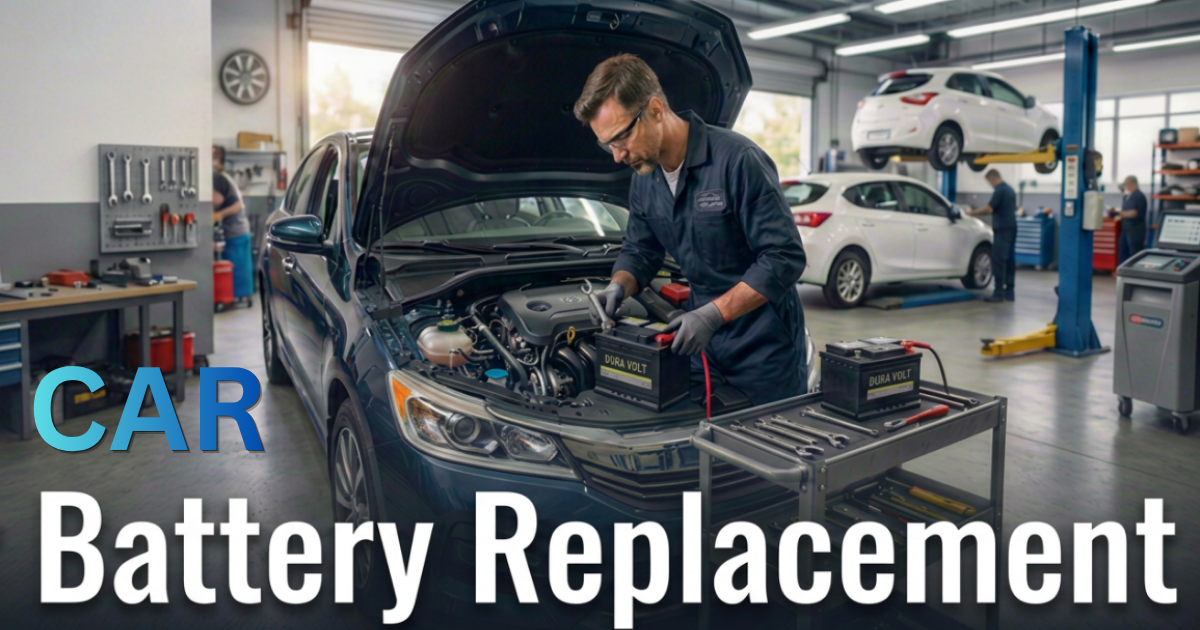
Before replacing a car battery, switch off the engine, remove the key, and wear safety gloves. Locate the battery and carefully disconnect the negative terminal first, followed by the positive terminal to prevent electrical short circuits. These steps are mandatory for Car Battery Replacement.
Remove the Old Battery and Clean the Tray
Carefully lift out the old battery and remove any securing clamps or brackets. Clean the battery tray using a wire brush and a baking soda solution to eliminate corrosion and acid residue before installing the new battery.
Install and Test the New Battery
Place the new battery into the tray, secure it properly, and reconnect the positive terminal first, followed by the negative terminal. Tighten all connections, perform a stability check, and ensure the vehicle starts correctly with all electrical systems functioning normally.
Car Battery Replacement near Me
Find Trusted Battery Replacement Services
Searching for car battery replacement services nearby helps you find certified repair shops with experienced technicians. These service centers offer quick battery diagnostics, professional installation, and reliable replacement options at competitive prices.
Professional Testing and Installation
Approved auto repair facilities perform detailed battery inspections, including cable connections, battery health checks, and compatibility verification. Their trained technicians ensure the correct battery type is installed for optimal vehicle performance and reliability after Car Battery Replacement.
Convenient Mobile Battery Support
Many providers offer mobile battery replacement services that can test and replace your battery at home or work. Regular battery testing during maintenance visits and periodic inspections help prevent unexpected breakdowns and extend battery life.
Car Battery Replacement at Home
Prepare for Safe Battery Replacement
Replacing a car battery at home is a simple DIY task when you have the right tools and follow proper safety procedures. Before starting, gather safety gloves, goggles, a socket wrench, cleaning supplies, and your replacement battery to ensure a smooth installation process.
Removing and Cleaning the Old Battery
Always switch off the engine and disconnect the negative terminal before removing the positive terminal to avoid electrical shorts. Once the old battery is removed, clean the battery tray thoroughly and inspect it for corrosion, rust, or any signs of damage before installing the new unit.
Installing the New Battery Correctly
Place the new battery securely in the tray, apply anti-corrosion protection, and reconnect the positive terminal first, followed by the negative terminal. After installation, check that all connections are tight, perform a quick stability test, and recycle the old battery responsibly at an approved collection center.
Cost of Replacement Electric Car Batteries
Factors Affecting Electric Car Battery Replacement Cost
The cost of Car Battery Replacement depends on several factors, including battery type, vehicle model, battery capacity (Ah), and cold cranking amps (CCA). Advanced lithium-ion batteries generally cost more than traditional lead-acid or AGM batteries due to their higher performance and longer lifespan.
Choosing the Right Battery Technology
Modern vehicles often use AGM, enhanced flooded, or lithium-ion batteries to support growing electrical demands and advanced vehicle systems. Selecting the correct battery type according to manufacturer recommendations helps maximize performance, improve durability, and reduce long-term replacement expenses.
Warranty, Lifespan & Smart Buying Tips
Environmental conditions such as extreme temperatures and humidity can accelerate battery wear, making proper battery selection even more important. Purchasing from a trusted seller with fresh stock and a full-replacement warranty of three years or more can provide better value and protection against premature battery failure.
Conclusion
Car battery replacement is an essential part of vehicle maintenance that ensures reliable starting performance and smooth operation of your car’s electrical systems. Choosing the correct battery type, monitoring warning signs of failure, and following proper installation procedures can help maximize battery life and prevent unexpected breakdowns.
FAQs
Car Battery Replacement
How do I know if my car battery needs replacement?
A Car Battery Replacement require if you have see these common signs include dim headlights, slow engine cranking, dashboard warning lights, clicking sounds when starting, and a swollen or damaged battery case. If you notice these symptoms, have your battery tested as soon as possible.
How long does a car battery typically last?
Most car batteries last between three and five years, depending on driving habits, climate conditions, maintenance, and charging system health. Extreme temperatures and frequent short trips can shorten battery life.
Can I replace a car battery at home?
Yes, replacing a car battery at home is possible with basic tools and proper safety precautions. Always disconnect the negative terminal first, install the new battery correctly, and ensure all connections are secure before starting the vehicle.
What factors should I consider when buying a replacement battery?
You should consider battery type, group size, terminal configuration, Cold Cranking Amps (CCA), amp-hour (Ah) rating, warranty coverage, and compatibility with your vehicle manufacturer’s specifications.
How much does electric car battery replacement cost?
Electric car battery replacement costs vary depending on battery technology, vehicle model, battery capacity, and manufacturer requirements. Lithium-ion batteries generally cost more than conventional lead-acid or AGM batteries due to their advanced design and longer lifespan.