

I’ve spent enough time around workshops to know most drivers ignore their tyres until something feels wrong. That’s usually the moment wheel balancing and alignment cost becomes an urgent question rather than a planning one.
Potholes, speed breakers, and rough roads wear down your car faster than everyday driving ever could. This is exactly why understanding wheel balancing and alignment cost matters before problems appear, not after.
A 4-wheel alignment runs ₹800–₹1,200 at local garages, climbing to ₹1,000–₹1,500 at branded tyre chains, and reaching ₹1,200–₹3,500 at authorized dealerships. Add wheel balancing on all four wheels and you’re paying ₹600–₹1,200 more.
A bundle brings both together for ₹1,600–₹1,800, a saving of ₹500–₹700 compared to two separate visits. This is where knowing your wheel balancing and alignment cost in advance genuinely pays off.
SUVs cost ₹1,200–₹2,000, while luxury cars like BMW, Mercedes, and Audi climb to ₹1,500–₹3,500. The whole job, done properly, takes 75–90 minutes and should happen every 10,000 km, not the outdated 15,000 km recommendation.
Nobody tells you that the ₹500 local garage and the ₹1,500 branded chain aren’t selling the same service. I’ve seen the cheaper route cost a customer ₹12,000 later in tyre replacement.
Across India, total wheel balancing and alignment cost sits between Rs 500 and Rs 1,500 for hatchbacks and sedans at a multi-brand garage. Premium SUVs with adjustable rear suspension land at Rs 1,200-2,500.
What Is Wheel Alignment and Why Does It Matter?
Alignment means setting the suspension angles so all four wheels sit exactly where the manufacturer specifications intended. This lets the car track straight without fighting your steering inputs. The angles that matter are camber, caster, and toe, and every one of them drifts naturally over thousands of kilometers.
A hard pothole hit speeds up that drift dramatically. Once the angles slip, your tyres scrub the road at a slight angle. This is what pulls the car, makes steering heavy, and drags down fuel efficiency over time.
Signs Your Car Needs Wheel Alignment
I always tell customers to trust their hands on the wheel before trusting a service reminder. A vehicle pulling to one side on a flat road is an early, honest warning sign.
Watch for steering wheel off-centre positioning, uneven or feathered tyre wear, vibration around 70-90 kmph, or squealing tyres on low speed turns. A recent pothole hit or kerb strike counts as a hard impact worth checking immediately.
Even a camber shift of 0.2–0.4° shows up as measurable wear within 3,000 km. New tyres fitted more than 1,000 km ago without a check is asking for trouble.
What Is Wheel Balancing?
Balancing solves a different problem entirely: it corrects the weight distribution across the tyre and wheel assembly. This stops vibrations at higher speeds before they start. Left unbalanced, a wheel will accelerate tyre wear on its own. Technicians use specialised equipment to find heavy spots and attach small balancing weights to the wheel rim.
Common Symptoms of Unbalanced Wheels
The clearest giveaway is steering wheel vibration, often paired with general vehicle vibration at highway speeds. Some drivers also describe noisy driving or simply reduced ride comfort.
Fixing it restores driving stability and takes real pressure off your suspension components. Left unchecked, it accelerates the exact same wear alignment problems cause.
Alignment or Balancing? Here’s What You Need to Understand First
These two get mixed up constantly, and I’ve watched shops upsell both when a customer only needed one. Alignment fixes the angles at which wheels contact the road, correcting camber, caster, and toe.
Balancing fixes the weight distribution of the tyre-wheel assembly so it doesn’t wobble as it spins. As a simple rule, a car pulling left or right means alignment, while vibration at highway speed means balancing.
In cost terms, alignment sits around Rs 500-1,500 per car while balancing runs Rs 300-600 per wheel. Understanding both separately makes your total wheel balancing and alignment cost far easier to budget for.
When Should You Get These Services?
I recommend a check every 5,000–10,000 km, right after a large pothole or curb strike. Following your manufacturer’s maintenance schedule is always the safest baseline.
Regular drivers on broken city roads or monsoon-ravaged highways should shorten the interval to 7,000-8,000 km. Bangalore’s craters run 10–15 cm deep, and hitting one at 40 km/h generates real impact force. Monsoon erosion damages road edges every year, so October is genuinely a smart month to check. EV owners should plan for 8,000 km intervals given their heavier setups.
How the Service Is Performed
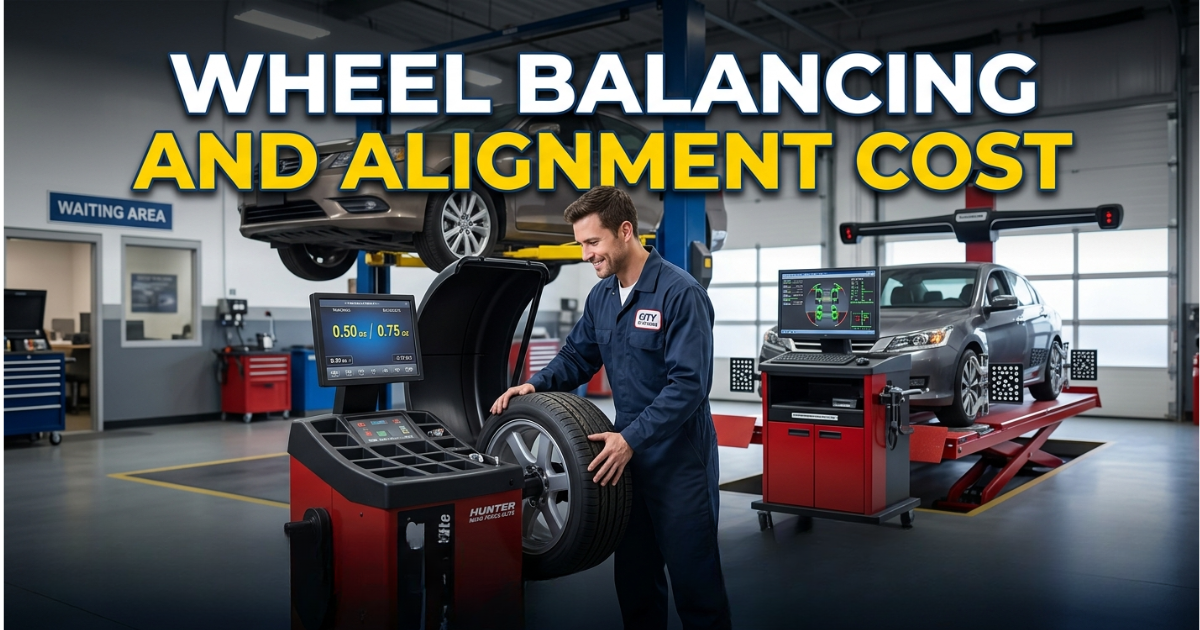
A proper job starts with technicians inspecting tyres for wear and damage, then measuring current wheel alignment using computerized equipment. Balancing follows on a separate computerized balancing machine.
At our shop, pre-alignment inspection takes 5–10 minutes, followed by target mounting, initial measurement, and adjustment. The whole alignment process runs 45–60 minutes. Add balancing to the same visit and total time runs 75–90 minutes. This full procedure is what genuinely fair wheel balancing and alignment cost should include.
Why Professional Service Matters
Professional technicians rely on advanced computerized equipment to guarantee accurate alignment. Proper calibration keeps your car within manufacturer specifications and cuts the risk of premature tyre replacement.
Good service centers hand you digital reports showing exact alignment values before and after adjustment. I’d never trust a shop that can’t produce one.
Tips to Extend Tyre Life
Maintaining recommended tyre pressure matters more than most owners realize. Pairing it with regular tyre rotation keeps wear even across all four corners. Avoid aggressive braking and sharp cornering, and always check alignment after driving over large potholes. These habits genuinely lift tyre performance and cut maintenance costs.
The 2026 Price Breakdown by Workshop Type
At a local neighborhood garage you’ll pay ₹500–₹800 for two wheels or ₹800–₹1,200 for four, usually on manual racks or basic laser rigs. A branded tyre chain charges more but delivers 3D computerized cameras accurate to ±0.01°.
An authorized dealership runs ₹1,200–₹2,500 using OEM-specified systems, while a luxury dealership charges ₹2,000–₹3,500 for the same precision. Understanding this tier system is central to managing your wheel balancing and alignment cost wisely.
App-based and doorstep options quote ₹399–₹1,499, but route you to a partner workshop with cashless billing on top. Always compare the final number against a walk-in quote.
Bundled Packages — Where the Real Savings Are
An Alignment + Balancing + Nitrogen package runs ₹1,100–₹1,600. A Complete Wheel Care Package at ₹1,500–₹2,500 adds tyre rotation, TPMS check, and visual inspection.
Buying separately costs ₹2,300 in total, yet the typical bundle price sits at just ₹1,600–₹1,800. This is one of the easiest ways to lower your overall wheel balancing and alignment cost.
What “3D Computerized” Actually Means
Manual racks read angles to ±0.5°, while advanced 3D camera systems measure to ±0.01° in real time. That precision isn’t cosmetic — it directly protects your tyre investment. A 0.3° toe misalignment can cut tyre life from 45,000 km down to 15,000 km. The extra amount you pay for proper 3D work pays for itself many times over.
Neighborhood-by-Neighborhood Price Guide
Location genuinely moves the price by ₹200–₹400 for identical work, because workshop rent varies sharply between areas. Peripheral zones charge less, while central and upmarket zones carry a 15–20% premium.
Nationally, metros cost 15-25% more than Tier 2 cities for the same job. This location factor is one of the most overlooked parts of wheel balancing and alignment cost planning.
Price by Vehicle Type
Hatchbacks run ₹500–₹800 to ₹1,000–₹1,500 depending on shop type, while sedans climb to ₹700–₹1,100 through ₹1,200–₹1,800. Compact and full-size SUVs cost noticeably more due to suspension complexity.
Electric vehicles need checks every 8,000 km because heavy battery packs and instant torque stress front suspension geometry harder than petrol cars. Luxury sedans and SUVs need OEM-specific settings, so always use a specialist for European marques.
A New Risk in 2026: Misalignment After ADAS Recalibration
Cars fitted with Advanced Driver Assistance Systems rely on front-facing cameras and radar sensors calibrated to exact wheel geometry. Misalignment tilts the camera’s field of view and triggers false alerts.
We’ve traced several ADAS complaints back to bad alignment rather than sensor faults. If you’re seeing false lane departure warnings, check alignment before booking a diagnostic scan.
5 Proven Ways to Save Money
Bundle alignment with balancing and tyre rotation together to save ₹500–₹700 over separate visits. Go mid-city instead of city-centre, since identical equipment costs 15–20% more centrally due to rent alone.
Use app promotions for genuine first-time discounts, but always confirm with a walk-in quote first. Booking weekday mornings also avoids informal weekend surcharges many shops quietly apply.
DIY Wheel Alignment Check
You can’t fix alignment at home, but you can confirm you need it. On a flat, straight, empty road at 40-50 kmph, if the car drifts within 5 seconds, alignment is off. Check whether your steering-wheel logo sits perfectly level, and inspect front tyres for uneven inner or outer edge wear. Fail any of these tests and don’t wait past 5,000 km.
Common Alignment Mistakes Indian Car Owners Make
The biggest mistake is skipping alignment after fitting new tyres, since a fresh tyre on a bad setup loses half its life within 10,000 km. Some shops also bill balancing as alignment, which are genuinely different services.
Never attempt DIY toe adjustment yourself — even a 2mm error in tie-rod length is enough to ruin tyre life. Always ask for a printed before/after report as proof of work done.
Final Thoughts
Wheel alignment and wheel balancing rank among the most important maintenance services any car owner can invest in. Together they protect safety, extend tyre life, and deliver a genuinely comfortable driving experience.
Knowing your realistic wheel balancing and alignment cost in advance means you never overpay or underpay for the wrong reason. Insist on a computerized before/after report every single time, whether from a local garage or a trusted network.
FAQs
How much does a 4-wheel alignment cost in India in 2026?
A computerized 4-wheel alignment costs Rs 500-900 for hatchbacks, climbing to Rs 900-1,500 for SUVs at multi-brand workshops. This forms the core of your total wheel balancing and alignment cost in most cities.
Our steering wheel is off-center when driving straight?
Stick to every 10,000 km or 6 months, whichever comes first. Move it up sooner after hitting a pothole, replacing suspension parts, or noticing your car pulling to one side.
Is wheel alignment the same as wheel balancing?
Not quite — they fix different problems. Alignment adjusts the angles of your suspension components, which resolves issues like the car drifting to one side. Balancing evens out uneven weight distribution in the wheel/tire assembly, which is what eliminates shaking or vibration at higher speeds.
Can I drive with bad wheel alignment?
Yes, but it costs you — you’ll wear out tyres 30-50% faster and lose 3-7% fuel economy. A small alignment job skipped today can turn into Rs 15,000-25,000 in premature replacement later.
Do EVs go out of alignment faster than regular cars?
Yes — EVs carry heavier battery packs and deliver instant torque that accelerates suspension wear. Many EV owners need checks every 7,000-8,000 km, which slightly raises their yearly wheel balancing and alignment cost.