

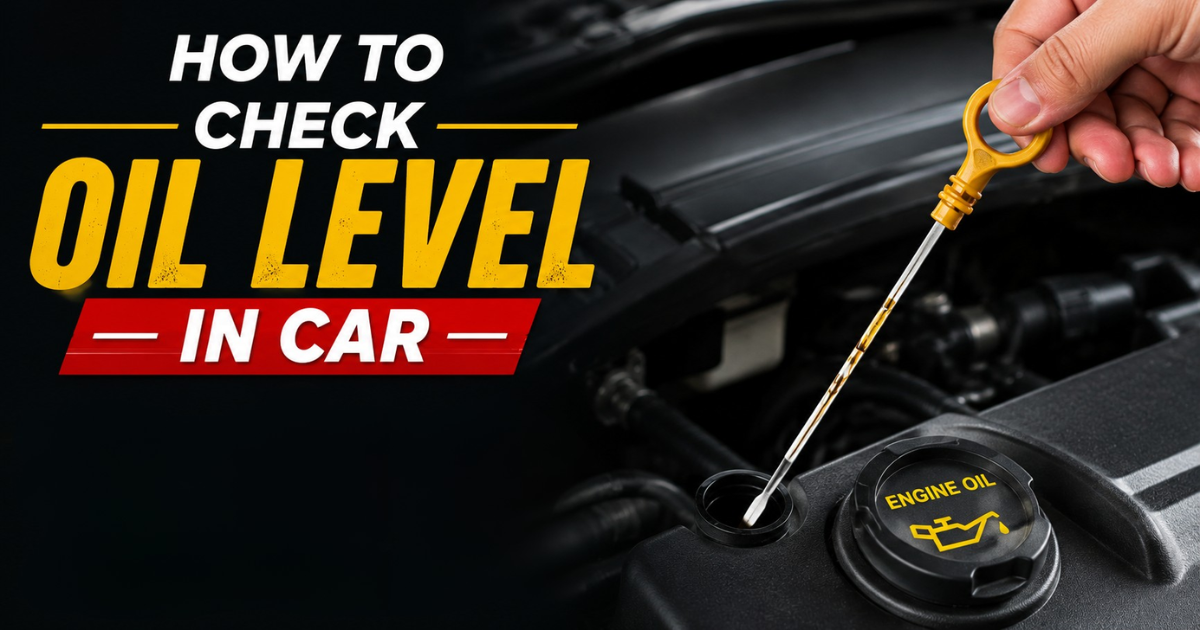
This guide breaks down how to check oil level in car into four steps that make the process simple, even if you’ve never opened your hood before. Ignoring this small habit can lead to low oil, dirty oil, or oil consumption that slowly drags down engine performance.
In the worst case, neglecting your oil leads to catastrophic engine failure that forces you to buy a new engine. I always tell friends with older cars, especially anything past 100,000 miles, to watch for engine oil signs more closely.
Step 1: Park on Level Ground
Before you even reach for the dipstick, find a flat spot and make sure your car sits on level ground. Parking on a slope almost always gives a false reading, which defeats the whole purpose of the check.
Shift into park, pull the parking brake, and if you drive a stick-shift, leave it in first gear. Keep the engine off so you’re not dealing with hot oil or risking burns during this first stage of how to check oil level in car.
Give the car about 1-2 minutes so oil that’s been circulated through the engine drains back into the pan and sump. While you wait, glance at your dashboard, since a warning light already glowing can save you a step later.
Understanding this first stage properly is the real foundation of how to check oil level in car the right way. Skip this step, and every reading after it becomes unreliable.
Step 2: Locate, Pull & Clean the Dipstick
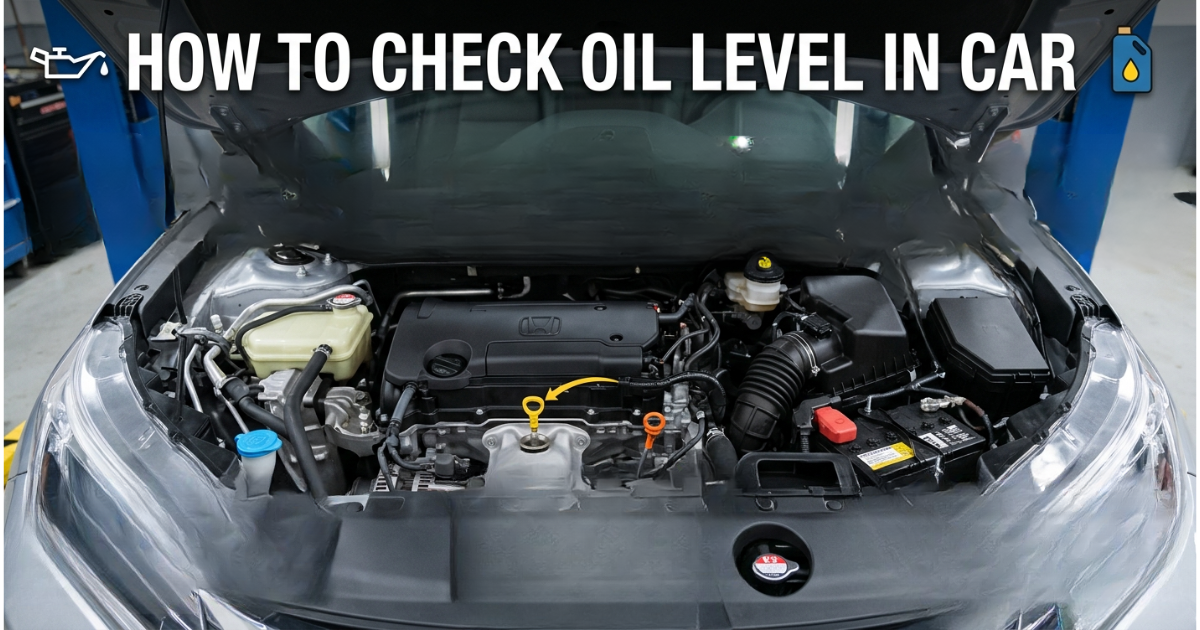
Somewhere in the engine bay, you’ll spot the dipstick, usually recognizable by its bright yellow or orange handle. It sits inside a narrow tube that runs down to the crankcase, where the engine oil actually collects.
Pull it out slowly, then wipe it down completely using a lint-free cloth or paper towel. This wipe-and-reinsert method clears away old residue, which matters a lot when you’re learning how to check oil level in car correctly.
Once the tip is clean, slide the dipstick back into its compartment and push down until it’s fully seated. Before you do, look for sludge or dark brown streaks, which usually mean an oil change is overdue.
I’ve picked up dozens of dipsticks over the years, and the ones with faint markings are always the trickiest. A clean wipe matters more than people think when practicing how to check oil level in car on any vehicle.
Step 3: Read the Dipstick Level
Pull the dipstick back out and hold it horizontal, then look closely at the two marks stamped near the tip. These represent the minimum and maximum levels, and the oil film should sit somewhere between them.
Some dipsticks label this differently, showing low and high, L and H, or simply MIN and MAX. Either way, the core idea behind how to check oil level in car stays exactly the same.
If the reading falls at or below the low mark, you need to add oil right away. If it sits above the recommended limit, drain a little out before driving the car again.
This manual check works even on cars with electronic sensors, which is why I never trust a dashboard light alone. Mastering how to check oil level in car through the dipstick gives you a reliable backup every time.
Step 4: Top Up or Add Oil as Needed
If your reading came back low, check your owner’s manual for the right oil grade before adding anything. Use a clean funnel to pour in small amounts, working in half-quart increments to avoid overfilling.
After each pour, let the oil settle for a minute, then check again against the minimum mark. Watch the oil’s condition too, since dark, gritty, or burnt-smelling oil usually calls for full oil and filter change.
This final part of how to check oil level in car is where most people either overfill or under fill without realizing it. Go slow, recheck often, and you’ll avoid both problems easily.
I’ve learned the hard way that overfilling is just as dangerous as running low. An over-filled pan lets the crankshaft strike and slosh the oil, causing cavitation and air bubbles inside the engine.
How Often Should You Check Oil
I check my own car’s oil every week, especially during hot summers or in dusty driving conditions. A good weekly habit builds real consistency into your car maintenance routine over time.
As a general rule, aim to check every 3-4 fill-ups or roughly 1000 miles. Knowing how to check oil level in car on this kind of schedule keeps surprises off your dashboard entirely.
Before any long drives or road trips, always check again, since nobody wants to get stranded with low oil pressure. If you’re towing or hauling heavy loads, the extra heat and friction wear oil down faster than usual.
Extreme temperatures, whether blazing heat or freezing cold, put more strain on the engine. This is exactly why how to check oil level in car should become a habit, not an afterthought.
Extra Things to Know
Good oil lubrication does more than coat moving parts; it fights friction, carries away heat, and stops grinding. Too much oil causes foaming and aeration, which quietly drops oil pressure and can trigger the warning light.
Picking the right oil isn’t optional either, since modern engines call for specific viscosity oils like 5W-30 or 10W-40. Using the wrong oil type leads to inaccurate readings that look fine on the surface but fail under real load.
I always keep a small bottle of trusted oil in my boot for long highway stretches. This one habit has saved me more than once when I needed to practice how to check oil level in car mid-trip.
Conventional oil suits older, simpler engines, while synthetic oil offers better protection through refined molecular sizes. If your car has crossed 75,000 miles, high mileage oil can genuinely stretch your engine’s life further.
Reading the oil’s color tells its own story, from golden and healthy to dark, gritty, and overdue. Milky or foamy oil often points to coolant mixing in, which means it’s time to see a mechanic, not top up again.
Conclusion
Knowing how to check oil level in car is one of the simplest habits that protects your engine for the long run. Stick to these four steps, park level, check the dipstick, read the marks, and top up carefully, and your car stays reliable through every season.
Anyone can learn how to check oil level in car in under ten minutes with a little practice. It costs nothing but time, yet it saves you from repairs that can cost thousands down the road.
FAQs
How frequently should engine oil be checked?
Check it once a week for the first month to understand your car’s oil consumption pattern, then move to once a month if the level stays steady. Cars with higher mileage or towing duty need weekly checks.
Can I check engine oil level while the engine is still hot?
It’s better to wait 5-10 minutes after driving so the oil settles back into the pan. Checking hot oil right away can also risk minor burns and gives a less accurate reading.
What does it mean if the oil looks milky or foamy?
Milky or foamy oil usually signals coolant or water has mixed into the engine oil, often from a head gasket leak. Stop driving and get the car checked by a mechanic immediately.
How much oil should I add if the level is low?
Add oil in small amounts, around 200-300 ml or half a quart at a time, then recheck the dipstick before adding more. This prevents overfilling, which can cause pressure problems inside the engine.
If my car already has an automatic oil-check feature, do I still need to know how to check the level manually?
Yes, self-check sensors can fail or give delayed warnings, so a manual dipstick check remains the most reliable backup. Knowing how to check oil level in car by hand gives you control even if the electronics act up.