

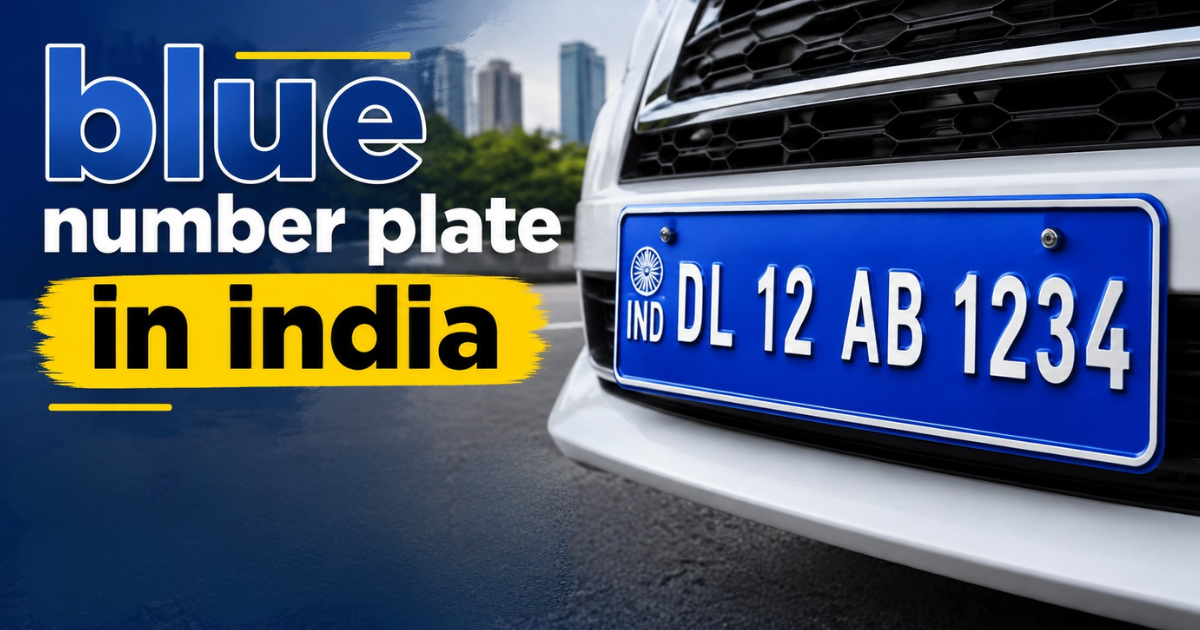
Years of driving on Indian roads taught me that a Blue Number Plate in India never belongs to an ordinary owner. That single fact says everything about the diplomatic status attached to it.
Every time I explain this to friends, I start with the structure: white letters on a blue base. This is unlike the yellow or white plates fixed to most private cars and commercial vehicles around us. A blue car number plate signals something bigger than vehicle identity; it points straight to an embassy or a consulate.
The Ministry of External Affairs manages this system, and regular citizens simply cannot walk into an RTO and request one. I have met first-time car buyers and transport professionals who confuse this plate with something flashy or premium. The real story sits in codes like CD, CC, and UN, each tied to a different category of official.
Temporary registrations, government-owned vehicles, and diplomatic cars each follow their own formats, colors, and designs. Knowing the vehicle type and purpose behind each one helps drivers avoid penalties and make informed decisions. This guide breaks down this topic in plain, everyday language from start to finish. By the end, you will understand exactly what it means, why it exists, and how it fits into the wider road system.
What Is a Blue Number Plate?
A genuine blue registration plate always carries a blue background paired with white lettering. This combination alone separates the Blue Number Plate in India from every other category on the road.
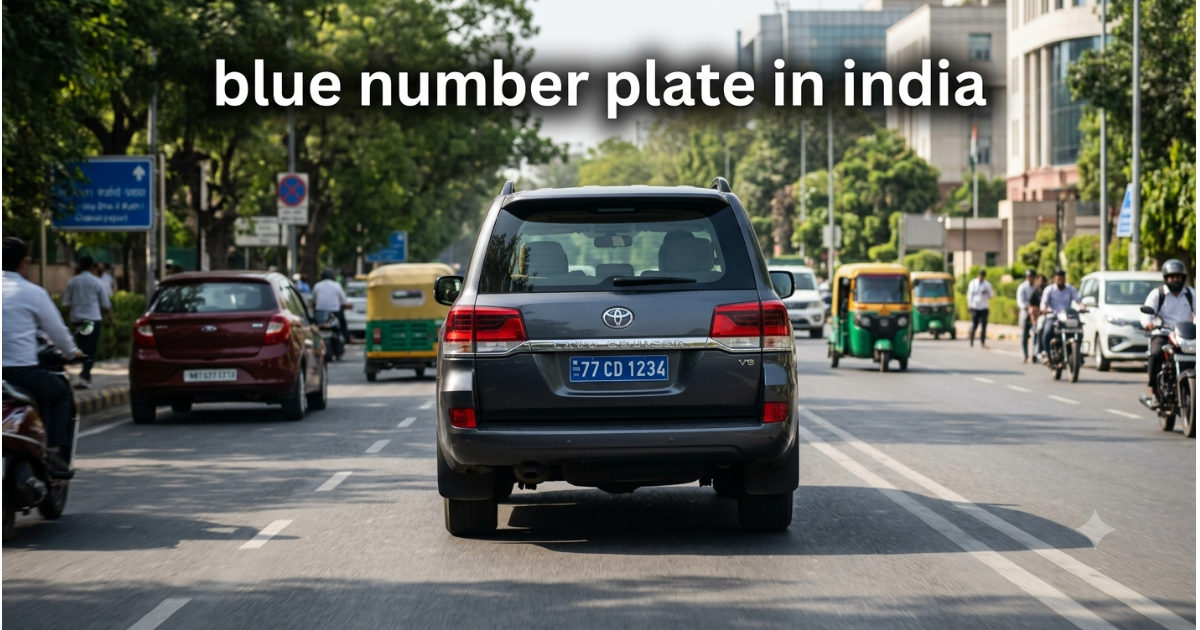
This does not follow the usual state RTO series pattern you see on regular cars. Instead, it opens with a country or organization code, moves into a status code, and closes with a serial number.
CD stands for Corps Diplomatic, used for embassy vehicles, while CC stands for Corps Consular and covers consulates. UN belongs to the United Nations and its allied bodies, coordinated through the Ministry of External Affairs.
There genuinely is no public application process for this category of plate. That is exactly why so many people confuse it with red number plates or assume there is a shortcut available.
Only authorized diplomatic officials and international officials attached to recognized missions qualify for this plate. A typical example might read something close to CD 12 AB 3456 once you know the pattern.
Who Can Get A Blue Number Plate
Eligibility here is narrow by design, and that is intentional on the part of the authorities. Only accredited foreign missions, consular posts, and specified international organizations qualify for this category of plate.
Being a business owner with money to spare will not open this door, and neither will VIP status. Paying a premium will not change that outcome either, since the rule applies equally to everyone outside the mission. If your real goal is easy movement between states, the BH series solves that problem far better.
It stays firmly white for private use or yellow for commercial use, with no diplomatic status attached at all. The breakdown stays simple once you see it laid out clearly in one place. CD goes to embassy vehicles, CC goes to consulate officials, and UN goes to the United Nations and related bodies.
Format At A Glance, The Color Map, And Different Types Of Number Plates In India
Once you learn the pattern, reading a Blue Number Plate in India gets surprisingly easy over time. A typical example looks like 77 CD 1234 or 23 UN 5, quite different from a normal MH 12 AB 1234 format. Yellow plates with black letters mark commercial and transport vehicles like taxis, goods carriers, and school buses.
Black plates with yellow letters belong to self-drive rental fleets, still counted as a commercial registration. Green plates cover electric vehicles, using white letters for private EVs and yellow letters for commercial EVs. Red temporary plates apply only until permanent registration arrives, and overstaying that window invites a fine.
Blue stays reserved strictly for diplomatic, consular, and UN vehicles, routed through the MEA Protocol Division. This is exactly why this plate category never follows the everyday RTO registration flow.
Standard private plates show black letters on white for cars and motorcycles, built for easy recognition. Commercial plates carry black letters on yellow for trucks and buses, along with extra permits and taxes.
HSRP Rules That Apply To Blue Plates
HSRP standards apply to every registered vehicle in the country, and the Blue Number Plate in India is no exception. Each genuine plate carries an aluminum base, reflective sheeting, a chromium hologram, and a laser-etched code.
HSRPs are mandatory for vehicles both old and new, relying on a unique serial number and chromium-based hologram. This combination fights duplication and forgery far more effectively than older plates ever managed to.
State transport departments have been setting firm deadlines for retrofitting these plates onto aged vehicles. Maharashtra, for instance, set 2025 as the cutoff for anything registered before April 1, 2019.
General Rules for Vehicle Number Plates In India
Every vehicle registered through the RTO must follow the Motor Vehicles Act, 1988, without exception. The government has steadily tightened rules since 1 October 2020 to close old loopholes in the system.
Temporary paper number plates are gone for new vehicles now, replaced by proper plates with red letters on yellow. Only English letters and Arabic numbers are permitted anywhere on a plate, including this diplomatic registration.
Even the size, thickness, and spacing are fixed at 65 mm, 10 mm, and 10 mm respectively for most vehicles. BS-VI four-wheelers carry a green stripe along with a fuel-type sticker showing petrol, diesel, or CNG.
Retro reflective sheeting keeps plates readable at night and under headlights for years without fading. Security features like laser branded tracking numbers and holograms help automated cameras read plates accurately.
Authorities are also cracking down hard on fancy plates with non-standard fonts or unusual coloration. Digital enforcement systems now lean heavily on QR codes linked to registration data for faster verification.
Much of this rulebook took shape around 2021, but enforcement remains ongoing into 2025 and beyond. Ignoring any of it risks real fines and can even mean losing the vehicle’s fitness certificate.
What Gets People Fined
Owners often get caught out by small things like fancy fonts or cheap vinyl print-outs made to imitate a plate. Adding logos, slogans, or non-English characters anywhere on the plate will get flagged sooner or later.
Sticking with the official font, correct color combination, and proper size genuinely keeps you out of trouble. This applies to every category, including a genuine diplomatic plate, with no exceptions for style.
Whether it is a red number plate or a special diplomat plate, each one must stay clearly recognized. Getting this wrong can mean overdue fines under standard traffic rules, so staying compliant matters everywhere.
Blue Plate vs Red, Black, Green, And Yellow
Comparing colors side by side clears up most confusion instantly for new drivers and curious readers alike. A red number plate marks temporary registration before the permanent number arrives, and this window is time-bound.
A black number plate belongs to self-drive rental cars, showing yellow letters on a black base. A green number plate covers electric vehicles, using white letters for private EVs and yellow for commercial EVs.
A yellow number plate applies broadly to commercial and transport vehicles carrying fare, goods, or passengers. And finally, this blue plate stands apart entirely, reserved for diplomatic and UN use only.
Why You See “Blue Plate With Yellow Letters” And “Pink Plate” Online
Genuine blue plates in India always carry white letters, never yellow lettering on any background. So anything showing yellow letters on black almost certainly belongs to a rental car, not a diplomatic mission.
A so called pink number plate is not an official category anywhere in the country at all. If you spot one online, it is either a foreign context or a custom vanity piece that would never pass enforcement here.
Quick Pointers
A Blue Number Plate in India always means diplomatic, consular, or UN use, and nothing else at all. It is never road-legal for anyone outside that specific circle, no matter how much they offer to pay.
The BH series is not blue at all; it exists purely for mobility across states while staying white or yellow. HSRP rules apply to every single vehicle regardless of category, covering font, size, sticker, and mounting.
Benefits Of Blue Number Plates In India
Real diplomatic privileges come attached to a Blue Number Plate in India under international convention. These can include immunity from certain local laws, fines, and even tolls in specific situations.
Foreign diplomats and international officials benefit from smooth movement through relaxed traffic rules at checkpoints. Extra security protection from local police and traffic authorities follows naturally for these vehicles.
The plate itself acts as clear communication of status, showing the exact official rank of the holder. This helps authorities respond correctly and quickly whenever a diplomatic vehicle needs assistance on the road.
What Is A Vehicle Number Plate?
At its core, a vehicle number plate is simply a unique identification plate issued by the RTO. Every motor vehicle in the country must carry this plate along with a proper registration certificate.
It typically contains the state and RTO code, the vehicle category, and a distinct registration number. Carrying a valid number plate is mandatory, since it lets authorities identify vehicles and track ownership.
Components Of A Vehicle Number Plate
A vehicle number plate might look simple at first glance, but it carries structured information underneath. The state and RTO code shows the first two letters for the state, followed by a two-digit RTO number.
The unique registration number is simply a combination of letters and numbers assigned by the RTO. Newer plates increasingly include QR codes for visibility and quick verification whenever an officer scans one.
Conclusion
After years of untangling this topic for curious drivers, I keep coming back to one simple truth. A Blue Number Plate in India is a status marker, never a cosmetic option that anyone can simply request.
It marks diplomatic, consular, and UN vehicles through a distinct code structure managed by the Ministry of External Affairs. No amount of money changes that basic fact, no matter how badly someone wants the look.
As an everyday owner, your job is far simpler than chasing a blue plate you were never eligible for. Stick to the legal colour for your own category, whether that means white, yellow, black, or green.
Staying compliant this way keeps you free of unwanted fines and confusion on the road. In short, the Blue Number Plate in India exists solely for foreign diplomats, consulate members, and UN officials.
FAQs
What Does a Blue Number Plate Signify in India?
It is a special registration plate issued only to diplomatic, consular, and UN vehicles. It carries white letters on a blue background and is coordinated through the Ministry of External Affairs.
Who is eligible for a Blue Number Plate in India?
Only accredited foreign missions, consular posts, and specified international organizations qualify for this plate. Regular citizens, business owners, and VIPs cannot apply for one, regardless of status or income.
Can I apply for a Blue Number Plate in India at my local RTO?
No, there is no public application process available at any regular RTO counter in the country. The request must originate from the mission itself and go through the Ministry of External Affairs.
What do the CD, CC, and UN codes mean on a Blue Number Plate in India?
CD stands for Corps Diplomatic, used for embassy vehicles belonging to foreign diplomats. CC stands for Corps Consular for consulate officials, while UN covers United Nations personnel.
Does a Blue Number Plate in India follow the same HSRP rules as other plates?
Yes, every Blue Number Plate in India still follows standard HSRP construction and safety requirements. The only real difference from other categories lies in the plate’s color and coding pattern.