

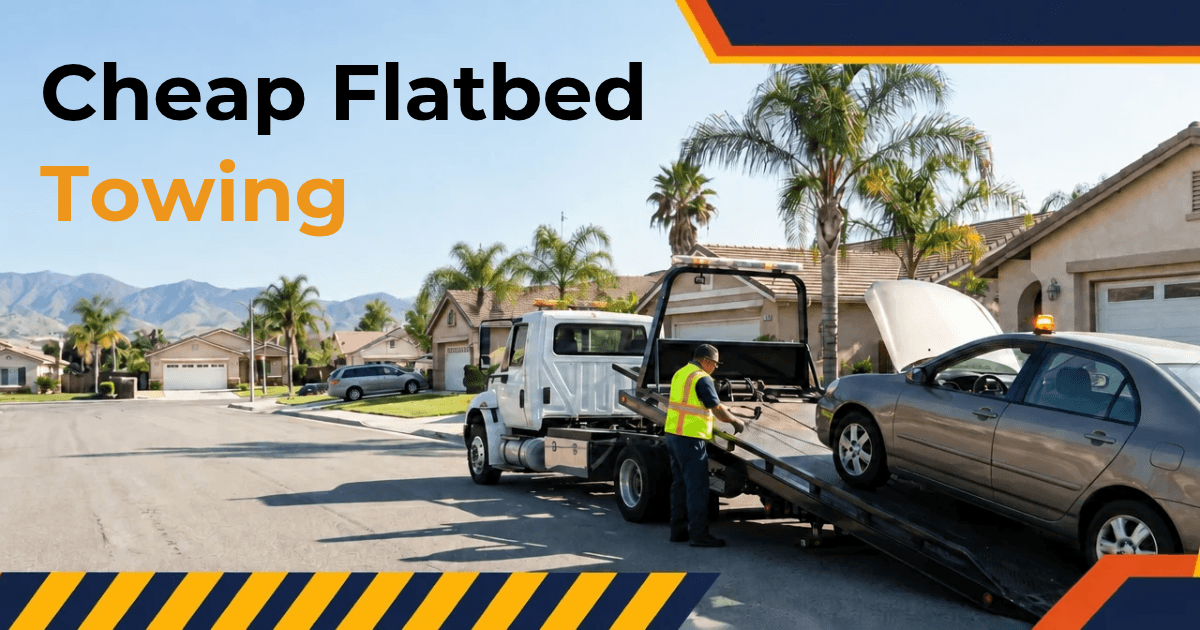
Flatbed towing is the safest way to move a car that can’t, or shouldn’t, roll on its own wheels. Prices still vary a lot from one company to the next, and drivers in Moreno Valley CA often learn that at the worst possible moment. This guide shows what you’re paying for, what to ask, and how to spot a fair quote, so you don’t end up overpaying.
What Is Flatbed Towing and How Does It Work?
Flatbed towing uses a truck with a long, flat bed that tilts down to the ground like a ramp. The operator pulls your car onto the bed with a winch, straps it down at the wheels, and levels the bed for the drive. All four wheels ride off the road, so the tires and drivetrain take no wear during the trip.
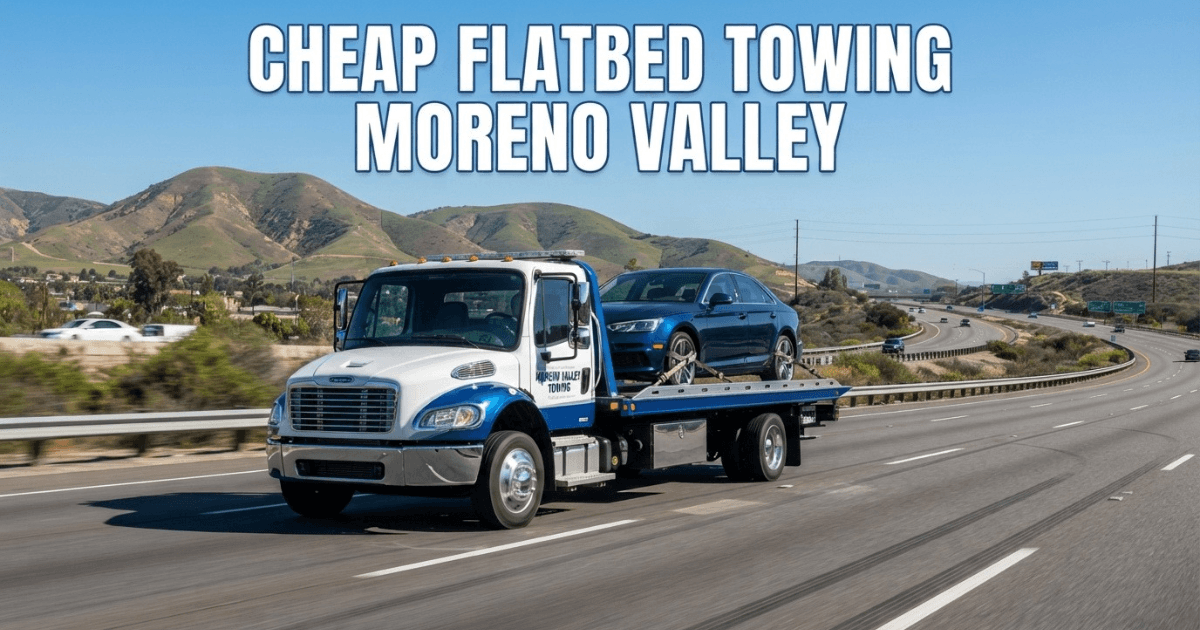
You’ll also hear this truck called a rollback tow truck, because the bed slides back and tilts. It works very differently from a wheel lift tow, where the truck lifts only the front or rear wheels and the other two roll on the pavement. Moving companies follow the same idea, offering a tow dolly that lifts two wheels or a full car carrier trailer that carries all four.
What is the difference between flatbed and wheel lift towing?
A wheel lift raises two wheels and lets the other two roll, while a flatbed carries the whole vehicle. Wheel lifts hook up faster and fit into tight parking lots. Flatbeds may cost the same or a little more, depending on the company, but they protect the transmission, bumpers, and tires much better.
For a short trip with an ordinary front-wheel-drive sedan, a wheel lift is usually fine. For a car with all-wheel drive (AWD), low ground clearance, or crash damage, a flatbed is the safer choice. Ask the dispatcher which truck they plan to send, so you don’t get a surprise at the curb.
Who Needs Flatbed Towing Instead of a Standard Tow?
You likely need a flatbed if your car has AWD or four-wheel drive, runs on electricity, sits low, or was in a crash. Flatbeds also suit motorcycles and any car that won’t roll freely. If a wheel is locked, bent, or missing, a flatbed is often the only safe way to move it.
Many owner’s manuals for AWD and 4WD vehicles warn against towing with two wheels on the ground, because it can strain the drivetrain. Check yours before you call, and repeat what it says to the dispatcher. Getting the right truck the first time saves you from a second trip and a second bill.
Is flatbed towing required for electric vehicles?
Most electric vehicle makers recommend flatbed towing or another method that keeps the drive wheels off the ground. Rolling an EV on its drive wheels can damage the motor and electrical parts. Check your owner’s manual or the maker’s roadside guide, and ask for a company with real EV towing experience.
Tesla towing, Rivian transport, and other electric vehicles often need a special transport or tow mode set before loading. Some EVs can’t shift into neutral once the 12-volt battery dies, which changes how the driver loads them. An operator who handles EVs often will know the correct tie-down points and keep the straps away from the battery pack.
Do motorcycles and luxury cars need a flatbed?
Yes, in most cases. Motorcycle towing works best on a flatbed with a wheel chock and soft straps, since a bike can’t be towed safely on one wheel. Luxury car towing and exotic car transport also call for a flatbed, because these cars often sit low and carry costly bodywork and wheels.
Ask whether the company uses soft straps, wheel nets, or extra loading ramps for low cars, since a steep bed angle can scrape a front lip. Some operators offer white-glove transport for classic car transport, which may cost more but adds extra care. For sport bikes and cruisers, ask how they secure the bike upright so it doesn’t rest on its kickstand.
How Much Does Flatbed Towing Cost in Moreno Valley?
There’s no single set price, because towing rates change by company, time of day, and distance. As a rough national guide, U-Pack estimates a local car tow at about $50 to $250, depending on where you live. Expect a hook-up fee plus a per-mile towing rate, and confirm the total before the truck leaves.
Treat every online number, including this one, as an estimate rather than a promise. The only reliable towing cost is a written or texted quote from the company that will actually do the job. Call two or three local providers, give each the same details, and compare their totals instead of their headline rates.
What fees make up a towing bill?
Most bills combine a base fee, often called the hook-up fee, with a mileage charge for each mile your car rides on the truck. Extra charges can apply for nights, holidays, winching, waiting time, or storage. Ask for each line item by name, so the final invoice matches the quote.
Common extras include an after-hours fee, a winch fee when a car sits in a ditch or soft dirt, and a charge for wheel skates if the wheels are locked. Some companies offer flat rate towing for trips inside a set area, which makes comparing quotes much simpler. Whatever the pricing setup, ask one plain question: “Is that the full price, including taxes and fees?”
How much does long-distance flatbed towing cost?
Long trips cost more than local ones, because you pay for every loaded mile and often for the driver’s empty return. For very long moves, a car-shipping carrier can beat a tow truck on price. U-Pack puts average auto transport rates at roughly $650 to $2,500, depending on the vehicle and distance.
If you’re moving out of state from Moreno Valley, compare a long-distance towing quote with a car shipping quote on an open car carrier. Carriers haul several vehicles at once, so the cost per car often drops on long routes. Enclosed shipping costs more, but it shields high-value cars from road debris and weather.
What Factors Raise or Lower Your Towing Price?
The biggest price factors are distance, time of day, the size of your vehicle, its condition, and how hard it is to reach. A simple pickup from a parking lot at noon costs less than a midnight recovery from a freeway shoulder. Knowing these factors helps you judge quickly whether a quote is fair.
Here’s how each factor tends to move the bill:
- Distance: more loaded miles mean a higher total, so a nearby shop usually costs less than one across the county.
- Time: nights, weekends, and holidays often carry a surcharge.
- Vehicle size and weight: a heavy pickup truck or large SUV may need a bigger truck than a compact car.
- Condition: a non-runner vehicle with locked wheels may need skates or a winch out, and accident recovery adds cleanup time.
- Location: a car in a steep driveway, a parking garage, or loose dirt takes more time and equipment.
Does towing cost more on the freeway?
It can. A freeway breakdown on the SR-60 freeway or I-215 involves extra safety work in fast traffic. If police or the California Highway Patrol call the tow, a rotation company usually comes instead of one you choose, and the agency’s agreement often sets the rate.
In parts of Riverside County, a Freeway Service Patrol helps stranded drivers on certain freeway stretches during commute hours at no cost to you. Check whether that service covers your location before you pay for a short move off the freeway.
How Can You Avoid Overpaying for Flatbed Towing?
Get a free quote before dispatch, compare at least two companies, check your insurance for tow coverage, and confirm how you can pay. Ask for the full total by text or email, not just over the phone. These four habits stop most hidden charges before they ever reach your invoice.
The worst time to shop for a tow is at night on a busy road with your hazard lights blinking. Save one or two trusted numbers in your phone now, while you’re calm and have time to read reviews. That way, a stranded motorist moment turns into a quick call instead of a rushed search.
What questions should you ask before booking a tow?
Ask for the total price, what it includes, the type of truck, the estimated time of arrival (ETA), and the payment options. Also ask where the car will go and whether storage fees start right away. Clear, quick answers to these questions are a strong sign of an honest company.
Use this short checklist on every call:
- “Will you send a flatbed truck?”
- “What’s the total for this many miles, with all fees?”
- “Do you charge extra for nights, weekends, or winching?”
- “How long until you arrive?”
- “Do you accept credit card payment?”
- “Can you text me the quote?”
Does your car insurance cover flatbed towing?
It might. Many auto insurance policies offer optional roadside assistance coverage, and some auto clubs, credit cards, and new-car warranties include towing up to a set distance. Limits vary widely, so check your policy or call your insurer before you pay for a tow out of pocket.
If you have coverage, call the insurer’s roadside line first, since it usually sends a contracted company at no charge up to the plan limit. Ask whether the plan covers a flatbed or only a standard tow. If you end up paying yourself, keep the receipt, because some plans pay you back later.
How do you spot a fair towing company?
Look for a company that is licensed and insured, quotes a clear price, and has steady recent reviews. Many tow operators also list a USDOT number you can look up on the FMCSA website. Walk away from any company that won’t name a price until your car is already on the truck.
Read reviews for patterns, not single complaints, and watch for repeated mentions of fast response time and honest billing. A BBB accredited listing or a long local history adds confidence, though neither one guarantees good service. Upfront pricing and transparent pricing should feel normal, not like a special favor.
What Are Your Rights When Your Car Is Towed in California?
California Vehicle Code Section 22651.07 gives owners clear rights when a company charges for towing and storage. You can ask for the Towing and Storage Fees and Access Notice and pay by cash, a valid bank credit card, or a check from your insurer. You also have the right to inspect your vehicle.
These rules matter most when your car is towed from private property or impounded, rather than towed at your own request. Section 22651.1 also requires storage facilities holding vehicles towed under Section 22651 to accept a valid bank credit card or cash, and a facility that refuses can owe the owner four times the charges. Laws change, so read the current text on the official California Legislative Information website.
What can you do if you think you were overcharged?
Start by asking for an itemized invoice and comparing every line with the quote you received. Raise the difference with the company calmly and in writing. If that fails, contact the agency that ordered the tow, file a dispute with your card issuer, or ask about small claims court.
Your notes from the original call make any dispute far easier to win. A text or email quote counts as strong proof of the price you agreed to. Photos of your car before loading also help if the company tries to add damage-related charges, since they show a clear vehicle inspection record.
Is Flatbed Towing Worth the Extra Cost?
For AWD cars, EVs, low or damaged vehicles, and motorcycles, flatbed towing is usually worth it. The price gap between a flatbed and a wheel lift is often small, while a drivetrain or bumper repair can cost far more. For a running front-wheel-drive car on a short local towing trip, a wheel lift may be enough.
Think of the flatbed as low-cost protection for expensive parts. No method can promise fully damage-free transport, but keeping all four wheels off the road removes the most common causes of tow damage. If you’re unsure, describe the car honestly and let the dispatcher suggest the right truck.
What Should You Do While Waiting for a Flatbed Tow?
Move yourself and your passengers to a safe spot away from traffic, turn on your hazard lights, and stay out of travel lanes. Give the dispatcher your exact location, including cross streets or the nearest freeway exit. Remove valuables and keep your keys and registration ready for the tow truck driver.
If you can’t get safely off a freeway, stay in the car with your seatbelt on, and call 911 if you feel in danger. Good roadside safety matters more than saving a few minutes. While you wait, take photos of your car from every side so you have a record of its condition.
What services can a tow company handle without towing?
Many problems don’t need a tow at all. A jump start, a flat tire change, fuel delivery, or a car lockout service often costs less than a tow and gets you moving faster. Describe the problem clearly, so the company sends the right help instead of a truck you don’t need.
FAQs
How fast can a flatbed tow truck reach me in Moreno Valley?
Arrival time depends on traffic, the time of day, and how close the nearest available truck is. Some local companies advertise arrival windows of under an hour, but always ask for a specific ETA when you call. If the wait sounds long, call another provider and compare.
Can I choose where my car gets towed?
For most tows you request yourself, yes. You can pick your home, a repair shop, or a dealer as the destination of your choice, but longer trips add loaded miles. Police-ordered tows are different, because the car usually goes to a storage yard the agency uses.
Is 24/7 flatbed towing more expensive?
24/7 towing is easy to find around Moreno Valley, but calls at night, on weekends, or on holidays may carry a surcharge. Ask about it before you book. If your car is parked safely at home, waiting until business hours can sometimes save you money.
Do tow companies in Moreno Valley serve nearby cities?
Many do, covering much of the Inland Empire, including Riverside, Perris, Beaumont, Hemet, and San Bernardino. Crossing city lines usually adds mileage to the bill. Confirm the service area and the full price before the company sends a truck.
What should I check before signing the tow invoice?
Compare the invoice with your quote line by line, and look for any fee you didn’t agree to. Make sure the paperwork notes your car’s condition correctly. Keep a copy of the signed invoice for your insurer or for any later dispute.