

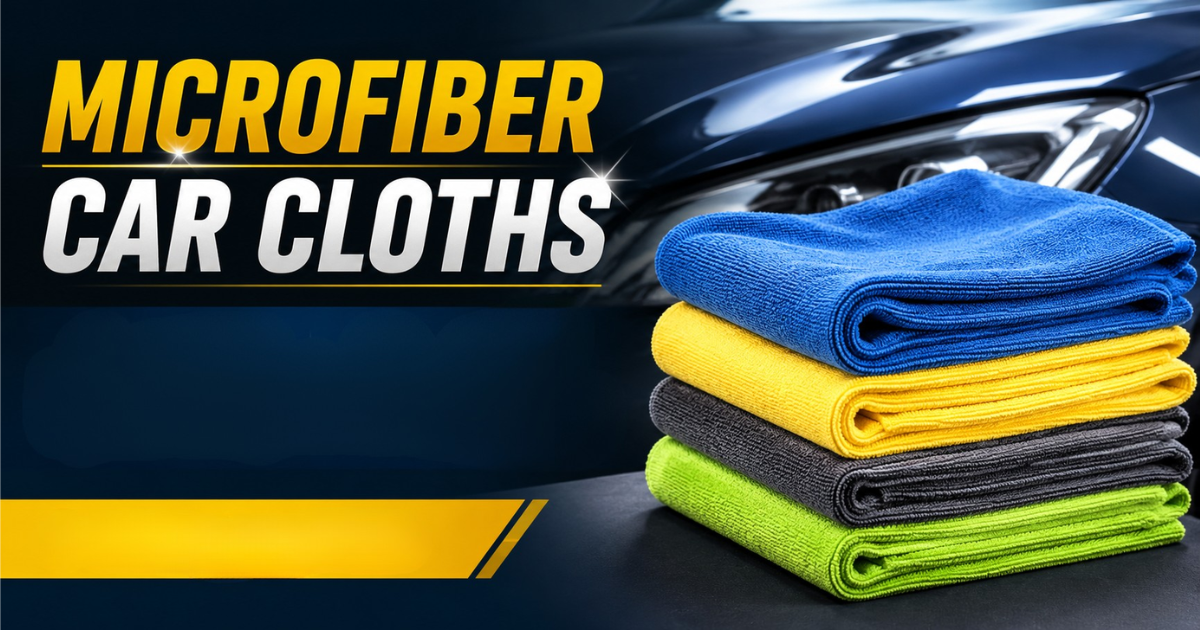
After years behind the buffer and hose, I’ve learned one simple truth: microfiber car cloths make or break a finished detail. Grab the wrong cloth and you risk fine scratches that show up the moment sunlight hits the paint.
The difference a good set of microfiber car cloths makes is easy to spot in a mirror smooth finish. It also speeds up drying, polishing, and interior wipe downs so the whole job takes less time.
Washing, drying, polishing, and interior cleaning all call for different weaves and thicknesses. Some premium brands offer well over a hundred variations, while budget friendly lines still hold up surprisingly well against everyday wear. I keep three types of microfiber car cloths in my kit at all times, and I never start a job without them.
Glass Cloths No More Streaks
Streaky glass is one of the most frustrating parts of detailing, and it usually comes down to using the wrong cloth. Standard microfiber car cloths are often too coarse for glass and shed lint that clouds the surface.
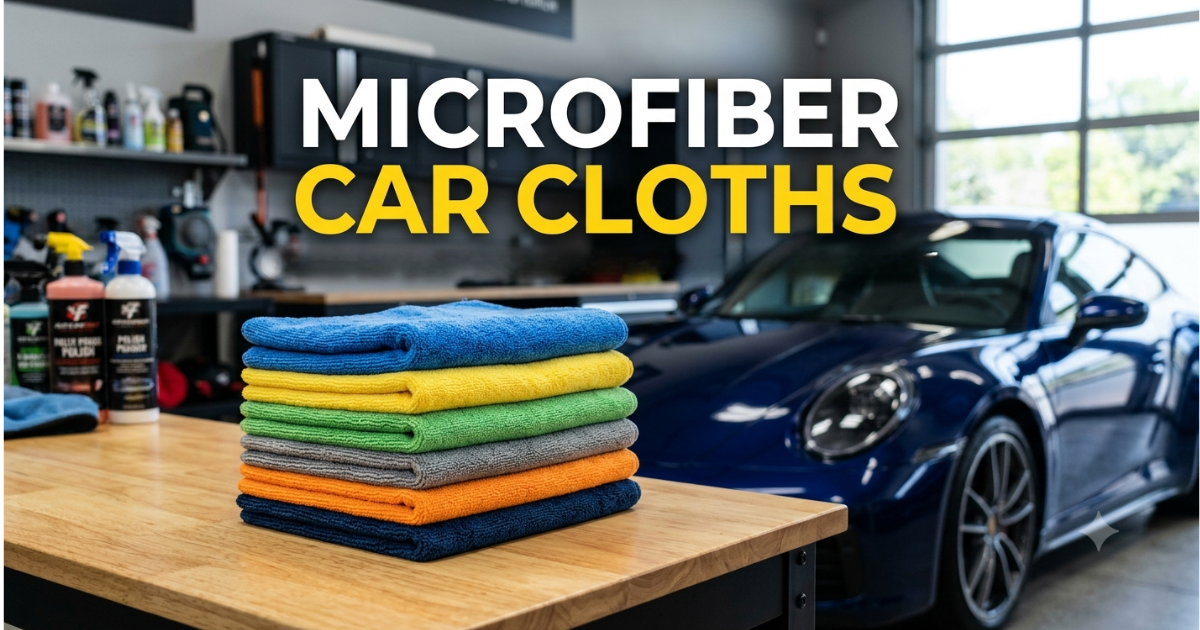
A dedicated glass cloth solves this with a short, tightly woven microfiber structure. Patterns like diamond or corduroy weaves are purpose built to glide across windows without dragging or catching.
Once I switched to microfiber car cloths designed specifically for glass, streak free windows became the norm instead of the exception. No more circling back over the same smudge three times. A good glass cloth is one of the most underrated tools in any kit, and it’s the first upgrade I recommend to anyone still using an old rag.
All Purpose Cloths for Everyday Jobs
If I could keep just one item, it would be a versatile set of microfiber car cloths. They handle dashboards, door panels, wheels, and light paint wiping all in a single session.
Soft, plush microfiber car cloths are gentle enough for delicate clear coats while still offering strong absorbency. That combination makes them ideal for removing polish residue or applying quick detailers.
Quality matters here too cheap all purpose towels tend to fall apart after a few washes. A durable set will outlast dozens of detailing sessions without losing softness.
Because one task can quickly become three, I always keep several all purpose microfiber car cloths on hand rather than relying on a single towel.
Drying Cloths That Actually Work
Drying is one of the most overlooked steps in car care, yet the wrong cloth here can undo all your washing work. Standard microfiber car cloths absorb water, but dedicated drying cloths do it far more efficiently.
Large, twisted loop drying cloths are engineered to soak up huge amounts of water fast. That means fewer passes over the paint and less risk of introducing swirl marks.
I keep both an oversized drying cloth and smaller general purpose towels in the trunk, since different jobs call for different sizes. A high capacity drying cloth also helps prevent stubborn water spots before they form. This one small habit protects the paint far better than letting a car air dry on its own.
Caring for Your Microfiber Car Cloths
Proper care keeps microfiber car cloths performing like new for years. Wash them separately using a dedicated microfiber detergent to strip out trapped wax and polish residue.
Never use fabric softener, bleach, or dryer sheets on them, these coatings clog the fibers and quietly kill absorbency. Air drying or a low heat setting is always the safer choice.
High heat can melt the delicate fibers in microfiber car cloths, shortening their usable life dramatically. A few extra minutes of care after each wash pays off across hundreds of future uses.
Budget vs Premium Microfiber Car Cloths
Premium microfiber car cloths, often made with higher polyamide content, tend to stay softer and hold up better over hundreds of wash cycles. They’re a worthwhile investment for anyone detailing professionally.
That said, budget friendly options can still deliver excellent results for everyday use. I’ve tested inexpensive multipacks that handled interior cleaning and wax removal just fine.
The real gap shows up with cheap, nonautomotive cloths sold at supermarkets. These thin, low quality alternatives shed fibers and lose absorbency quickly, unlike purpose built microfiber car cloths made for vehicle surfaces. Even an affordable set of automotive grade microfiber car cloths will outperform a generic rag every single time.
Final Thoughts
Choosing the right cloths for each stage of detailing is one of the simplest ways to improve your results. A dedicated glass cloth, a versatile all purpose cloth, and a high absorbency drying cloth cover nearly every scenario.
A handful of well chosen microfiber car cloths, cared for properly, will deliver a cleaner, shinier, and better protected finish for years to come.
FAQs
Microfiber car cloths
How many microfiber car cloths do I actually need to get started?
Three is a good starting point: one dedicated glass cloth, one all purpose cloth, and one drying cloth. From there, most detailers add extras as their routine grows.
Can I use the same cloth for glass and paintwork?
It’s best to avoid this. Glass cloths use a tighter weave suited to streak free clarity, while paint safe cloths are built to be gentler on clear coats, so mixing the two can transfer grit between surfaces.
When Is It Time to Swap Out Your Drying Cloths?
A well made drying cloth can typically handle a few hundred wash cycles before it starts losing absorbency. Once it stops soaking up water efficiently or starts feeling stiff, it’s time to retire it.
Can Microfiber Cloths Be Safely Machine Dried?
High heat can melt the synthetic fibers, so air drying is usually the safest option for keeping them soft over the long term.
Do more expensive cloths really perform better than budget options?
Premium cloths often last longer and hold their softness through more wash cycles, but budget friendly options can still deliver strong results for everyday detailing. The right choice usually comes down to how often you detail and how much longevity you need.