

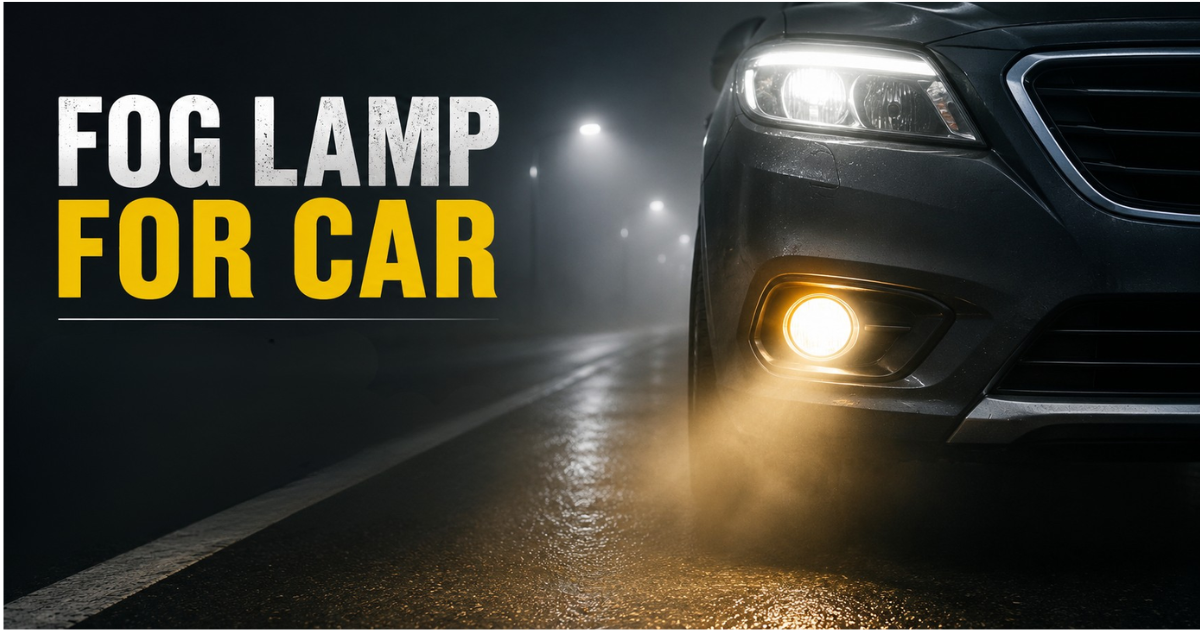
Choosing the right fog lamp for car use can make all the difference on a bad weather night and anyone who drives on Indian highways during dense fog or heavy rain knows how fast road visibility can disappear.
That is why I decided to fit an aftermarket fog light kit on my own family car after struggling through a few scary night drives. Working through different fog light kits myself taught me a lot about mounting brackets, wiring harnesses, relays, fuses, bezels, and switches, and once I understood how each part worked, the whole functionality of the system finally made sense.
Unlike spot lights, a proper low wide beam from a good fog lamp for car hugs the road instead of bouncing back as glare, which is exactly the kind of auxiliary lighting that helps drivers spot road signs, obstacles, and sharp turns on poorly lit roads long before headlights alone ever could.
Whether you own a work truck or a small city runabout, upgrading with factory fog lights or projector fog lamps brings a real appearance boost, faster reaction time, and genuine confidence on the road, especially when shifting weather conditions make low-light driving unpredictable.
Understanding the Purpose of Fog Lights
Most people assume raw brightness is what matters most, but the real secret behind a good fog lamp for car setup is the beam pattern, since that single detail decides whether drivers can actually see during bad weather.
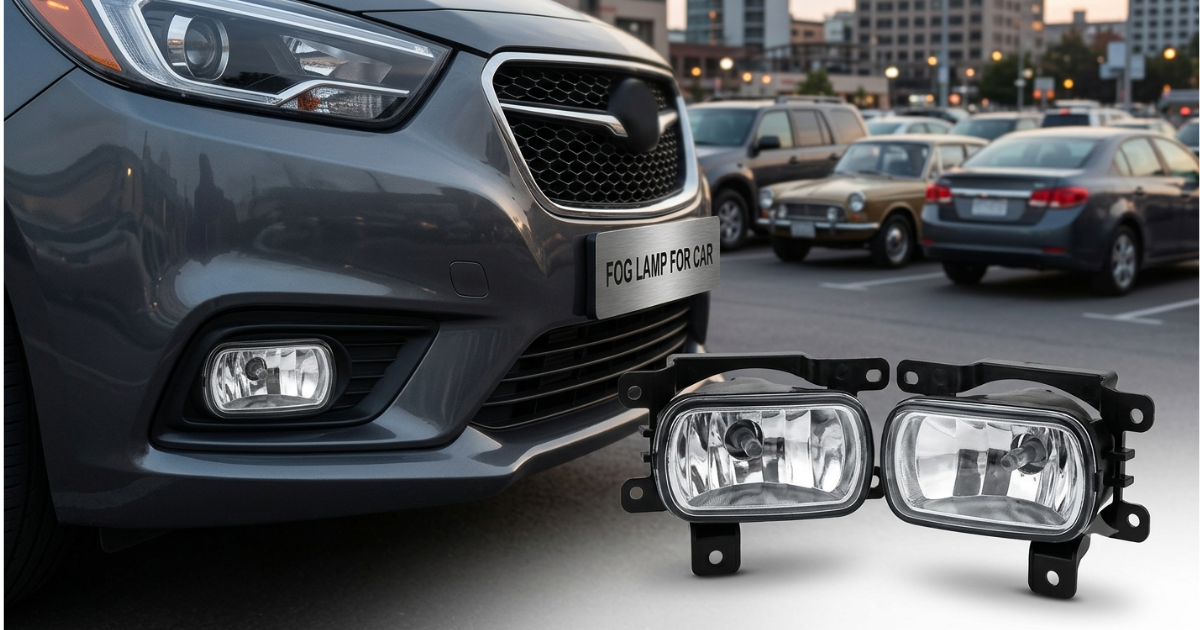
Mounted low near the front bumper, fog lights throw a flat beam across the road surface, cutting down light reflection and glare during mist, dust, thick fog, or monsoon conditions, while standard headlights send out a wide beam that does little for nearby objects close to the car.
How to Choose the Right Fog Lamp
Choosing the right fog lamp for car ownership means picking the correct fog lights for your own driving habits, since drivers who mostly stay in cities can often manage fine with basic LED fog lamps.
Anyone living in fog prone areas, near mountain roads, or dealing with regular heavy rain should look toward projector fog lamps for greater distance and extended visibility, while rural commuters, off road enthusiasts, and long-distance travelers usually need something stronger, since driving lights offer a good balance of width and reach across busy highways.
Spot lights suit those chasing far off hazards at night, but every vehicle owner should first check compatibility and fitment against their exact vehicle requirements before starting installation, since a mismatched part only causes trouble later.
Common Buying Mistakes
One of the biggest misconceptions among buyers is thinking that a brighter fog lamp for car automatically performs better, when too much brightness actually creates more glares instead of real weather performance.
What really matters is the beam shape of your fog light, not the raw output it produces, since wrongly shaped fog lights can blind other drivers on the road.
Another common mistake is using spot lights for daily driving, because a narrow beam leaves road edges and city streets poorly lit, making them a poor fit for suburban roads. Smart owners usually pair one auxiliary light with driving lights or fog lamps rather than relying on a single fix for long-distance visibility.
Types of Fog Lamps
Halogen fog lamps remain a classic budget friendly option, since their warm yellow light performs nicely during light rain or thin fog, even though they draw more power and wear out faster than newer technologies.
LED fog lamps have grown popular for good reason, offering strong energy efficiency, a longer service life, and crisp white light that boosts nighttime visibility without draining the battery. Projector fog lamps sit at the top of the range, using precision lenses to create a focused beam with superior illumination and reduced glare for oncoming traffic.
A model like the my TVS MPLFL-03, built with an HD lens, delivers real clarity and stronger driving confidence during nighttime hours or adverse weather, offering brighter illumination and a longer lifespan than older units, and compared with old halogen bulbs, a modern projector fog light lights up the road far more efficiently.
Regular vs. Projector Fog Lamps
Traditional fog lamps usually throw a wider, more scattered beam, while projector fog lamps deliver focused illumination with far better light distribution across the road. This difference really shows during heavy rainfall or thick fog.
Many owners now choose projector units for premium performance, since they offer controlled, brighter lighting on twisting mountain routes or long stretches of highway driving without ever blinding other motorists.
Maintenance Tips
Good maintenance keeps your whole lighting system working the way it should, so wipe your fog lamp lenses often and check the alignment of both lamps regularly. Inspect the wiring and seals too, since ignoring them invites moisture damage that shortens the overall lifespan of your fog lamp for car setup.
What Comes in a Fog Light Installation Kit?
A complete fog lamp for car installation kit usually bundles every part you need, including the fog lights themselves, mounting brackets, bezels, a wiring harness, relay, inline fuse, dashboard switch, connectors, and other installation hardware.
Having all these components together makes the whole installation far easier than hunting down each piece on your own. Just double-check compatibility and fitment for your exact vehicle model before starting, so nothing gets stuck halfway through.
Understanding the Wiring System
Most people find automotive wiring confusing, but the circuit behind a fog lamp for car is actually simple once you break it down. The wiring harness links both fog lights to a relay and an inline fuse, which protects the electrical system from overloads or short circuits.
One wire runs to the battery’s positive terminal, another connects to a solid ground point on the vehicle, and the dashboard switch passes through the firewall to draw ignition power. This setup keeps the lights working only when needed and prevents unwanted battery discharge overnight.
Installing the Fog Lights
Start by removing the bumper covers or blank inserts on the bumper where each of the fog lights will sit, then fix them firmly using the supplied brackets and screws.
Next, guide the wiring harness through the engine bay, keeping every wire well clear of cooling fans, drive belts, and other suspension components. Secure everything neatly with cable ties so no moving parts ever snag the wiring later on.
Test before Final Assembly
Before locking anything down, reconnect the battery and run a full test on the whole system. Turn the ignition on, flip the switch, and confirm both fog lights light up exactly as expected.
Once everything checks out, tidy the wiring with zip ties, tuck the relay somewhere safe away from heat and moisture, then refit all trim panels and covers for the final assembly.
Final Thoughts
Fitting a proper fog lamp for car kit is a satisfying DIY project that lifts both vehicle appearance and driving safety at the same time. Aftermarket fog lights genuinely improve visibility during fog, rain, or nighttime driving, while giving any car that neat factory-style upgrade look.
By routing the wiring carefully, making clean electrical connections, and testing the whole system before final assembly, you end up with professional-looking results and safer driving no matter what weather conditions come your way.
FAQs
Fog lamp for car
Do I really need a fog lamp for my car if I already have headlights?
Yes. Headlights are mounted high and aimed forward, so their beam scatters off fog particles and bounces back as glare. A fog lamp sits lower and throws a flatter beam that stays under the fog line, giving you far better road visibility in misty or rainy conditions.
Which is better for daily use, LED or halogen fog lamps?
LED fog lamps are generally the better everyday choice because they use less power, run cooler, and last much longer than halogen units. Halogen bulbs still work well in light fog and cost less upfront, but they draw more current and burn out sooner.
Can I install a fog light kit myself, or do I need a mechanic?
Most fog light kits are designed for DIY installation if you’re comfortable with basic tools and simple wiring. The process mainly involves mounting the lamps, running the wiring harness, connecting power and ground, and wiring the dashboard switch, so a mechanic isn’t strictly necessary unless you’re unsure about electrical work.
Will fog lights drain my car battery if left connected?
No, not if they’re wired correctly. A properly installed fog lamp circuit runs through an ignition-controlled switch and fuse, so the lights only draw power when the ignition is on, which prevents any unwanted battery drain overnight.
What color temperature works best for fog lights?
A warmer yellow tone around 3000K generally cuts through fog and rain better than a cooler white light near 6000K, since yellow light scatters less in moisture-heavy air. Cooler white tones look sharper on clear nights but offer less benefit in genuine fog conditions.