

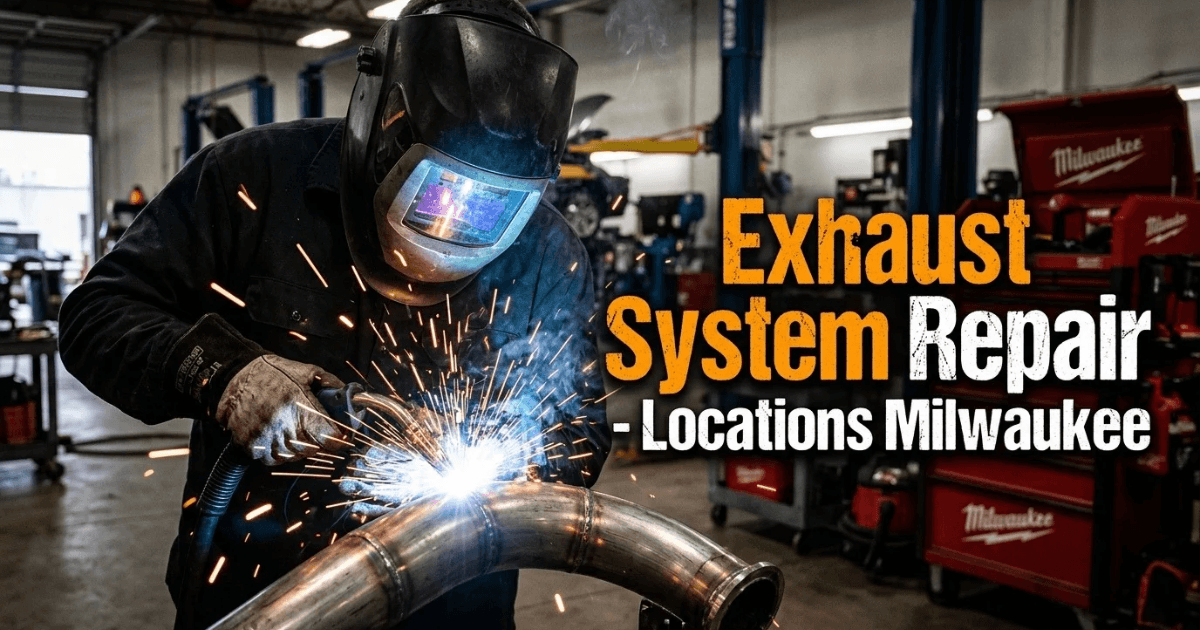
Finding exhaust system repair in Milwaukee is easier when you know what to look for and who to call. This guide covers the warning signs, the local shops worth checking, and the questions that protect your wallet. Each answer stands on its own, so you can jump straight to the part you need.
What Is Exhaust System Repair and Why Does It Matter?
Exhaust system repair means fixing the parts that carry hot, harmful gases from your engine out to the back of your car. A good fix keeps toxic gases out of the car, cuts noise, and helps your car pass inspection. It also protects fuel efficiency and engine performance.
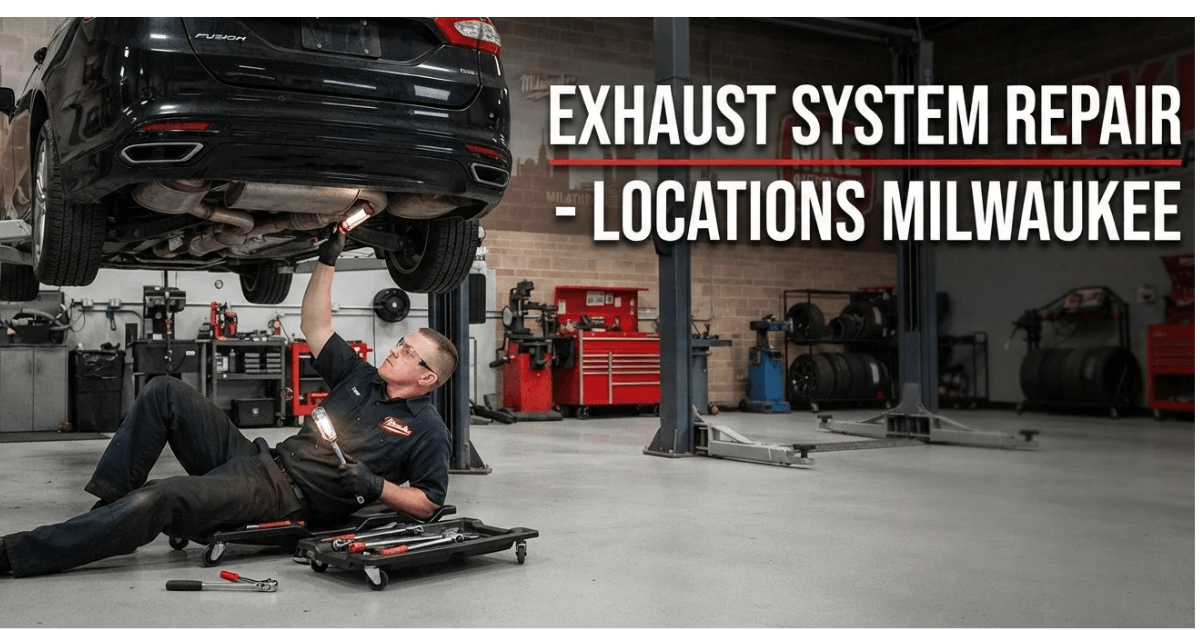
It routes exhaust fumes away from the people inside, and it cleans the gases before they reach the air. Because the whole system works as one chain, one weak link can hurt every part after it.
What Parts Make Up an Exhaust System?
Sensors such as the oxygen sensor tell the engine computer how clean the burn is. Gaskets, flex pipe sections, and exhaust hangers hold everything together and seal the joints.
Each part has a different job, so each fails in a different way. Rust usually attacks the muffler and pipes first, while heat and age wear out the converter and sensors. A technician finds the real problem by inspecting the full path instead of guessing at one part.
What Happens If You Ignore Exhaust Problems?
Small problems grow fast when you wait. A leak can bring carbon monoxide into the car, cause poor fuel economy, and trigger a failed inspection. Delays also raise the bill, because a cheap pipe fix can turn into a pricey converter job.
Mufflers Plus Inc warns on its site that harmful gases can reach the cabin and affect your family’s health. If you smell fumes inside the car, open the windows and get it checked right away.
How Do You Know You Need Exhaust System Repair?
Listen for a loud exhaust noise, a rattling noise, or a hissing sound, and watch for a drop in power or mileage. Fumes in the cabin, a dragging pipe, or a lit check engine light also point to trouble. If you notice any of these, book an inspection soon.
Most warning signs show up slowly, so drivers often get used to them. A car that sounds a little louder each month deserves a look before the noise turns into a hole. Putting off exhaust system repair rarely saves money, because rust keeps spreading while you wait.
What Sounds, Smells, and Symptoms Are Warning Signs?
A deep roar usually means a hole in the muffler or a cracked pipe. Metal rattling points to a loose hanger or a broken shield, and a sulfur smell can signal a failing converter. Vibration in the pedal, rough idle, or loss of power also deserve attention.
A burning smell or visible smoke from under the car needs quick action. Rust shows up as flaking metal, a corroded muffler, or dark streaks near the joints. You can look under the car with the engine off and cool, but leave the real diagnosis to a trained technician.
Does a Check Engine Light Point to the Exhaust?
Sometimes. The light can come on when an oxygen sensor or catalytic converter reports a problem, but it also lights for many other faults. A shop runs computer diagnostics to read the stored codes, so you get facts instead of guesses.
Do not clear the code and hope it stays away. It usually returns, and a cleared code can leave your car unready for an emissions test. Ask the shop to explain which code appeared and what test proved the cause.
Where Can You Find Exhaust System Repair in Milwaukee?
You can find it at a muffler shop, a general repair garage, or a chain store across Milwaukee County. Two local options you can call today are Tech Way Auto Service, with locations in Milwaukee and St. Francis, and Mufflers Plus in West Allis. Compare them using location, hours, warranty, and how they quote the job.
Both shops post contact details and weekday hours on their sites, so you can call before you drive over. Tech Way lists its St. Francis shop on South Kinnickinnic Avenue and its Milwaukee shop on East Howard Avenue, while Mufflers Plus sits on West National Avenue. Hours, phone numbers, and services can change, so confirm them first.
What Does Tech Way Auto Service Offer?
Tech Way Auto Service offers exhaust repair, exhaust system replacement, and emissions inspection at two locations. Its ASE-certified technicians work on most makes and models, and the shop is a TechNet affiliated shop that backs repairs with a 24-month/24k-mile warranty, which it describes as nationwide. Other exhaust work is by appointment.
The site says walk-in emissions testing is the only option, with no appointments, so arrive during the posted window. The exhaust page lists 9 am to 12 pm, while the location cards show different times for the Milwaukee shop, so call to confirm. The shop also shows 628-plus Google reviews, which you can read before you decide.
What Does Mufflers Plus Offer in West Allis?
Mufflers Plus Inc is a West Allis shop that says it has more than 33 years of experience with exhaust and muffler system work. Its site invites you to call for a free estimate if you suspect a problem, and it lists weekday hours from 8 am to 6 pm. It is closed on Saturday and Sunday.
The site frames exhaust work around safety, saying a faulty system can let harmful fumes into the car. It also lists auto repair and brake service pages, which helps if you want to fix several things in one visit. Call 414-327-6669 and ask what the free quote covers before you drop off the car.
Should You Choose a Specialist, a General Shop, or a Chain?
Choose the local auto repair shop that can diagnose the cause, explain the fix, and put the price in writing. A specialist often works faster on pipes and mufflers, while a general garage can handle exhaust and other repairs in one visit. Chains may offer set prices or coupons, but quality still depends on the technician.
If you need more than one job, such as brake repair or an oil change, a general shop saves trips. If you only need a muffler or pipe, a specialist may fit better. Either way, ask who will do the work and whether they hold ASE certification.
How Do Emissions Inspections Work in Milwaukee?
Milwaukee County sits inside the southeastern Wisconsin area where many vehicles need periodic emissions testing. The test checks that your emission controls work as designed, which supports vehicle compliance and clean air. Because state regulations can change, confirm which vehicles must test and how often with the Wisconsin DNR.
A broken exhaust part can cause a failed emissions test, so repairs and testing often go together. Tech Way, for one, offers emissions testing in addition to repairs, which can save you a trip. Bring your notice if you have one, and check in at the front desk, since the shop says it accepts walk-ins only.
What Should You Do After a Failed Emissions Test?
Read the report, then ask a shop that does emissions repair to find the cause before you replace any parts. Common culprits include a weak catalytic converter, a bad oxygen sensor, or an exhaust leak. Fix the cause, then retest, and keep your repair paperwork.
Guessing at parts wastes money, because the same code can come from several faults. Ask the shop to show you the failed part or the test results. Also ask whether the repair is covered by a warranty, since a warranty-backed repair saves you a second bill if the problem returns.
How Much Does Exhaust System Repair Cost?
The cost of exhaust repair depends on the part, your vehicle, and the labor needed, so no single number fits every car. A small hanger or gasket fix usually costs far less than a catalytic converter or full system replacement. I will not guess exact prices here, so get a written estimate from two or three shops.
Parts quality, rust level, and access to the pipes all change labor time. Original and aftermarket parts differ in price, so ask whether the shop uses high-quality parts and which type it plans to install. Compare quotes line by line, because a low total can hide cheap parts or a short warranty.
Is It Worth Repairing Instead of Replacing?
Repair usually makes sense when damage is limited to one section, such as a rusted exhaust pipe or a leaking joint. A system overhaul can be smarter when rust has spread across the whole system. Ask the shop to show you which sections are still sound and which are failing.
Think about how long you plan to keep the car and what the rest of it needs. A fix that adds years of safe driving to a car you like is easy to justify. If the car has other big problems, compare the exhaust bill with the car’s value before you commit.
How Do You Pick the Right Exhaust Shop?
Pick a shop with proof of skill, a clear estimate, and a written warranty. Check that the technicians are ASE certified, read recent customer reviews, and confirm the shop works on your make. Then compare two or three options before you decide.
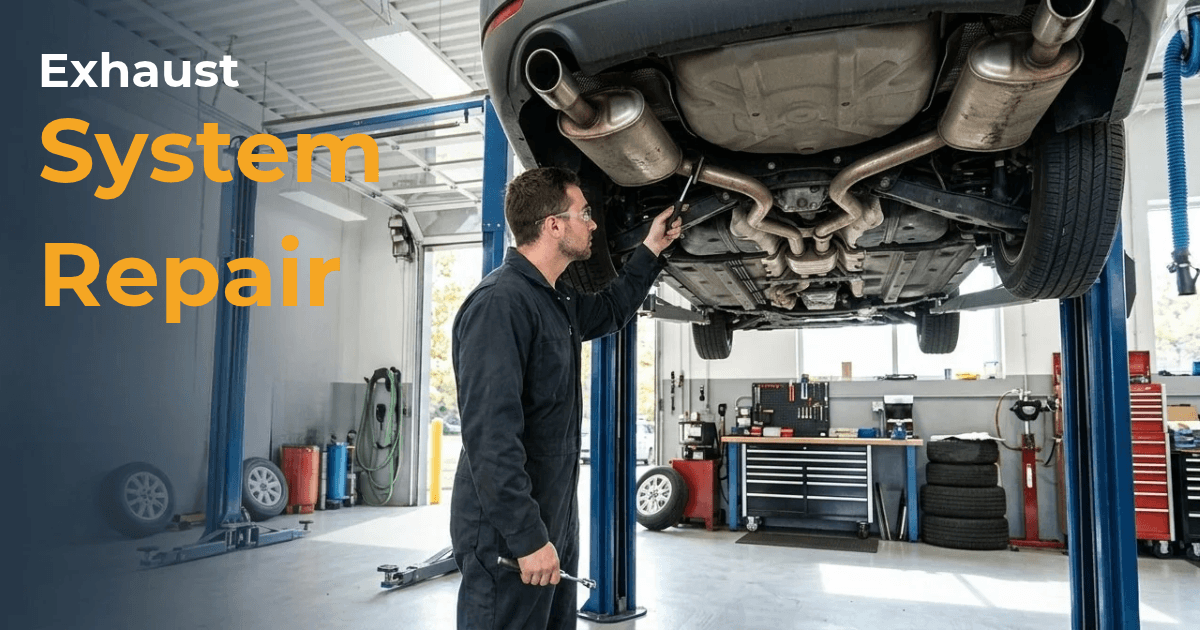
Reviews tell you how a shop treats people after the sale, not just before it. Shops known for trusted auto repair tend to earn comments about honesty, clear explanations, and bills that matched the quote. Use the same checklist for any exhaust system repair job, big or small.
How Can You Protect Your Exhaust System After the Repair?
Keep the system healthy by fixing small leaks fast, washing away road salt, and avoiding repeated very short trips when you can. Have the exhaust checked during routine maintenance such as oil changes and brake work. Keep your repair paperwork so you can use the warranty.
Road salt in Wisconsin winters speeds up rust, so rinse the underside of the car when temperatures allow. Short trips also let moisture sit inside the pipes because the system never gets hot enough to dry out. A yearly look under the car during preventive maintenance catches loose hangers before they snap.
What Is the Best Next Step if Your Car Needs Repair Today?
Call one or two of the shops above, describe your symptoms, and ask for a written estimate. Book an appointment for repairs, or arrive during the posted window if you only need an emissions inspection. If you smell fumes in the cabin, stop driving and get help sooner.
Write down when the noise or smell started, how the car drives, and any lights on the dash. That short note helps the technician find the cause faster. With the right shop and clear questions, exhaust system repair in Milwaukee becomes a simple, predictable job.
FAQs
How Long Does Exhaust System Repair Take?
A simple fix such as replacing a hanger or patching a pipe can often finish in a short visit, while a full system replacement can take longer. Rusted bolts and hard-to-reach parts add time. Ask the shop for a time estimate when you get your quote.
Can You Drive With a Leaking Exhaust?
It is not safe to keep driving with a leak, because fumes can enter the cabin and carbon monoxide is dangerous. A small leak can also grow and fail an inspection. If you smell exhaust inside the car, open the windows and have it checked as soon as you can.
Do You Need an Appointment for Exhaust Repair in Milwaukee?
It depends on the shop. Tech Way says emissions testing is walk-in only, while it takes appointments for its other exhaust services. Mufflers Plus lists weekday hours and invites calls for estimates, so phone ahead to confirm how it schedules work.
Does a Warranty Come With Exhaust Repairs?
It can, but terms differ by shop, and Tech Way says its work carries a 24-month, 24,000-mile nationwide warranty through TechNet. Ask any shop for the warranty terms in writing, including parts, labor, and what voids coverage. Read the fine print before you pay.
What Is the Difference Between a Muffler and a Catalytic Converter?
The muffler reduces engine noise, while the catalytic converter changes harmful gases into less harmful ones before they leave the car. Both sit in the exhaust path but do different jobs. A failing muffler usually gets loud, while a failing converter often shows up as a check engine light or failed emissions test.