


I still remember the day I bolted my first aftermarket car spoiler onto my old hatch back. I thought it was only about looking cool, but the more I drove on the highway, the more I realized a spoiler changes how a car actually feels at high speeds.
That curiosity pushed me to dig deeper into aerodynamics, and honestly, it changed how I look at every vehicle on the road now. Most people buy spoilers thinking only about visual appeal, and I get it, because a sharp design does give a car that sporty appearance everyone notices.
Understanding Aerodynamics
Aerodynamics sounds technical, but it simply studies how air behaves around a moving vehicle, and once you understand drag and lift, everything about spoilers makes more sense. Drag slows the car down and hurts fuel efficiency and top speed, while lift creates an upward force that reduces pressure between the tires and the road.
At lower speeds, these aerodynamic effects stay mild, but push into high-speed driving or sudden lane changes, and the car can feel unstable without proper aerodynamic control.
How a Spoiler Works
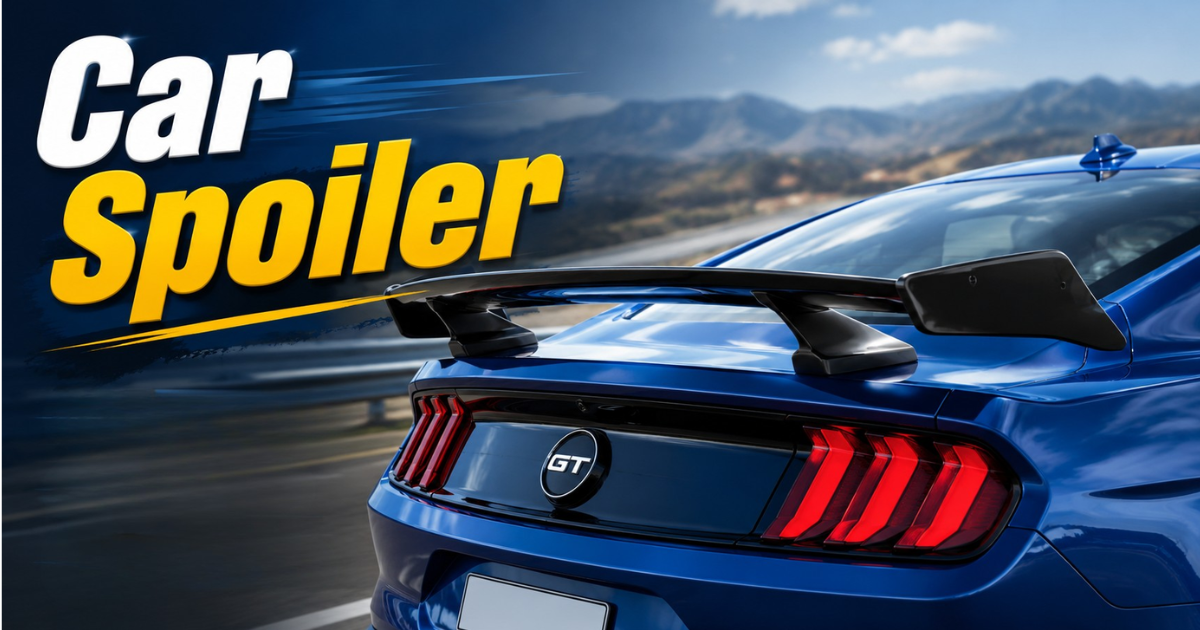
A spoiler sits at the rear of the vehicle and interrupts airflow that would otherwise create lift, and this is really the heart of how the whole system works. As air hits the top surface, it builds downward pressure, which turns into down force pressing the tires firmly onto the road surface.
That added grip reduces the chance of the rear wheels slipping, and drivers usually notice this most while cornering or holding steady at highway speeds. This same idea connects to bigger racing parts too.
A rear wing acts like an upside-down aircraft wing, using pressure differences above and below it to build down force, following ideas close to Bernoulli’s Principle and the Coandă Effect.
A front splitter works from underneath, managing front-end lift and boosting front tire grip, so the balanced handling comes from multiple aerodynamic devices working together, not the spoiler alone.
Advantages of a Spoiler
The clearest advantage of a good spoiler is stronger vehicle stability, since higher downforce on the rear wheels keeps the tires gripping the road properly. This directly improves handling and cornering performance, and it builds real driver confidence during long stretches of high-speed driving. I’ve felt that confidence firsthand and once I trusted the grip under hard cornering, I stopped second-guessing every turn.
Beyond that, a spoiler helps cut down aerodynamic lift, lowering the risk of feeling unstable when air rushes underneath the car. This isn’t limited to sports cars either; many regular sedans and performance vehicles now use subtle spoilers to boost safety and overall driving dynamics.
Are Spoilers Useful for Everyday Driving?
Inside regular city driving, a spoiler gives only a small performance benefit, mainly because aerodynamic forces stay weak at lower speeds in traffic. Things change once you hit open highway travel or lean into more spirited driving.
Where performance applications finally let the spoiler do real work. Most manufacturers design factory installed spoilers to balance appearance with genuine aerodynamic improvements, so buyers get both style and function.
Passenger cars rarely deal with strong aerodynamic lift during normal trips, so the spoiler stays more of a safety cushion than a necessity for stability, fuel efficiency, or comfort. High-performance sports cars and racing vehicles rely on this far more.
Since they are constantly deal with drag, down force, and shifting conditions at every speed. In my own experience switching between city errands and weekend track days, the same spoiler felt almost invisible in traffic yet completely necessary once speeds climbed and handling truly mattered for safety.
Why Drag Matters
Drag stands as one of the biggest threats to a car’s efficiency, and it grows fast as speed increases, since aerodynamic resistance rises with the square of the vehicle’s speed. At highway speeds, a poorly shaped car forces the engine power to fight harder against air resistance, burning more fuel than it should.
Early automobiles barely worried about this since they rarely passed 45 mph, but modern vehicles now get carefully shaped with aerodynamics in mind from day one.
Modern Cars and Aerodynamic Design
Manufacturers today invest heavily in aerodynamic engineering, and most passenger cars now sit with drag coefficients somewhere between 0.25 and 0.35, which supports better fuel economy and lower emissions.
Electric vehicles gain even more from this, since reduced drag stretches their driving range further on a single charge. Still, a car’s vehicle’s shape isn’t the only factor, because frontal area matters too, and larger vehicles can face more aerodynamic resistance than smaller sports cars, even with a strong shape.
The Secret behind Race Cars
Race cars chase down force instead of chasing low drag, because pressing the tires hard onto the track delivers better traction during acceleration, braking, and cornering. Yes, wings and other aerodynamic components raise drag, but the grip they add lets these cars post much faster lap times overall.
Formula racing cars prove this best and despite carrying high drag coefficients, their aerodynamic designs produce massive down force, letting them hold incredible speeds through tight corners without losing control.
Conclusion
A car spoiler is much more than a stylish exterior upgrade and it is an aerodynamic component that reduces lift, increases down force, and improves stability at higher speeds.
By optimizing airflow, it enhances traction, handling, and braking performance, making it a valuable feature for both vehicle safety and overall driving performance.
FAQs
Car spoiler
What does a car spoiler actually do?
A car spoiler disrupts airflow at the rear of the vehicle to reduce lift and create downforce, which presses the tires onto the road for better grip and stability.
Do spoilers make a real difference at low speeds?
Not much. Aerodynamic forces stay weak during city driving and lower speeds, so a spoiler mainly helps during highway travel or high-speed driving.
Are spoilers only for sports cars?
No. While sports cars and race cars rely on spoilers heavily for traction and cornering performance, many regular sedans and passenger cars also use subtle factory-installed spoilers for added safety.
How is a spoiler different from a wing or splitter?
A spoiler reduces rear end lift, a rear wing generates strong down force using pressure differences, and a front splitter manages airflow underneath the car to boost front tire grip.
Does adding a spoiler affect fuel efficiency?
It can. Since spoilers alter drag and aerodynamic resistance, poorly designed ones may slightly reduce fuel economy, while well-engineered ones balance appearance with practical aerodynamic improvements.