

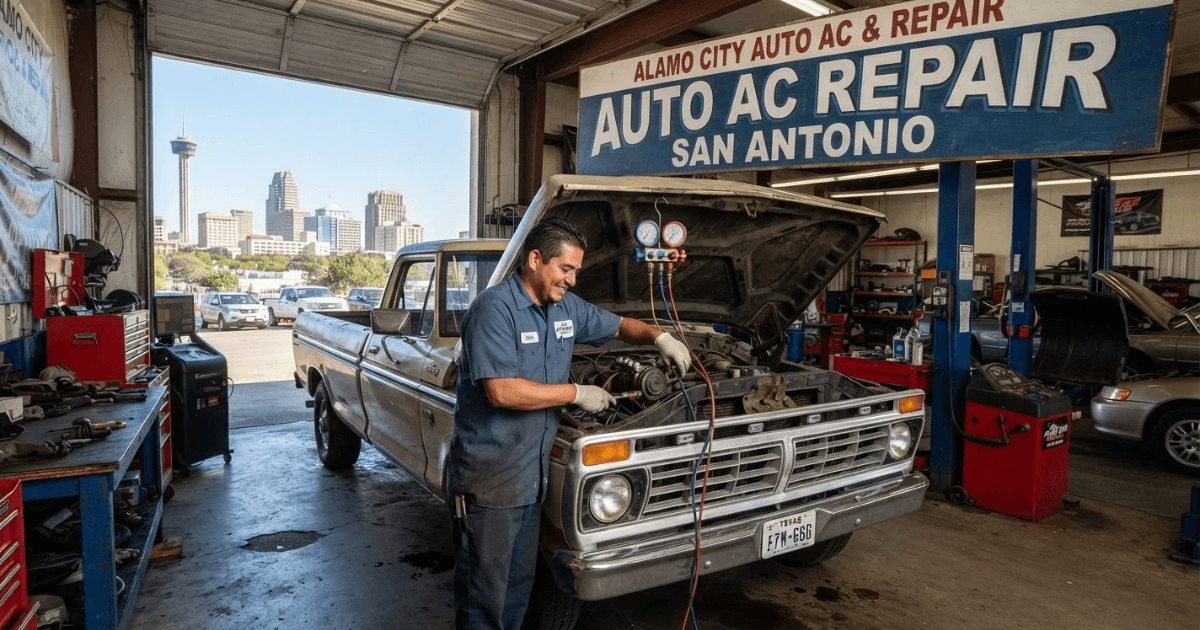
San Antonio’s normal July high sits near 95°F, and that Texas heat turns a weak air conditioner into a daily problem. A parked car in full sun heats its cabin far past the outside temperature. Quick auto AC repair San Antonio keeps drivers alert and stops small faults from growing.
High temperatures and humidity keep your compressor working hard from April through October. Your heating and cooling systems share the front of the engine bay, so a condenser fault can strain the engine too. I learned this when a blocked condenser on my old sedan showed up as a rising temperature gauge in traffic.
What Happens Behind the Vents When You Turn On Your Car’s AC
A car AC system moves heat out of the cabin by cycling refrigerant through a sealed loop. The AC compressor pressurizes the gas, the condenser sheds heat, and a thermal expansion valve or orifice tube drops the pressure. The evaporator core absorbs cabin heat while the blower motor pushes cool air out.
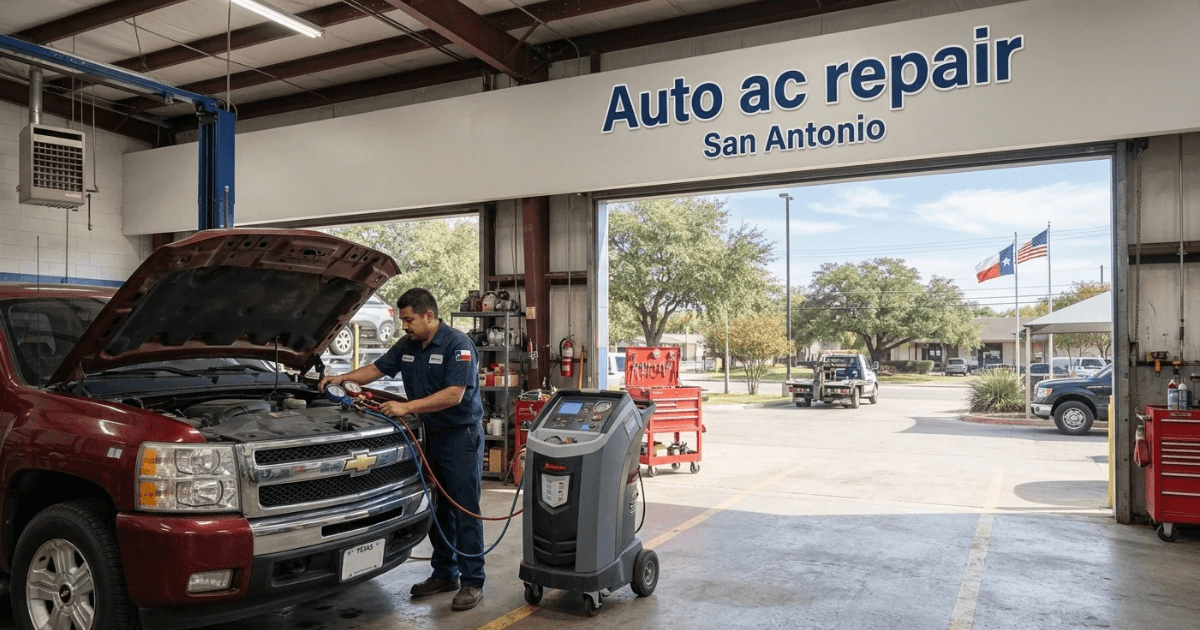
The AC belt, usually the same serpentine belt that turns the alternator, drives the compressor. A compressor clutch engages on demand, a compressor bearing lets the pulley spin freely, and compressor shaft seals hold in refrigerant oil. Valve systems use a receiver-drier to trap moisture, while tube systems use an accumulator.
The HVAC housing holds the evaporator case, the blend door actuator, and an evaporator drain tube. Low-pressure and high-pressure switches, an AC pressure sensor, and an ambient temperature sensor feed a control module that also runs dual climate control. Relays and fuses power the condenser fan and the radiator and electric cooling fans.
What Symptoms Mean Your Car Needs AC Service?
The clearest sign is AC blowing warm air on the coldest setting. Weak airflow from vents, intermittent cooling, and fluctuating temperatures also signal trouble. Any sudden loss of cold air calls for a prompt car air conditioning service visit before a small leak harms the compressor.
Clicking, hissing, or squealing noises often point to the clutch or belt, while a rattling noise or metallic grinding can mean internal compressor damage. Musty or sour smells usually come from mold and mildew on the evaporator. Water pooling inside the car often traces back to a clogged evaporator drain tube.
Visible fluid leaks or an oily refrigerant residue around fittings mark a refrigerant leak. A compressor not engaging, an AC not cooling at idle, or an AC blowing hot air shows a clear decline in AC performance. Mention a heater not working too, since many shops offer car heater repair in the same visit.
What Usually Causes These AC Problems?
Low refrigerant from a leak ranks among the most common causes of weak cooling. A micro-leak or slow-forming leak at the O-rings and seals can take months to drain the system. A clogged cabin air filter, a failing blower motor, or a worn compressor clutch causes many other complaints.
Compressor bearing failure usually makes noise before full compressor failure sends debris through the discharge line and suction port. A slipping belt, a restricted expansion valve, or an undercharge or overcharge also strains the system. Road debris, bent cooling fins, and corrosion choke the condenser.
How Do Technicians Diagnose an AC Problem?
A good diagnosis starts with an AC performance check that compares high-side and low-side pressure readings with the manufacturer’s chart. The technician then finds the leak or fault before adding refrigerant. Skipping that step usually means paying for the same AC recharge twice.
UV dye leak detection uses fluorescent dye that glows under a UV light or blacklight, while electronic leak detection sniffs for gas at the AC hoses and connection fittings. Pressure decay testing and a vacuum test with a vacuum pump and vacuum gauge confirm whether the system holds tight. AC electrical diagnostics then trace blown fuses and relay failures, electrical faults, and a sensor’s loss of signal.
A compressor clutch engagement check and an output air temperature test confirm the result, and I always ask for that reading before and after repairs. Menus may say AC diagnostics, climate diagnostics, or AC pressure testing. A static pressure gauge check with AC gauges on the service ports helps, but it cannot locate a slow leak alone.
What Repair Services Should a Good Shop Offer?
A capable auto AC repair San Antonio shop handles the whole system, not just recharges. Look for AC refrigerant leak repair, evacuation and recharge, AC compressor replacement, condenser repair, and evaporator case replacement. That range lets the shop fix the root cause instead of topping off refrigerant.
A compressor kit replacement pairs the new compressor, whether from Denso or another supplier, with a receiver-drier replacement and an expansion valve replacement or orifice tube replacement. Many compressor warranties require that full kit. Cabin air filter replacement, blend door actuator replacement, and condenser fan replacement solve many airflow and temperature complaints.
Evaporator service and cleaning, AC system cleaning, and routine climate control maintenance stop odors and catch wear early. An AC retrofit updates old R-12 systems, and Vintage Air sells aftermarket AC kits for classic cars. Business owners should look for commercial fleet AC service and heavy-duty truck AC repair experience.
Which Refrigerant Does Your Car Use?
Most US cars built from the mid-1990s through the late 2010s use R-134a, while most new cars use R-1234yf. Older classics may still carry R-12, which most people call Freon. A sticker under the hood lists your refrigerant type and the correct charge.
R-1234yf belongs to the HFO-class refrigerants that carry a low global-warming impact, and R-744, or carbon dioxide, appears in a few European models. Each gas needs its own machine and refrigerant oil. Refrigerant recovery and recycling equipment and environmentally safe refrigerant handling and disposal keep these gases out of the air.
What Certifications Should an AC Technician Hold?
Federal law requires anyone who services a vehicle AC system for pay to hold EPA Section 609 certification. Look for EPA Section 608/609 certified technicians who also hold ASE credentials. ASE-certified HVAC specialists have passed the A7 heating and air conditioning test.
An ASE Master Technician has passed a full set of ASE tests and logged hands-on experience. Since 2018, federal rules limit refrigerant sales to certified technicians, except cans of two pounds or less. Certified automotive air conditioning specialists follow federal safety guidelines and never vent gas.
Who Offers Car AC Repair San Antonio?
Several local shops list AC work, and each brand offers the services described on its own website. Their focus ranges from personal cars to semi-trucks and RVs. A search for car AC repair San Antonio returns very different specialists, so match stated services to your vehicle.
What Does Automotive Brake & Clutch Offer?
Automotive Brake & Clutch focuses on car and truck AC repair, including heavy-duty truck AC repair for fleets and over-the-road semi-trucks. Its website lists AC compressor replacement, R-134a recharges, climate diagnostics, and UV dye leak detection, and it says its technicians hold EPA Section 608/609 certified status. The site also lists clutch repair, brake service, and DOT fleet maintenance.
What Does Auto Service Experts Offer?
Auto Service Experts, at autorepairsanantonio.com, lists a free AC check, AC recharge, AC refrigerant leak repair, compressor kit replacement, and evaporator case replacement. Its pages also cover cabin air filter replacement, AC system cleaning, AC retrofit, car heater repair, and hybrid car AC repair San Antonio. The site mentions ASE-certified HVAC specialists and displays a NAPA Auto Care Center logo.
What Does Kool2U Offer?
Kool2U lists a MaxKool AC Diagnostic and evacuation and recharge for R-12, R-134a, and R-1234yf systems. It also lists heating and cooling systems repair, heavy equipment AC systems, RV AC repair, and mobile auto repair for domestic, Asian, and European makes. Kool2U says an ASE Master Technician leads its team.
What Does SA Brake Offer?
SA Brake serves truck, trailer, and industrial customers rather than everyday commuters. Its website lists air conditioning and heating alongside brakes, clutches, alternators, batteries, and belts and hoses. Fleet buyers can ask exactly what its AC and heating category covers.
What Will You Pay to Get Your Car’s AC Fixed in San Antonio?
Cost depends on the fault, the refrigerant, and the vehicle, so a fair quote starts with a diagnosis. An AC recharge with R-1234yf usually costs more than one with R-134a, because the newer gas costs more per pound. Ask for a written quote that separates parts, labor, and gas.
Is a DIY AC Recharge Worth It?
A DIY recharge rarely pays off when the system leaks. DIY refrigerant kits add gas without fixing the leak, many contain stop-leak products that can clog an orifice tube, and cans without proper gauges risk an undercharge or overcharge. A professional auto air conditioner service usually costs less than a second repair.
How Do You Choose the Right Shop?
Choose a shop that diagnoses before it recharges, holds EPA and ASE credentials, and puts its warranty in writing. Ask which leak tests it uses and whether it services your refrigerant type. Clear answers usually point to car HVAC mechanics who do careful auto air conditioning repair.
Why Is This Site the Easiest Place to Start Your Search?
This site gathers what each local shop says about its own services in one place, so you can compare shops quickly. Each summary sticks to what the brand’s website states. You can match your symptoms to the right tests, then call the right shop first.
What Should You Do Next?
You now know the symptoms, tests, and credentials that separate careful work from quick fixes, plus the services each local brand lists. For a clear starting point on auto AC repair San Antonio drivers can rely on, visit Auto AC Repair San Antonio, TX. Compare options there, and then book the right shop.
What Do Drivers Often Ask About Auto AC Repair San Antonio?
Most questions cover cabin odors and how AC trouble affects the rest of the car. The short answers below address two concerns that come up often with San Antonio drivers. Each answer stands on its own, so you can jump straight to the one you need.
Why Does My Car AC Smell Musty?
Musty or sour smells usually come from mold and mildew feeding on moisture buildup on the evaporator core. A dirty cabin air filter or a blocked drain makes the problem worse over time. Evaporator service and cleaning plus a fresh filter clears up most cases within a single shop visit.
Can a Bad AC System Cause Engine Overheating?
Yes, a blocked condenser or a cooling fan malfunction can raise engine temperature, because the condenser sits in front of the radiator. Damaged cooling fins make the problem worse. Ask the shop to check both systems during the same visit.