


My sedan once died at a red light on Mount Hope Avenue one January. That stalled car taught me that knowing the cause calms the next ten minutes. This guide explains why car stalling happens, how to stay safe, and how to choose a shop through our site.
What Causes a Car to Stall While Driving or Idling?
A car stalls when the engine stops running without the driver turning it off. The engine needs spark, fuel, air, and steady electrical power at the same moment. When any one of those inputs drops out, combustion ends and the car loses its drive.
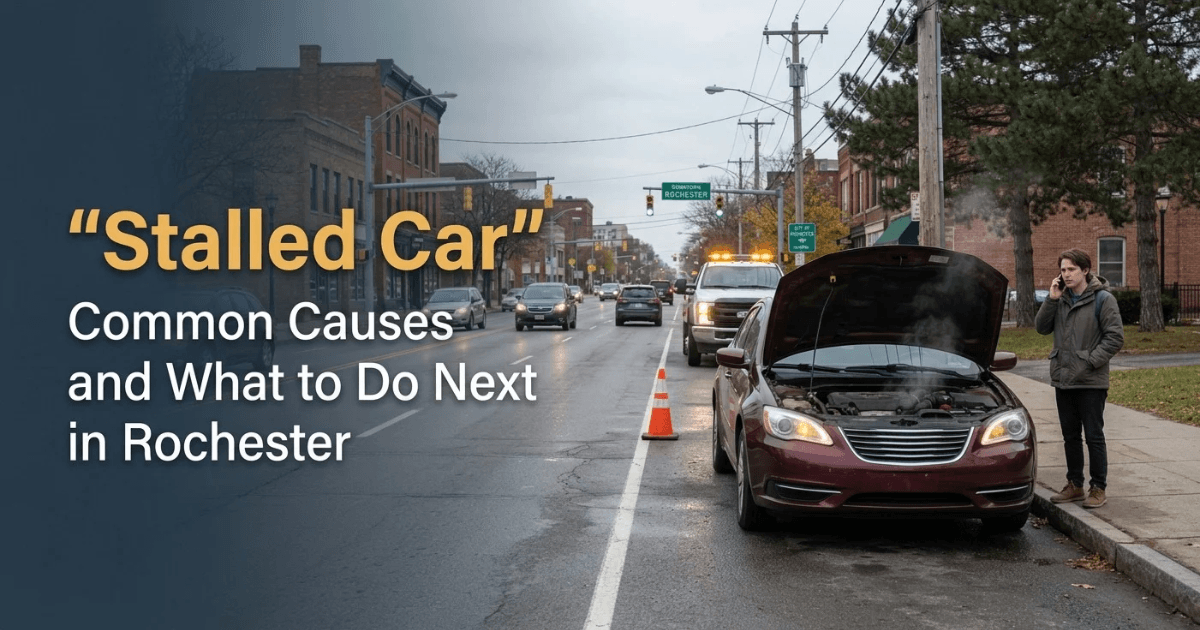
Some drivers face intermittent stalling, where the engine dies and restarts. In worse cases, the engine stalls while driving and causes a complete power loss while driving. You also lose power steering and brake assist, so the wheel feels heavy.
Milder drivability issues often appear first. You might notice poor acceleration on the I-490 on-ramp, sluggish acceleration from a stop, or reduced power on hills. Hard starting, difficulty starting, or an engine failing to start points to the same family of faults.
Stalled Car? Here Are the Usual Suspects
Most stalls trace back to four areas: ignition, fuel and air delivery, sensors and electrical power, and engine cooling. A weak spark, a starved fuel supply, a confused computer, or an overheated engine can each shut things down. The sections below cover each area.
How do ignition problems cause stalling?
Ignition problems stop the spark that lights the air-fuel mixture in each combustion chamber. Worn spark plugs, a failing ignition coil, or a worn ignition switch can cut that spark without warning. Seasonall Automotive Center recommends spark plug replacement before about 80,000 miles.
The ignition wires and cables carry high voltage to the spark plugs, and worn or brittle ignition cables or damaged spark plug wires leak that energy. Corroded or broken wiring and faulty ignition wiring often start as a misfire. Spark plugs left unchanged too long also widen their gaps.
How can fuel and air problems stall an engine?
Fuel system problems starve the engine, and it quits once the fuel supply falls short. A failing fuel pump, clogged fuel injectors, or a failed fuel injection system can all cause this stall.
Replace the engine air filter on schedule, because a clogged filter chokes airflow. Carbon deposits also clog the fuel injection system over time. Even a loose gas cap matters, since a poor gas cap seal can trigger a warning light.
Can sensors and electrical faults shut a car down?
Yes, because the onboard OBD computer needs accurate sensor data to meter fuel and time the spark. A failing oxygen sensor or mass airflow sensor feeds it bad numbers until the engine quits.
Faulty sensors usually leave a stored diagnostic code behind. Now and then, a computer glitch triggers a stall without a clear code. Corroded battery terminals cause similar trouble, so I clean mine every fall.
Does overheating make a car stall?
Yes, engine overheating can stall a car, and some modern engines cut power to protect themselves. A coolant leak, low coolant, a stuck thermostat, water pump failure, or cooling fan failure can push temperatures too high. Keep driving hot, and a blown head gasket may follow.
The cooling system moves coolant from the coolant reservoir through the engine, radiator, and radiator and cooling hoses. Radiator corrosion or a weak radiator cap lets pressure escape. A failed head gasket can cause coolant mixing into oil, which leaves milky or frothy oil on the dipstick.
Can belts or exhaust problems stop the engine?
A broken serpentine belt can stop the alternator and water pump at once, which drains the battery and overheats the engine. Worn belt tensioners and pulleys often cause that failure. A clogged catalytic converter chokes the exhaust system, and the engine loses power until it stalls.
Black smoke from the tailpipe means the engine burns too much fuel. Keep the engine oil, oil filter, transmission fluid, and power steering fluid on schedule. Low power steering fluid won’t stall the engine, but it makes a stall harder to steer through.
Early Red Flags Your Car May Be About to Stall
Most engines warn you before they quit. A check engine light, rough idling, hesitation during acceleration, and engine misfires top the list. A flashing check engine light signals a severe misfire that can overheat the catalytic converter, so act immediately.
Sounds often come first, such as engine knocking, pinging when accelerating, a grinding noise, a popping noise, or a growling noise. A jerky feeling, chugging, engine vibration, or an engine missing points to ignition or fuel trouble. Describe each sound to your mechanic.
Unusual odors, like a sweet coolant smell or a burnt rubber smell, often come with steam from under the hood or belt slipping or rattling. Check for puddles under the vehicle and poor gas mileage. Dashboard warning lights, the temperature warning light, and a scheduled maintenance reminder all deserve attention.
What should you do right after your car stalls?
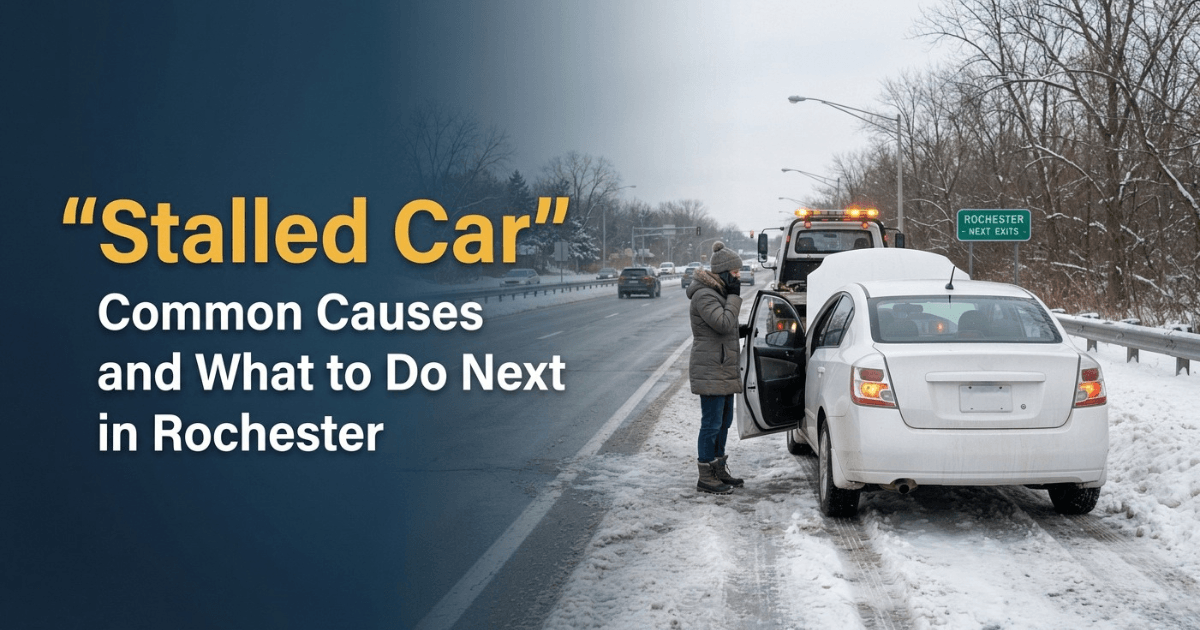
Switch on your hazard lights and pull over safely while the car still rolls. Once you stop, shut off the engine and set the parking brake. If you see steam or a hot gauge, let the engine cool for 30 minutes before you touch the radiator cap.
Try one restart and watch the gauges. If the engine overheats or flashes a warning, stop driving as soon as possible and arrange a tow to avoid further engine damage. Park Avenue Garage in Rochester NY lists towing, so one call covers the towing service and the repair.
Don’t ignore warning signs just because the car restarted. Have the vehicle inspected promptly, even after a single stall. I once skipped that step, and the second stall caught me in heavier traffic.
How do mechanics diagnose a stalled car?
A technician starts vehicle diagnostics by plugging a scanner into the OBD-II port, standard on US cars since the 1996 model year. The scanner reads any stored diagnostic code along with live sensor data. Hands-on tests then confirm the exact fault.
A check engine light diagnosis often includes a fluid inspection, coolant level check, dipstick oil level and color check, and belt and hose inspection. A sensor and cooling system diagnosis follows when symptoms point that way.
For intermittent stalls, note when they happen. Adam’s Auto Repair and Seasonall Automotive Center both offer a drivability drop-off form online. That form captures details before you leave.
Picking the Right Repair Shop in Rochester: What Matters Most
Look for ASE (Automotive Service Excellence) certified technicians, a clear written estimate, and plain explanations. ASE makes certified technicians retest every five years, so the credential stays current. Also confirm the shop handles your vehicle type and the repair you need.
A careful shop performs a professional inspection before it quotes a repair. It suggests a check-up and shows you the worn part instead of guessing. Its named brands also reveal its standards.
Seasonall Automotive Center’s website references ACDelco, WIX Filters, Wynn’s, Jasper, Car Care Aware, and MACS (Mobile Air Climate Systems Association). Park Avenue Garage’s website mentions ASE (Automotive Service Excellence), Monroe, AAMCO, and Car Care Aware. Each name is easy to look up.
Which services do local shops list on their websites?
Each shop below offers the services its own website lists. Compare each list against your symptoms before you pick up the phone. A shop with electrical services, for example, suits a stall tied to the alternator or wiring.
Park Avenue Garage on Scottsville Road in Rochester NY lists engine maintenance that covers fuel injection service, ignition service, and spark plug work. It also names electrical services, heating and cooling services, inspections and emissions, transmission services, undercar services, Brakes, and Towing. That menu suits anyone searching for Rochester engine maintenance.
Seasonall Automotive Center on East Henrietta Road in Rochester NY lists AC Repair, Alignment, Brakes, Car & Truck Care, inspections and emissions, Repair Services, and Tires. Its articles also cover the oil change, spark plug replacement, and serpentine belt replacement. New York requires a yearly safety and emissions inspection for most vehicles.
Rochester Tire & Automotive on North Main Street in Rochester NH lists Brakes, AC Repair, transmission services, Alignment, electrical services, Tires, and Auto Repair Services. Its website links stalling to a failing fuel pump and ignition problems.
Adam’s Auto Repair sits in Mount Pleasant, Michigan, but its website shows a broad service menu. It lists engine repair, engine maintenance, Diagnostics, electrical services, transmission services, general automotive repair, and domestic and Asian vehicle repair. Use it as a benchmark for Rochester auto repair shops.
How can you prevent your car from stalling again?
Follow your maintenance schedule, replace filters and plugs on time, and check fluids monthly. Scheduled manufacturer maintenance milestones, such as a 100,000-mile service, often bundle plugs, belts, and coolant into one visit. Owners who address problems early prevent costly repairs, especially when extreme weather hits western New York.
Many owner’s manuals count short trips, stop-and-go traffic, excessive idling, hard acceleration, and towing and heavy loads as severe driving conditions. If that describes your commute, follow the severe-service schedule. Your plugs, filters, and fluids will last longer for it.
Where should you go next if your car stalls in Rochester?
A stalled car feels less overwhelming once you know what to suspect. Keep “Stalled Car? Learn the Common Causes and What to Do Next in Rochester” handy as your checklist. Then browse our site to compare local shops and the services each one lists.
What do Rochester drivers ask most about stalling?
These two questions come up often when Rochester drivers call a shop after a stall. Each answer stands on its own, so you can skip to the one that fits your situation. Anything more complex needs a professional scan and a technician’s eyes.
Can a bad battery make an engine stall?
A weak battery rarely stalls a running engine, because the alternator takes over once the car starts. A failing alternator or corroded battery terminals, however, can drain voltage until the engine dies.
Is it safe to keep driving after a stall?
Keep driving only if the car restarts normally and shows no warning lights. A flashing check engine light, steam, or a hot temperature gauge means you should stop and call for a tow. Even after a clean restart, book an inspection within a few days.