

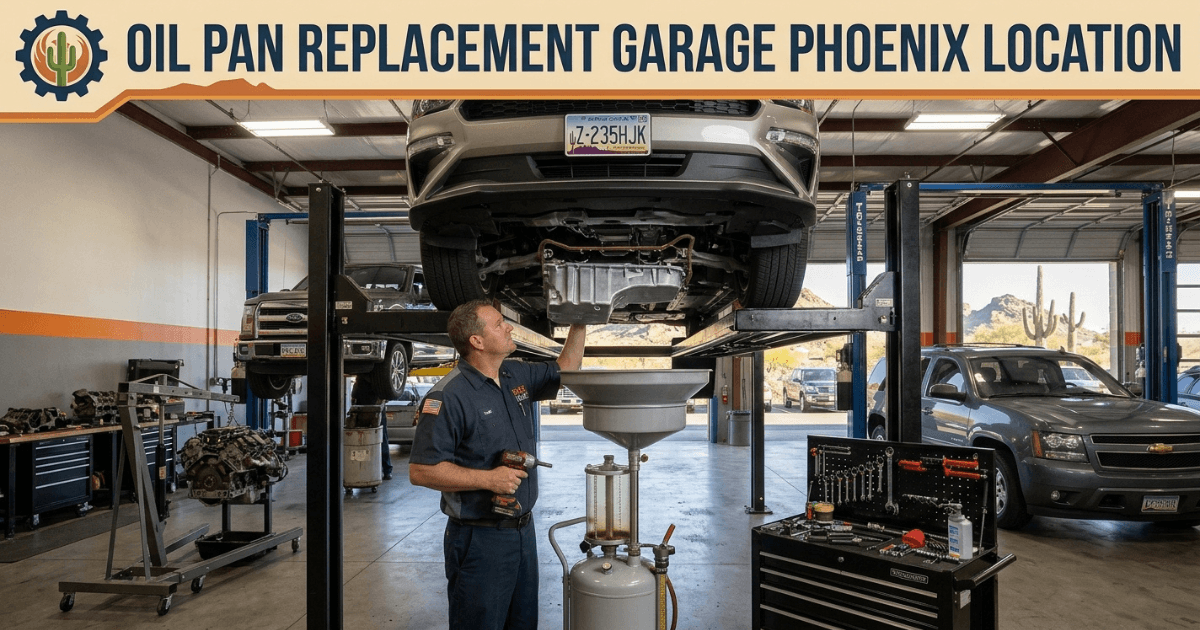
Oil pan trouble starts with a few drips and ends in a huge bill. This guide covers what the part does, how to spot a leak, and where Phoenix garages fix it. Read it, and you will know what to ask your mechanic.
What should I know about an oil pan before a repair?
What is an oil pan, and what does it do?
An oil pan is a metal tray under your engine that holds the engine oil. Some mechanics call it the oil sump or sump pan, and it works as an oil reservoir for your whole engine lubrication system. The oil pump pulls motor oil up through an oil pickup tube and feeds every moving part.
Oil falls back into the pan after it works, which keeps oil circulation steady and oil pressure healthy. Your manual lists the oil capacity, often four to six quarts. An oil pan baffle stops the lubricant from sloshing away from the pickup.
Where does the oil pan sit?
The engine oil pan hangs from the bottom of the engine and bolts to the engine block with a ring of oil pan bolts. An oil pan gasket works as the oil pan seal between the two parts. Makers build the pan as a steel oil pan, an aluminum oil pan, or a composite oil pan.
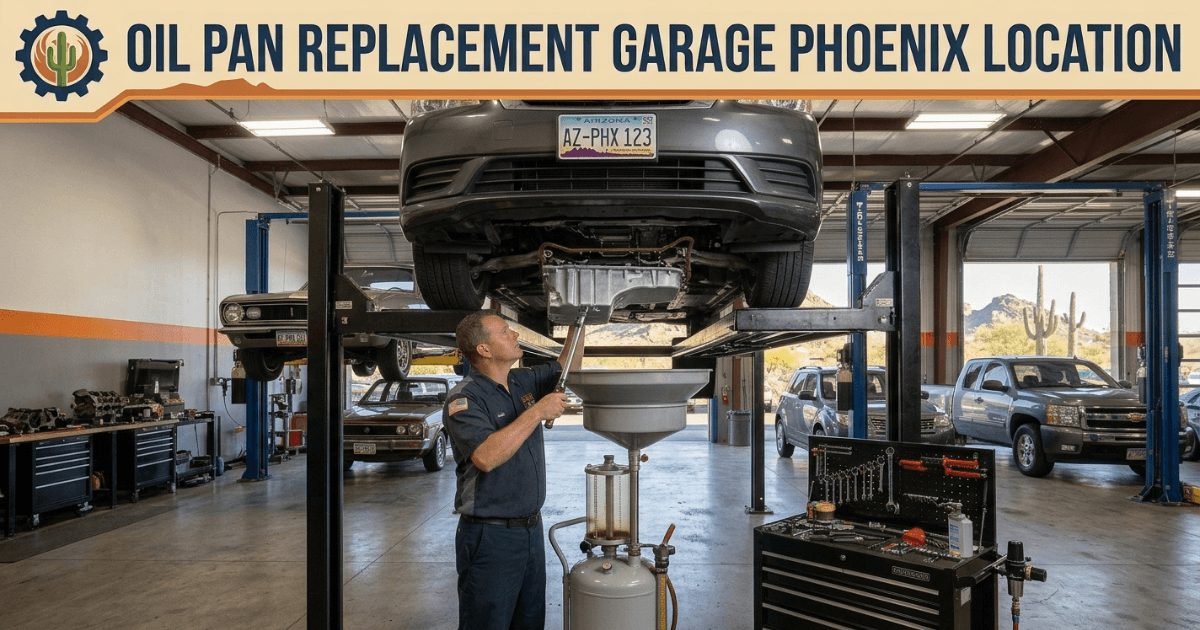
The crankcase wraps the spinning crankshaft, and the pan closes it. Most cars use a wet sump that stores oil in the pan, while a dry sump moves it to a tank. Steel rusts, aluminum cracks, and plastic splits.
How do I know my oil pan is leaking?
What are the first signs of an oil leak?
Check the ground for four signs of an oil leak: dark spots under car, black or brown stains, an oil puddle, and oil drips. A burning oil smell, blue smoke, or smoke from engine vents often joins them. Spot these early, because small leaks grow.
Slide cardboard under the engine overnight if you doubt what you see. Oil stains on driveway concrete and oil spots under the vehicle point to the source. Never ignore a burning smell, because oil on hot metal can ignite.
Does the oil light always mean a leak?
Not always, but the oil warning light and the low oil pressure light both tell you to stop and check the oil level. Leaks trigger both lights often.
Pull the dipstick: a low oil level or consistently low oil between changes points to a leak or an engine that burns oil. Frequent oil top-ups and needing oil changes more often both signal trouble, and the check engine light may join in. Your dipstick reading gives the mechanic hard numbers.
What other symptoms show up as the leak grows?
An overheating engine, engine knocking, and unusual engine noises all appear when oil runs low. A ticking noise at startup often means the top of the engine waits too long for oil. Treat each one as a stop-driving warning.
Later you may feel an engine running rough, a loss of engine power, or engine stalling at a red light. Under the car, look for oil streaks, oil residue, an oily undercarriage, or oil-soaked components. A slow leak with oil seepage costs less to fix than a steady drip.
What causes an oil pan to leak?
Why does an oil pan gasket wear out?
A worn gasket fails because heat and time harden it. Gasket deterioration makes the rubber or cork brittle, and gasket shrinkage opens tiny gaps. Age and mileage do most of the damage, though a sticky PCV valve, clogged PCV valve, or faulty PCV valve can add excessive crankcase pressure.
Every drive creates heat cycles, and the heating and cooling cycles squeeze and relax the seal thousands of times. A hardened gasket cannot flex, so oil creeps through. Sealant failure also happens with bad RTV sealant work or a warped oil pan flange.
Can road debris or a speed bump crack the pan?
Yes, a sharp hit can dent or crack the pan. Road debris damage, impact damage, and speed bump damagecause many leaks, and even rocks and pavement can do it. A car with suspension bottoming out raises the risk.
A dent can pinch the gasket. A rusted oil pan or corroded oil pan weeps slowly, while a cracked oil pan or dented oil pan can drain fast. After any hard strike, book an undercarriage inspection within a day.
Can loose bolts or a drain plug cause a leak?
Yes, bolts and plugs cause many leaks. Loose oil pan bolts let the seal relax, and overtightened bolts crush the gasket or bend the flange. Improper installation during an earlier repair often hides behind a mystery leak.
Shops follow torque specifications for that reason. Stripped drain plug threads, a broken drain plug gasket, or a missing drain plug washer also drip oil, and they cost far less than a new pan. Ask your last shop to recheck the oil drain plug and its drain plug gasket.
Does Phoenix heat make oil leaks worse?
Yes. Tanner Motors says Phoenix’s extreme heat speeds up gasket and seal wear, so oil leaks follow sooner. Hot weather softens rubber, and every Phoenix summer heat spell above 110 degrees tests each seal.
Park in shade, and check your oil more often in summer. Heat also speeds up premature engine wear when oil runs low. A cheap seal check beats a roadside breakdown on a 115-degree afternoon.
What happens if I ignore an oil pan leak?
Can a leak ruin my engine?
Yes. Low oil causes loss of lubrication, increased friction, and metal-on-metal contact, and that path ends in serious engine damage, catastrophic engine failure, or complete motor failure. Overheating comes first, and engine seizure or engine seizing follows.
Each mile on empty oil brings reduced engine performance, shortened engine life, and costly repairs. An engine replacement, engine rebuild, or engine overhaul can cost thousands, so compare that repair cost with a leak fix today. Xpress Automotive recommends engine replacement only when nothing else works.
Is an oil leak a fire or safety risk?
Yes. Tanner Motors warns that an unchecked leak can cause serious engine damage, pollute the environment, and create a fire hazard. Get any leak checked before your next long drive.
Leaks also cause environmental pollution, because oil runs off pavement and leads to soil and water contamination. A slick spot is a safety risk for people and pets, and burning oil can cause a failed emissions test. A worn engine may also burn more fuel, so reduced fuel efficiency often follows.
How do mechanics find an oil leak?
How does a garage diagnose an oil leak?
A good garage starts with a clean engine and a careful look from underneath. Techs run auto diagnostics, diagnostic tests, and a lift inspection to trace the oil upward. They pinpoint the leak this way, because oil travels and drips far from its source.
Tanner Motors uses Smart Flow technology to find leaks, and many shops add UV dye leak detection with a blacklight. This leak source identification step separates a pan leak from a valve cover gasket drip that only looks like one. An inspection under the vehicle and a pressure test finish the job.
Which tools and tests do shops use?
Shops plug an OBD-II scanner into your car and read fault codes. Many also run computer diagnostics, engine diagnostics, and emissions diagnostics. A digital inspection with photos shows you what the tech sees.
A compression test checks the cylinders, an oil pressure test checks the pump, and oil analysis checks for metal or fuel in the oil. A check engine light diagnosis and a digital vehicle inspection add more detail. A systematic diagnosis and a specialized repair plan keep your bill honest.
How does a garage replace an oil pan?
What are the steps of an oil pan replacement?
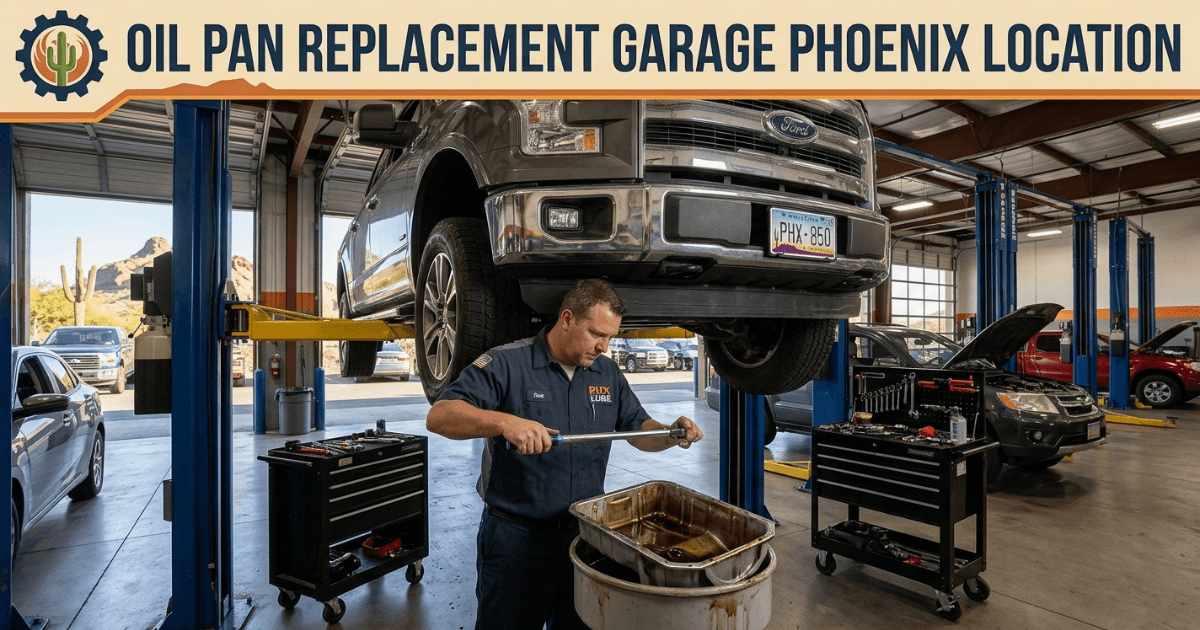
A tech raises the car on jack and jack stands, then will drain the oil into a drain pan and remove oil pan bolts one by one. Next comes a gasket scraper to clean mating surface metal on the block and the pan. Last, the tech will install new gasket material, apply sealant only where the maker says, and torque the bolts in order.
Then the shop will refill with new oil through a funnel, fit a new oil filter with an oil filter wrench, and run the engine. A dipstick check, an oil level check, a leak test, a test drive, and a post-repair inspection follow. Techs also avoid bending the dipstick tube when they lower the pan.
How long does it take, and how much does it cost?
Mechanics often book two to five hours of labor. One independent mechanic reports that an oil pan gasket replacement can cost nearly $1,000 on some vehicles.
Total repair cost depends on parts and labor, so get a written repair estimate first. OEM parts cost more than aftermarket parts, though quality parts from either group can work. Shops with transparent pricing and free estimates make comparing easy, and some offer same-day repair or same-day service.
Should I fix the pan or use a sealer?
Yes, fix it. Resealing can work for a small seep, but a damaged pan needs oil pan replacement. Quick fixes only delay the bill.
Oil pan repair with patch material fits rare cases, and gasket replacement costs less than a new pan when the metal stays straight. Let the tech diagnose first.
Which other parts leak besides the oil pan?
Top Oil Leak Culprits Which Gaskets and Seals Fail First?
Besides the pan, the valve cover gasket, rear main seal, front crankshaft seal, and timing cover seal leak most often. Tanner Motors also repairs valve cover gasket leaks, crankshaft seal repair jobs, and worn oil seals on European cars.
The camshaft seal, timing cover gasket, oil filter housing, and oil filter housing gasket drip too, as do the oil cooler, oil cooler lines, and oil cooler gasket. A Check each spot before you blame the pan.
Which nearby parts can fool me?
An oil pressure sensor, oil pressure switch, turbocharger oil line, or transmission pan can leak and drop fluid near the pan. Axle seals, oil seals, and the differential also leave drips that look like engine oil. Check the color and thickness first.
Low oil hurts the timing belt, timing chain, timing gears, piston rings, pistons, connecting rods, camshaft, engine bearings, and main bearings first. Xpress Automotive repairs timing gears, piston rings, and crankshafts. Leaking oil can soak the serpentine belt and strain the water pump.
Where can I get oil pan replacement in Phoenix?
Which Phoenix garages fix oil pans?
Four Phoenix shops publish oil leak, engine, or oil change services. Tanner Motors sits at 10221 North Cave Creek Road, and Xpress Automotive sits at 15629 South Desert Foothills Parkway. Mike’s Auto Repair works from 1302 East Indian School Road, and 19th Avenue Garage works from 4035 North 19th Avenue.
Tanner Motors focuses on European car repair, lists oil pan replacements for Audi, BMW, Lexus, Mercedes-Benz, MINI, and Volvo, and runs a page on BMW oil pan leak and gasket work. Xpress Automotive lists oil pan gaskets, and Mike’s and 19th Avenue cover engine work, so call first. Tanner serves Maricopa County drivers and sells oil leak repair, oil leak detection, dealership-quality repair, affordable repair, and fast and reliable repair.
Which shop has weekend hours, towing, or financing?
For weekend hours, Mike’s Auto Repair opens Saturday from 8 am to 3 pm, and 19th Avenue Garage opens Saturday from 7 am to 11 am. 19th Avenue Garage also offers after-hours drop-off. Mike’s Auto Repair adds free towing on its repairs.
Tanner Motors links to Bosch financing, and 19th Avenue Garage lists financing available through Synchrony. Mike’s calls itself an authorized NAPA Auto Care center, and 19th Avenue backs its work with a NAPA nationwide warranty. Tanner Motors closes at 5:30 pm and Xpress Automotive at 4:30 pm on weekdays.
Choosing an Auto Repair Shop? Key Signs of a Reliable Mechanic
Look for ASE-certified mechanics, certified technicians, and experienced technicians who explain the job in plain words. Honest mechanics give written quotes and practice no upselling. A trusted mechanic also welcomes questions, and strong customer reviews and customer satisfaction scores back that up.
Pick an auto repair shop with a clear repair warranty and a family-owned shop feel if you like personal service. A local auto repair business is easier to reach if something goes wrong, and a mobile mechanic helps when you cannot drive the car. Search auto repair near me, call two or three Phoenix AZ auto repair shops, and book an appointment with the one that answers best.
How do I keep my oil pan from leaking again?
How often should I change my oil?
Follow your manufacturer recommended interval, which many newer cars set between 5,000 and 10,000 miles with synthetic oil. Mike’s Auto Repair still suggests a 3,000-mile oil change as a classic rule. Check your manual first, because the right oil change interval depends on your engine.
Choose conventional oil, a synthetic blend, or high-mileage oil by oil viscosity and oil grade, and match the manual. A good shop handles old oil disposal and used oil recycling, and the oil drain interval and oil change cost vary by oil.
What maintenance checks catch leaks early?
A courtesy check, a multi-point inspection, and a visual inspection during each oil change catch leaks early. Mike’s Auto Repair uses oil changes to spot future problems. Ask for a fluid inspection too.
Add regular maintenance such as preventative maintenance, scheduled maintenance, and factory scheduled maintenance, including the 30,000-mile service, 60,000-mile service, and 90,000-mile service. Request a fluid flush, fluid top-off, coolant flush, tune-up, and engine filter replacement, then check the air filter, fuel filter, and cabin filter. A vehicle inspection, safety inspection, or pre-purchase inspection before you buy a used Toyota, Honda, or Ford also spots a weeping pan.
What else do people ask about oil pan replacement?
Is It Safe to Drive With a Leaking Oil Pan?
Only a short distance, and only after you check the oil level. A fast oil pan leak can empty the pan in minutes. Call for towing if the oil light stays on.
Carry a quart of the right oil for emergencies. Driving on low oil can cause engine damage fast. Ask about towing before you drive far.