

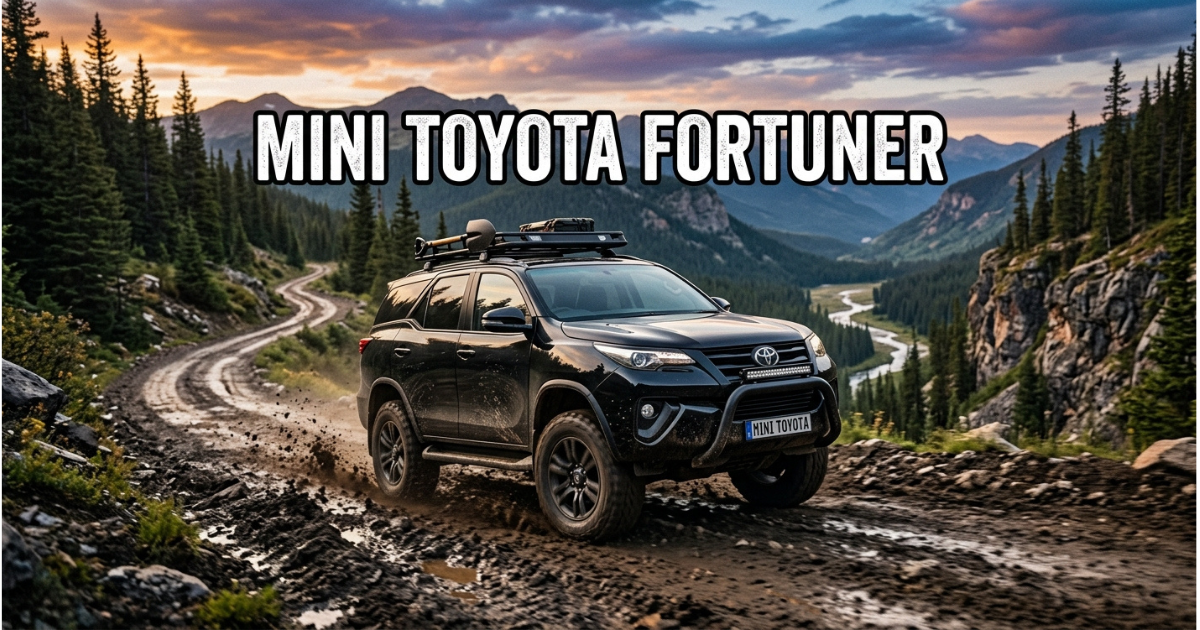
I went through the numbers myself, cross-checked them against three different trackers, and put together everything a genuine buyer would want to know before getting excited about the Mini Toyota Fortuner.
Toyota Mini Fortuner Expected Price
My first stop while researching the Mini Toyota Fortuner’s price was Car Junction, and it quotes an ex-showroom price close to ₹20 lakh, sitting well under the full-size Toyota Fortuner. CarBike360 widens that window to ₹27 lakh, while MotoTech India brings the number down to ₹11.86 lakh, with the range-topping version touching ₹16.33 lakh. So the final on-road price really depends on which variant you pick, whether that is the 1.5E MT, the 1.5G AT, or the 1.5S AT.

None of these variant names are locked in yet, and Toyota has not made an official announcement, so treat every number here as a working estimate rather than gospel. If you like planning your budget the way I do, the EMI numbers matter just as much as the sticker price. One estimate puts the monthly outgo at ₹44,552 per month for a buyer based in Mumbai.
That figure assumes a 10% down payment, a 10% interest rate, and a 60-month loan period, so a longer tenure or a bigger loan amount will shift your monthly number up or down. Your own buyer’s location changes things too, since city taxes rarely match a Mumbai quote exactly.
Expected Launch Date
Nobody has locked down a firm date for the Mini Toyota Fortuner’s debut in India, but the expected launch date floats between two markers depending on which source you trust. Car Junction points to 15 June 2027, while CarBike360 pushes that out to 24 September 2027. Both agree the timeline stays tentative until Toyota issues an official launch confirmation.
As an upcoming vehicle, its full specifications and variants will likely surface only in the weeks before the actual reveal, so I would not mark my calendar just yet.
Engine and Performance
Engine talk gets a bit messy across sources, and the numbers do not fully agree with each other on the Mini Toyota Fortuner. Car Junction lists a 1,999 cc petrol engine without confirming maximum power or peak torque. CarBike360 simply says the car gets an automatic transmission and stays quiet on engine displacement until official launch.
MotoTech India gets specific with a 1.5-litre four-cylinder petrol engine rated at 105 PS and 136 Nm of torque. That third source also expects a 5-speed manual alongside a 4-speed automatic gearbox, and it says the Indian version will run on front-wheel drive rather than a full four-wheel-drive system.
This keeps the powertrain and drivetrain simpler for city driving. Whichever transmission you end up with, the goal seems to be balancing SUV performance with everyday usability and reasonable mileage.
Features and Interior
Step inside, and the story again depends on who you ask. Car Junction confirms the 1,999 cc engine but admits full variant-wise equipment and performance information are still missing. So infotainment technology, safety equipment, connected-car functions, driver-assistance systems, and complete interior specifications remain unconfirmed for now.
CarBike360 echoes that gap, saying cabin equipment, touchscreen size, upholstery, and sunroof details are not locked in. It advises against treating early leaks as final equipment information or connected-car technology.
MotoTech India offers the richest cabin details, with three rows of seating for seven passengers. A second row uses 60:40 split-fold functionality and a third row gets 50:50 split-fold seats, plus a leather-trimmed steering wheel, automatic front air conditioning, and rear roof-mounted AC vents.
There is also a 6.8-inch touchscreen infotainment system with USB and Bluetooth connectivity. That infotainment system should keep everyone entertained, but I would still expect children or smaller adults to feel more comfortable than grown adults in that last row, given how tight third rows usually get.
Fuel Efficiency
Fuel bills are always on my mind before buying any SUV, and here the picture is only half-drawn for the Mini Toyota Fortuner. Car Junction admits it has no certified mileage figure or official mileage figure ready yet. So it suggests holding off on any comparison with other SUVs until Toyota confirms the real number.
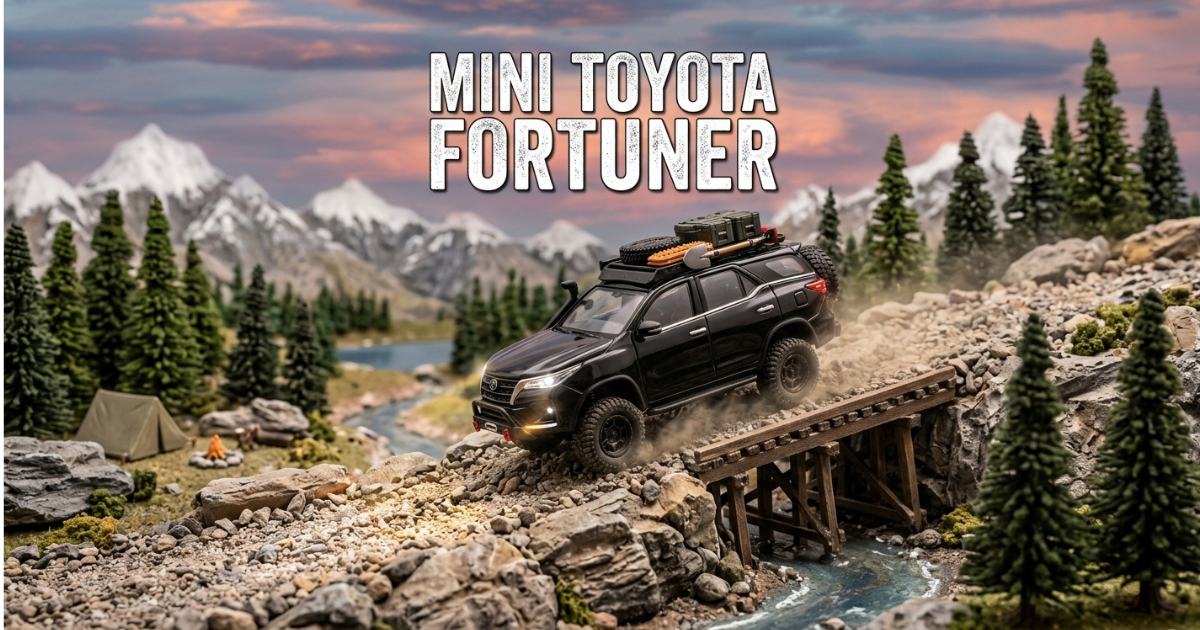
MotoTech India takes a guess at 15–16 km/l, crediting the lightweight construction and four-cylinder petrol engine for helping with both urban driving and highway driving. Real-world fuel economy always shifts with traffic, vehicle load, driving conditions, and your own driving style during everyday use.
In short, the mileage and fuel efficiency claims sound promising on paper but need a proper road test to prove them.
Safety Features
Safety is where I always slow down and read the fine print, and the two sources disagree in how much they reveal about the Mini Toyota Fortuner. CarBike360 has not confirmed details on airbags, ADAS, electronic stability systems, cameras, or other safety technologies.
It says buyers should check official documentation closer to launch before assuming anything is standard.
Toyota Mini Fortuner vs Toyota Fortuner
Comparing the Mini Toyota Fortuner to its bigger sibling puts things in perspective quickly. The full-size Toyota Fortuner is a proper 7-seater SUV with both petrol engine and diesel engine choices. Car Junction lists it from ₹34.76 lakh ex-showroom, a clear step up from this smaller car’s price range.
CarBike360 frames the smaller SUV’s ₹20–27 lakh window as far more accessible than that larger SUV, especially since the smaller model currently sticks to a petrol engine paired with an automatic transmission. That is unlike the one petrol automatic variant CarBike360 quotes for the standard Fortuner.
Who Should Consider the Mini Fortuner?
So who actually fits the Mini Toyota Fortuner? Based on what Car Junction and CarBike360 describe, it suits anyone chasing a Toyota-branded SUV at a lower price than a full-size SUV. It also suits someone who wants a compact SUV for everyday driving with a strong SUV identity, decent luggage space, and reliable petrol-powered performance.
It also works for shoppers torn between 5-seat simplicity and 7-seat configurations, since the flexible premium SUV-style design and smooth automatic transmission support both family use and pure urban driving with equal ease. Still, hold off on any final purchase decision until the brand nails down real-world family usability figures.
Seating Capacity
Seating flexibility might be the smartest part of the Mini Toyota Fortuner package. CarBike360 lists 5-seat and 7-seat options, giving Toyota customers real flexibility depending on whether they need a tighter five-seat SUV or extra passenger capacity through a seven-seat configuration.
That range should appeal strongly to larger families who do not want to compromise on family use just because they picked a smaller-footprint model.
Comfort and Convenience
Daily comfort touches round out the package nicely. Expect keyless entry, push-button start, cruise control, automatic air conditioning, rear AC vents, and old-fashioned power windows. There is also a six-way manually adjustable driver’s seat and steering-mounted audio controls doubling as phone controls.
Add the 6.8-inch touch screen infotainment system, a six-speaker audio system, and both power-adjustable ORVMs and retractable ORVMs. There is also a sunroof counted among the listed exterior features, and everyday drives should feel genuinely well-equipped.
Toyota Mini Fortuner Pros and Cons
Every car has trade-offs, and the Mini Toyota Fortuner is no different. On the plus side, its seven-seat capacity, compact dimensions, efficient four-cylinder engine, generous ground clearance, and thorough safety equipment make it easier to manoeuvre and park than a full-size SUV.
On the downside, the third row can feel cramped for full-grown adults, the cabin may not feel as premium as some rivals, and the front-wheel-drive configuration suits urban use and light off-road use far better than serious off-roading against tougher competitors.
Toyota Mini Fortuner vs Competitors
In the wider market, this model lines up against practical family-oriented SUVs and crossovers like the Maruti Suzuki Ertiga, Honda BR-V, and Mitsubishi Xpander Cross. Its edge comes from Toyota’s brand reputation, genuine seven-seat practicality, bold SUV styling, and a solid list of safety equipment that many rivals still treat as optional extras.
Note
One last reminder before you get too attached to any number here: the Mini Toyota Fortuner remains an upcoming model. Every price, launch date, and set of specifications floating around from Car Junction and CarBike360 counts as expected figures rather than confirmed facts.
Treat all of it as expected information until the official launch actually happens.
Final Verdict
Pulling everything together, the Mini Toyota Fortuner looks like a genuine attempt to bring Fortuner-style SUV appeal to a smaller footprint within Toyota’s Indian lineup. Car Junction pegs it around ₹20 lakh with a 15 June 2027 target and a 1,999 cc petrol engine built for solid everyday performance, mileage, and luggage space. CarBike360 widens the window to ₹20 lakh to ₹27 lakh, sets its sights on 24 September 2027, and expects petrol power through an automatic transmission across 5-seat and 7-seat configurations.
MotoTech India goes furthest with detail, describing a compact seven-seat SUV built around a 1.5-litre petrol engine, an expected 15–16 km/l mileage, 220 mm ground clearance, and a long list of safety features. All of this is wrapped in Toyota’s design language and pitched as an affordable alternative to larger SUVs at ₹11.86 lakh to ₹16.33 lakh.
Across all three trackers, engine specifications, interior features, colour options, dimensions, safety equipment, exact variants, various features, launch details, and the true Indian price still need an official announcement for the Mini Toyota Fortuner before anyone can trust the official pricing. Still, the reliability promise built into the Toyota badge is already doing a lot of the selling.
FAQs
When will the Mini Toyota Fortuner launch in India?
There is no confirmed date yet. Car Junction expects 15 June 2027, while CarBike360 expects 24 September 2027, so both dates remain tentative until Toyota makes an official announcement.
What is the expected price of the Mini Toyota Fortuner?
Estimates vary by source. Car Junction and CarBike360 place it between ₹20 lakh and ₹27 lakh, while MotoTech India expects a lower range of ₹11.86 lakh to ₹16.33 lakh depending on the variant.
What engine will the Mini Toyota Fortuner get?
Reports differ here too. Car Junction lists a 1,999 cc petrol engine, while MotoTech India expects a 1.5-litre four-cylinder petrol engine producing around 105 PS and 136 Nm of torque with manual and automatic gearbox options.
Will the Mini Toyota Fortuner have a 7-seat option?
Yes, according to CarBike360 and MotoTech India, the SUV is expected to offer both 5-seat and 7-seat configurations, making it flexible for smaller households and larger families alike.
Is the Mini Toyota Fortuner based on the Toyota Rush?
According to MotoTech India, the Mini Toyota Fortuner is expected to be based heavily on the Toyota Rush, a seven-seat SUV already sold in several international markets.