

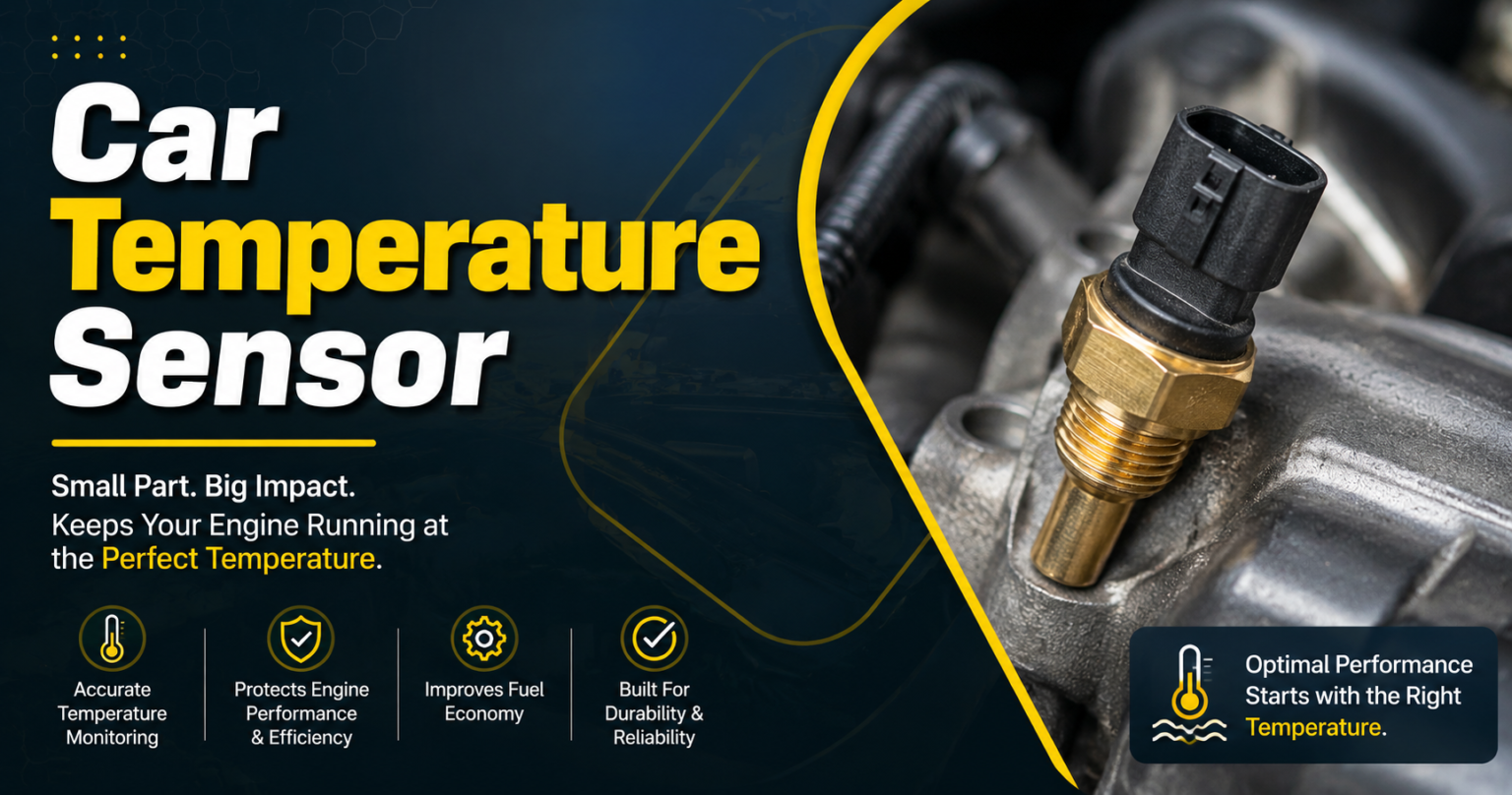
This article looks at the car temperature sensor from every angle, so owners, workshops, and anyone who wants reliable performance from their engine can understand it fully. Force Motors vehicles and many other brands depend on this sensor for monitoring engine temperature, and I want to walk you through why that matters.
Good compatibility between the sensor and the vehicle engine system keeps everything safer and more efficient, and that is the real goal here. Whether your car is hot under the hood or running smooth, this guide breaks down the essential facts about the correct spare part.
I want to prevent confusion, reduce the guesswork, and give you something fundamental you can actually use, because every good car temperature sensor deserves proper attention. By the end, you will know how this crucial, continuous temperature control device fits into modern industry, protects equipment endurance, and cuts down inactivity time.
What is the (engine coolant) temperature sensor?
A coolant temperature sensor sits inside the engine management system, and its whole job is giving a precise measurement of how hot your coolant runs. This little device keeps things within the optimum temperature limits, which sounds technical but really just means your engine stays happy and safe.
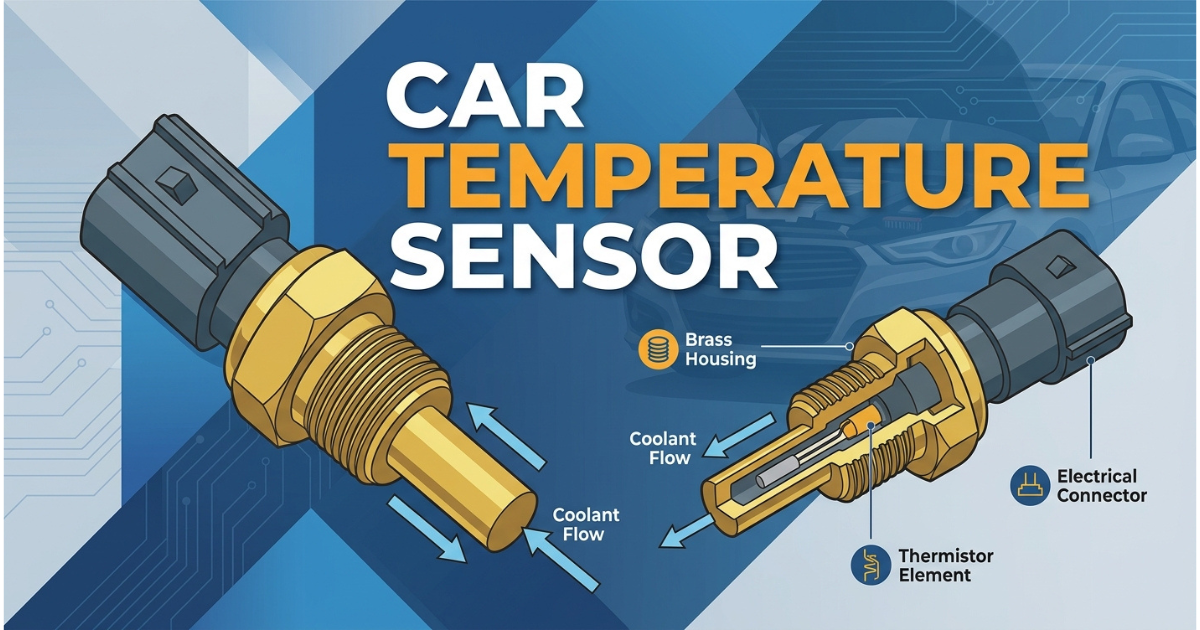
I always tell people that predictive maintenance starts right here, since this is where a car temperature sensor earns its keep. That early warning saves you from long downtime and painful repair costs, and it also protects the motor while boosting operative efficiency.
There is a bigger picture too: better sustainability through smarter fuel use and lower emission reductions all trace back to this one sensor doing its job. The ECU, or engine fuel unit, reads the signal constantly to manage fuel injection and ignition timing.
Here is the mechanism in plain terms: the sensor gets a regulated voltage, and the resistance of that signal shifts with engine coolant heat. That shift becomes temperature variation, and from that resistance reading, the computer can calculate temperature and then adjusts ignition timing. The fuel mix and cooling fan speed adjust too, holding a regular temperature that protects vehicle safety and keeps coolant system performance steady.
Types of temperature sensors
Not every sensor works the same way, and I learned this the hard way after mixing up two types on an old project. Thermistors come in two flavors, NTC and PTC, and both change their resistance as temperature increases, giving a precise and fast reaction.
That fast reaction to temperature changes lets you control motor temperature with confidence, which is exactly what a good car temperature sensor should do. Thermocouples work differently, joining two different metals to create voltage, and while they offer a wide measure range and strong durability.
They do need referential temperature compensation to stay accurate, unlike simpler designs used in everyday cars. Resistance temperature detectors, known as RTD, often use platinum and rely on metal electric resistance to deliver high precision.
That high precision comes with long-term stability, which makes them a favorite for industrial applications that demand constant monitoring. Semiconductor sensors take a modern route, using semiconductor integrated circuits to create a voltage output that works well across moderate temperature ranges. These semiconductor types stay small and compact, making them perfect for electronic applications and automatization applications in newer cars.
Choosing the right type protects functional reliability, keeps overall efficiency high, and supports industrial systems and motors for years without failure.
Applications of temperature sensors
Controlling the cooling system is job one, since the sensor watches motor temperature and tells the fan and water pump when to kick in. This holds an optimal temperature and directly fights overheating, protecting vehicle performance and stretching out motor life far longer.
Adjusting the air-fuel mixture is another big role, because the ECU leans on sensor data to fine-tune the fuel-air mixture for optimum combustion. That fine-tuning improves fuel efficiency and cuts down polluting emissions, and I have seen cars run rough simply because this reading was off by a few degrees.
Onboard diagnosis systems, known as OBD, use this data to warn drivers about motor temperature problems, allowing early interventions that dodge costly repairs. Optimizing motor performance also depends on accurate coolant temperature readings, especially during a high-demand situation like speedy driving.
Emission control rounds out the list, since holding temperature within ideal ranges reduces polluting gases, helping emission control systems meet environmental guidelines and support cleaner, more ecologic driving.
Where can you find the coolant temperature sensor?
Every vehicle manufacturer places this part a little differently, but most tuck it close to the thermostat, and sometimes the exact sensor location sits right inside the cooling system itself. I always check near the engine block first, because that is where the wiring usually leads on most models. Some setups also include a second unit connected to the control unit, which then relays a reading to the dash, giving two points of data instead of one.
Two-sensor cars are rare these days, but you will still spot them if you work across a wide range of engines, and knowing where your car temperature sensor sits saves real diagnostic time.
How to spot a faulty temperature sensor and what it means
An overheating engine is often the first clue, and a bad sensor sends mixed messages, sometimes locking onto a permanent cold signal. Other times it throws a false hot signal even when engine temperature sits fine, leaving you stuck with false readings. I once trusted a gauge that lied to me for a week straight, and it taught me to never ignore small warning signs from a car temperature sensor.
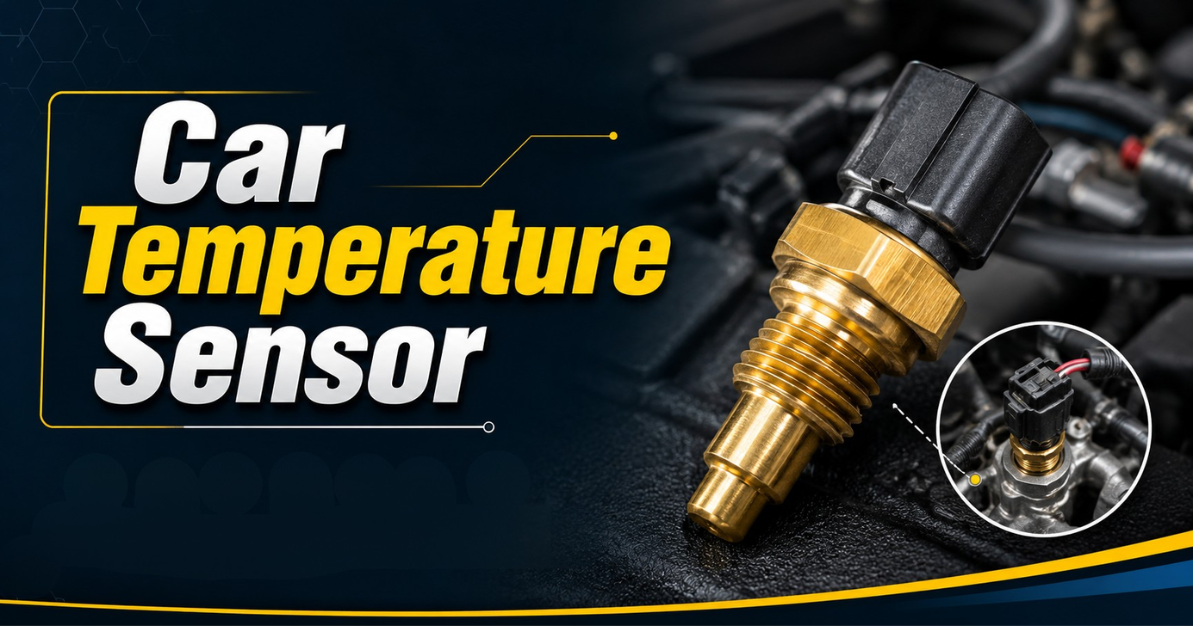
Black exhaust smoke points to a messed-up fuel ratio, since too much fuel cannot fully burn inside the combustion chamber. This leaves unburned fuel to smoke out the tailpipe and signal that cooling system repair is overdue. Bad fuel economy shows up too, because a coolant temperature sensor stuck on a cooler engine reading forces the system to dump extra fuel.
That extra fuel floods the fuel mixture even when the hot engine is already running warm, wasting money at every fill-up. Fluctuating temperature readings are another red flag, especially when engine temperature fluctuations show up without any real change in weather. Even on days that feel colder outside, that pattern calls for a proper mechanic inspection on your car temperature sensor.
A faulty engine light often joins the party too, since the check engine light switches on the moment the car computer picks up a signal issue from the sensor circuit.
Keep your cooling system running as it should do
Brands like K-Seal exist for a reason, and if your engine cooling system shows any sign of a leak, acting fast stops further damage from spreading. That damage can reach the rest of your vehicle quickly if a faulty car temperature sensor goes unnoticed for too long. For bigger jobs, K-Seal Ultimate handles serious repairs, while K-Seal HD is built for larger vehicles that need extra strength.
Temperature Sensor T006865422917
This particular part code, T006865422917, is listed through Auto Junction India as a genuine spare part built for Force Motors Traveler models. It carries HSN code 84099941 under the Force Motors spare parts and sensors category, with clear pricing listed for buyers.
The listing price sits at ₹694, already including taxes, with GST set at 18%, though the product listing showed the item out of stock recently. Reaching out to the seller is smart before you count on availability, especially for a specific car temperature sensor model like this one.
The full detail sheet reads clean: Product name is Temperature Sensor, Part Code is T006865422917, HSN Code is 84099941. Listed Price sits at ₹694, and Status shows out of stock, with the Vehicle Brand listed as Force Motors. The Listed Model is Traveler 26 Str, and the Variant is T-26 Euro-III/IV, filed under Category Engine and Sensor Category Sensors.
Why Is a Temperature Sensor Important?
This part exists to read temperature conditions across the vehicle system, feeding data straight into the control system and monitoring system so the car can react properly. Accurate temperature information supports efficient engine operation and helps flag abnormal temperature conditions before they turn serious. A faulty sensor creates inaccurate readings, and that opens the door to bigger engine-related issues down the road.
Swapping out a damaged sensor for a truly compatible component matters a lot during routine vehicle maintenance, and skipping that step never ends well for any car temperature sensor setup.
Compatibility with Force Motors Traveler
Auto Junction lists T006865422917 specifically for the Force Motors Traveler, matching the 26 Str body and the T-26 Euro-III/IV trim. The same part number shows up again inside their engine spare-parts listings, confirming it as a standard fit for this model. Every model and variant carries its own engine configuration and production specifications, so buyers should always confirm exact vehicle details before checkout.
Price and Availability
The listed price stays fixed at ₹694, already covering taxes, though the product page currently marks the unit as out of stock. Auto Junction offers an enquiry option along with seller contact information for anyone chasing real-time availability on this car temperature sensor. Their broader sensor catalog stretches well beyond this one listing, covering other temperature sensors and vehicle sensors.
This includes coolant temperature sensors, environmental temperature sensors, EGR temperature sensors, and assorted engine-related sensors worth browsing if you need a backup option.
Buying the Right Temperature Sensor
Start by checking the part number, since T006865422917 needs to match your required component exactly, and skipping this step causes more returns than anything else. Next, confirm your vehicle model lines up correctly, because a part built for one Force Motors Traveler model rarely fits another without issues.
Look closely at the engine variant too, since small shifts in engine specifications or variant specifications change what actually fits under the hood.
Check seller availability and current stock before placing order, and always lean on professional installation through a qualified mechanic if you are not confident. A component checked and fitted properly saves you from repeat trouble, especially with something as important as a car temperature sensor.
Conclusion
The Temperature Sensor, listed under T006865422917, stands as a genuine Force Motors spare part built for the Traveler 26 Str in the T-26 Euro-III/IV trim. It sells through Auto Junction India at ₹694 with taxes included, carrying HSN code 84099941 and 18% GST.
The listing showed out of stock on the product page during the last check, so vehicle owners should confirm the part number and model compatibility before buying anything.
Checking availability directly with the seller remains the smartest move, especially whenever an online listing shows a gap in stock. A car temperature sensor, no matter which brand builds it, stays one of the most overlooked yet important parts under the hood. Giving it proper attention keeps your whole vehicle running the way it should, mile after mile, season after season.
FAQs
What does a car temperature sensor actually do?
A car temperature sensor measures your engine coolant heat and sends that reading to the ECU, which then adjusts fuel mix, ignition timing, and cooling fan speed to keep the engine safe.
How do I know if my car temperature sensor has gone bad?
Common signs include an overheating warning, black exhaust smoke, poor fuel economy, fluctuating temperature readings, and a check engine light staying on.
Where the car temperature sensor is usually located?
It typically sits near the thermostat within the cooling system, though the exact spot depends on your vehicle manufacturer and model.
Can I drive with a faulty car temperature sensor?
It is risky since a faulty sensor can send false readings, hide real overheating, and hurt fuel economy, so getting it checked by a mechanic quickly is the safer choice.
How much does a replacement car temperature sensor cost?
Prices vary by brand and vehicle model; for example, the Force Motors Traveler sensor T006865422917 is listed at ₹694 including taxes, though availability should always be confirmed with the seller.