


Petrol prices in India have crossed ₹100 per liter in many cities, so choosing a best petrol mileage car has become a serious financial decision. Brands print impressive brochure numbers, but these rarely survive real Indian traffic, potholes, and daily stop-start driving.
ARAI mileage figures come from controlled lab conditions, while real-world mileage depends on your driving style, route, and how well you maintain the car. This gap is exactly why buyers now research carefully before picking a best petrol mileage car for their daily needs.
I have driven a Maruti Swift, spent a week with a Maruti Celerio, and taken a Hyundai Creta on a long highway trip. Each one told a different mileage story once real traffic entered the picture.
This guide compares claimed versus real figures across petrol, CNG, hybrid, and diesel cars, then shares habits that genuinely improve fuel efficiency. That way, your next purchase rests on real data instead of a glossy sales pitch.
Mileage is rarely just about the engine; vehicle weight, gearbox tuning, tyre condition, and daily passenger load all quietly shape the final fuel bill. Keeping that in mind while reading claimed figures will save you from disappointment later.
Top Petrol Hatchbacks for Mileage
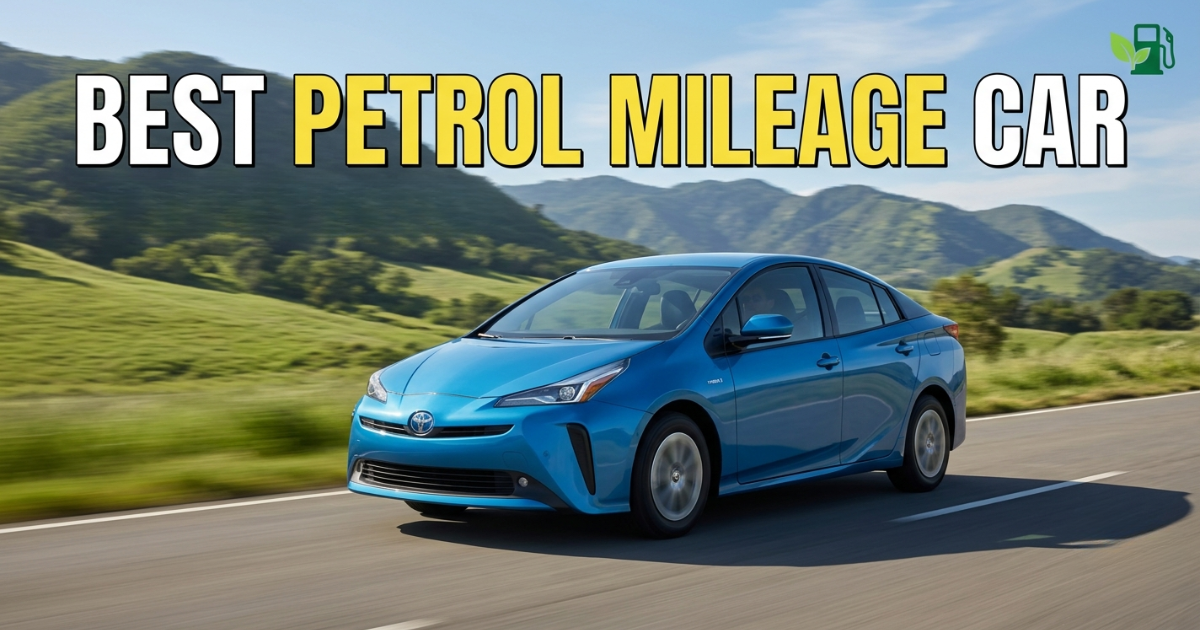
Small hatchbacks post the best claimed mileage figures in India, and most shortlists for the best petrol mileage car begin here. The Maruti Celerio leads with 26.68 kmpl on the AMT petrol version, though real city driving usually settles between 19 and 23 kmpl. Many owners simply call this hatchback the best petrol mileage car for pure city use.
Its light kerb weight and smooth drive train make it ideal for office commutes and tight city lanes. A simple habit worth adopting is switching off the engine whenever traffic halts for more than thirty seconds, which saves noticeable fuel over time.
The Maruti Swift claims 25.75 kmpl, but real-world figures land closer to 16–18 kmpl in the city and 21–23 kmpl on highways. Using premium or 91-octane fuel, keeping smooth throttle inputs, and checking wheel alignment every 10,000 km all help protect peak mileage.
Its wide service network and lightweight build keep long-term ownership costs low, which is why owners often call it a genuine best petrol mileage car. The Toyota Glanza, rated around 22.35–22.94 km/l, offers a spacious cabin, low maintenance costs, and strong resale value.
The Maruti Suzuki S-Presso (25.30 km/l) suits first-time buyers looking for an affordable, easy-to-drive city car. The Maruti Suzuki Wagon R (25.19 km/l) adds more cabin space without sacrificing much fuel economy, thanks to its tall design and comfortable seating.
A few more hatchbacks deserve a mention. The Maruti Suzuki Baleno, rated close to 22 km/l, pairs excellent fuel economy with a premium interior. The Maruti Suzuki Fronx mixes crossover styling with a fuel-efficient petrol engine, giving buyers SUV looks without hatchback-level running costs.
The Hyundai Grand i10 Nios, at around 20.7 km/l, is built mainly for easy city handling. It remains a popular first car thanks to its affordability and low operating costs, though it rarely tops the best petrol mileage car list outright.
SUVs and Sedans: Trading Mileage for Space
SUVs and larger sedans rarely match hatchback-level efficiency, but some come close to a true best petrol mileage car rating. The Hyundai Creta claims 16.8–17.4 kmpl, though real figures usually fall between 12 and 18 kmpl depending on city or highway use.
The face lifted Creta improved slightly thanks to better aerodynamics and refined ECU tuning. The Toyota Urban Cruiser Taisor, a compact SUV rated near 22 km/l, combines SUV styling with genuinely good highway performance.
The Honda City 4th Generation, rated at 17.40 kmpl, performs well on highways due to its aerodynamic design. Frequent gear shifts in heavy traffic can hurt its real mileage, though fitting iridium spark plugs and keeping RPMs under 2,000 can add a kmpl or two.
The MG Hector claims 12–14 kmpl but often delivers only 8–12 kmpl in the city, since its turbo petrol engine favors power over economy. This is a reminder that heavier SUVs almost always trade mileage for size and comfort.
The Mahindra Scorpio N accepts lower mileage, around 12–13 km/l, in exchange for a powerful engine and strong highway stability. The Toyota Rumion, an MPV rated near 20.5 km/l, manages surprisingly good mileage for its size thanks to a smooth petrol engine.
Across this segment, every extra kilogram of body weight and every inch of extra ground clearance quietly costs a little fuel economy. Buyers should treat this as a trade-off rather than a flaw, since the same weight often improves crash protection and comfort.
CNG, Hybrid, and Diesel Alternatives
For buyers who drive heavily every day, fuel type matters as much as the car itself when hunting for the best petrol mileage car equivalent. CNG models offer the lowest running costs: the Maruti Suzuki Celerio CNG manages 34.43 km/kg, and the Wagon R CNG returns 34.05 km/kg.
The Alto K10 CNG and Dzire CNG both stay above 33 km/kg, while the Hyundai Exter Knight CNG, at 27.10 km/kg, adds SUV styling to the mix. These options suit buyers who cover long distances every single day, such as delivery riders or long-commute office-goers.
Hybrid cars deliver strong efficiency with added comfort. The Maruti Suzuki Victoris tops the segment at 28.65 km/l. The Toyota Hyryder (27.97 km/l) and Honda City e:HEV (27.13 km/l) follow close behind, both leaning on their electric motor during slow city traffic.
Larger hybrids like the Maruti Invicto and Toyota Camry manage around 23.2 km/l while offering more space and a genuinely premium ride. This makes them worth considering for buyers who want comfort alongside real fuel savings on long family journeys.
Diesel cars remain strong performers on highways, even though they sit outside the strict best petrol mileage car category since they run on diesel. The Hyundai Venue and Kia Sonet both return around 24 km/l. The Tata Altroz manages 23.60 km/l, and the Hyundai Creta diesel offers 21.80 km/l with a spacious, family-friendly cabin.
Larger SUVs like the Mahindra XUV 7XO drop to 18.5–20.1 km/l but make up for it with cabin space and road presence. Strong pulling power matters more than outright mileage for buyers who regularly tow or carry heavy loads.
Factors That Affect Real Mileage
Mileage figures can vary by 30–40% between the best and worst outcomes for the same car, and several factors explain why. Driving patterns, traffic conditions, and vehicle maintenance all play a role, along with air conditioning use and road quality.
Passenger load and fuel quality from the pump matter too, and two owners driving the same model can report very different mileage. This usually comes down purely to how carefully each one manages these factors.
Take the Skoda Slavia as an example: it claims 18–20 kmpl, yet many owners report only 8–14 kmpl in daily use. The gap is rarely about the engine alone; aggressive acceleration and skipped servicing quietly chip away at fuel efficiency.
Short trips that never let the engine warm up properly also hurt mileage more than most drivers expect. This is one more reason real ownership reviews matter more than lab-tested claims when judging any best petrol mileage car shortlist.
Practical Tips to Improve Mileage
A few simple habits genuinely raise fuel efficiency over time and help any car get closer to a best petrol mileage car result. Check the air filter every 5,000 km, since a clogged filter forces the engine to work harder and can cost you 5–10% efficiency. Track tyre pressure weekly, because under-inflated tyres on Indian roads can quietly cost 2–3 kmpl.
Use cruise control on highways, maintain steady speeds, and avoid sudden acceleration or hard braking. Plan trips to avoid peak-hour traffic, since idling and constant stop-start driving hurt mileage more than most drivers realize. Regular servicing, correct tyre pressure, and choosing fuel from trusted stations round out a routine that protects your fuel budget.
A few car-specific habits also help. Switching off the engine during traffic halts longer than thirty seconds genuinely saves fuel. Using ECO mode where available and staying close to the 80–100 kmph speed range on highways can each add a small but real improvement.
None of these tricks demand extra spending, yet together they can close much of the gap between claimed and real mileage. That gap is often the real difference between an average car and a genuine best petrol mileage car.
Verdict
Choosing the best petrol mileage car always depends on your daily driving needs rather than brand names alone. For mostly city driving, the Maruti Celerio, Maruti Swift, and Toyota Glanza remain the strongest picks.
Families needing more space can consider the Toyota Rumion or Hyundai Creta. SUV enthusiasts may accept lower mileage from the Mahindra Scorpio N in exchange for space and power.
If you drive long distances daily, weigh CNG for low running costs, hybrids for comfort with efficiency, or diesel for highway strength. Always compare ARAI figures against real owner experiences before making a final purchase decision. At the end of the day, no single car wins on every count. The right choice depends on where you drive most and how many people usually travel with you.
A careful test drive in your usual traffic conditions will often tell you more than any brochure ever will. That single test drive is often the fastest way to confirm whether a car truly deserves the best petrol mileage car label.
FAQs
Which is the best petrol mileage car in India right now?
The Maruti Celerio and Maruti Swift remain the strongest picks in the hatchback segment. Real mileage still depends heavily on driving style and traffic conditions.
Does real-world mileage always match the ARAI claimed figure?
No, real-world mileage almost always falls below the ARAI figure. Lab tests run under controlled conditions that do not reflect daily traffic.
Can simple driving habits actually improve petrol car mileage?
Yes, habits like maintaining correct tyre pressure and avoiding harsh acceleration genuinely help. Switching off the engine during long stops can add a few extra kilometers per liter.
Is an SUV ever a genuine best petrol mileage car option?
Compact SUVs like the Toyota Urban Cruiser Taisor come reasonably close to hatchback-level efficiency. Larger SUVs trail behind due to extra weight and engine size.
Should I choose CNG or hybrid over petrol for better mileage?
CNG models like the Celerio CNG and hybrids like the Maruti Suzuki Victoris both beat regular petrol figures by a wide margin. The right choice depends on your daily running and budget.